尽管2024年有91%的英国火车在预定时间的五分钟内到达,而德国仅为82%,但英国政府正在加速铁路国有化,其控制的客运出行份额从2023至24年度的16%上升到53%。虽然私有化并非失败——它将年铁路出行量从1994至95年度的7亿人次提升至2024至25年度的17亿人次——但通勤者仍面临着高昂的票价,例如一张伦敦到利物浦的高峰单程票价高达120英镑(160美元)。
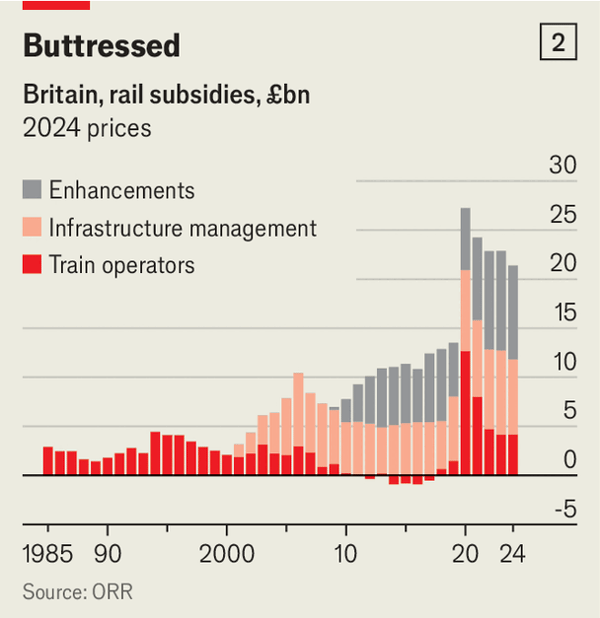
纳税人的财政负担已大幅增加,政府的运营补贴从2000至01年度的20亿英镑飙升至2024至25年度的120亿英镑。与此同时,由于通勤模式的变化,铁路收入仍比大流行前水平低12%,而私有运营商在大流行前的平均利润率仅为约2%,这表明国有化并不能解决这些结构性的资金赤字。
国有化可能会改善系统协调,但面临着创造一个压制私营部门竞争并屈服于工会工资压力的强大垄断企业的风险。归根结底,政府面临着在减少投资、提高已被冻结的票价或继续提供巨额补贴之间的艰难权衡,而这些问题都无法通过改变所有权来解决。
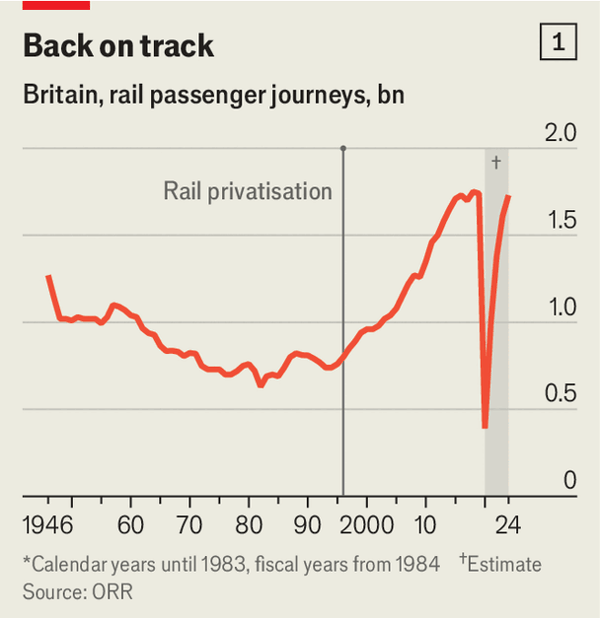
While 91% of British trains arrived within five minutes of schedule in 2024 compared to 82% in Germany, the British government is accelerating rail nationalization, with its control of passenger trips rising to 53% from 16% in 2023-24. Although privatization was not a failure—boosting annual rail journeys from 700 million in 1994-95 to 1.7 billion in 2024-25—commuters face high fares, such as £120 ($160) for a peak London-to-Liverpool ticket.
The financial burden on taxpayers has grown significantly, with government operational subsidies escalating from £2 billion in 2000-01 to £12 billion in 2024-25. Meanwhile, rail revenue remains 12% below pre-pandemic levels due to shifting commuter patterns, and private operators' profit margins averaged only about 2% before the pandemic, suggesting nationalization will not resolve these structural funding deficits.
Nationalization could improve system co-ordination but risks creating a powerful monopoly that stifles private-sector competition and succumbs to union wage pressure. Ultimately, the government faces difficult trade-offs between reducing investments, raising frozen fares, or continuing to fund massive subsidies, none of which are solved by changing ownership.
Source: Britain’s rail nationalisation is going full steam ahead
Subtitle: But it risks going down the wrong track
Dateline: 6月 11, 2026 04:47 上午