中国在改革开放约40年后首次面临大规模代际财富转移。2025年中国新增70位亿万富豪,总数达到470人(美国为924人),这些富豪合计拥有约1.8万亿美元财富。当前98%的中国亿万富豪为白手起家,高于香港的66%和台湾的69%。然而财富正迅速老龄化:2025年资产至少50亿元人民币(约7.2亿美元)的人群中,60岁以上占49%,高于2016年的23%。财富研究机构估计,在2025年起的十年中,净资产超过500万美元的中国人将向下一代转移约2.1万亿美元。
继承问题正在迅速扩大。对2003至2024年间上市公司创始人或控股股东去世案例的研究发现67人去世,平均年龄64岁,但仅6人留下遗嘱。继承纠纷也显著增加:2006至2015年间法院继承判决不足9万件,而2016至2025年几乎增长到原来的五倍。与此同时,中国约5亿人的中产阶级积累了大量资产,主要来自住房私有化。城市住房拥有率从1980年的20%上升至2022年的96%,约70%的家庭财富集中在房地产中,使继承问题不仅影响富豪阶层。
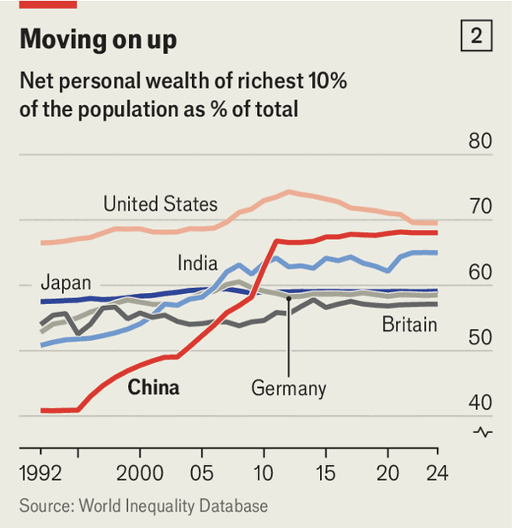
财富集中趋势明显。2024年中国前1%人口拥有30%的财富、前10%拥有68%,而30年前分别为16%和41%。与此同时经济增长放缓与就业压力加剧:非在校16至24岁青年失业率约17%。社会态度明显变化,认为“努力总有回报”的比例从2004年的62%下降至2023年的28%,认为家庭状况比五年前更好的比例从2004至2014年的70%降至2023年的39%。在机会收缩和继承财富扩大的背景下,社会流动性预期下降,年轻人对努力与成功之间关系的信心明显减弱。
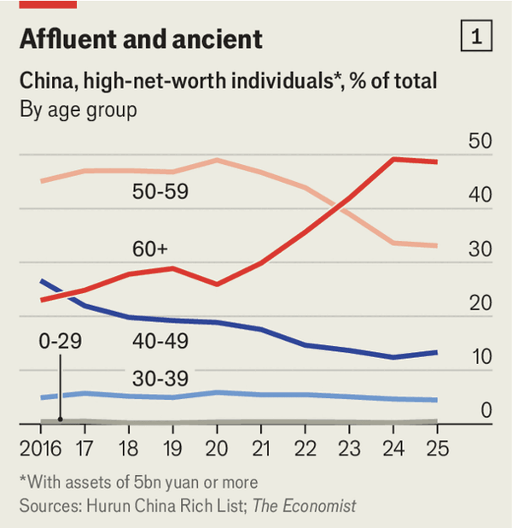
China is confronting its first large-scale intergenerational wealth transfer after roughly 40 years of market reforms. In 2025 the country created 70 new billionaires, bringing the total to 470, compared with 924 in the United States, and these billionaires together hold about $1.8trn in wealth. Currently 98% of Chinese billionaires are self-made, a higher share than Hong Kong’s 66% and Taiwan’s 69%. However wealth is ageing rapidly: in 2025, 49% of individuals worth at least 5bn yuan ($720m) were aged 60 or above, up from 23% in 2016. Wealth analysts estimate that Chinese individuals with more than $5m in assets will transfer about $2.1trn to heirs during the decade beginning in 2025.
Inheritance disputes and estate-management problems are expanding quickly. A study of founders or controlling shareholders of listed Chinese firms who died between 2003 and 2024 identified 67 deaths with an average age of 64, yet only six had written wills. Legal disputes over inheritance have surged: fewer than 90,000 court judgments occurred between 2006 and 2015, but the number nearly quintupled between 2016 and 2025. Meanwhile China’s roughly 500m middle-class citizens have accumulated significant assets, largely through housing privatization. Urban homeownership rose from 20% in 1980 to 96% in 2022, and around 70% of household wealth is concentrated in property, extending inheritance challenges beyond the ultra-wealthy.
Wealth concentration is increasing markedly. By 2024 the top 1% of Chinese held 30% of national wealth and the top 10% held 68%, compared with 16% and 41% respectively three decades earlier. At the same time economic growth has slowed and labour-market pressures have intensified: unemployment among non-student youth aged 16–24 is about 17%. Public attitudes have shifted sharply, with the share believing that “effort is always rewarded” falling from 62% in 2004 to 28% in 2023, and the proportion reporting that their family situation improved over five years dropping from 70% in 2004–2014 to 39% in 2023. As opportunities narrow while inherited wealth expands, expectations of social mobility are declining and confidence in the link between effort and success is weakening.