伊朗战争引发的能源冲击已成为历史上最大的供应中断之一。霍尔木兹海峡受袭使约15%的全球石油供应被困,相当于1970年代石油危机冲击规模的约两倍,尽管全球经济能源强度自那时以来已下降约50%。国际能源署宣布释放最多4亿桶紧急储备,但这只是暂时缓解措施。约五分之一全球液化天然气运输也受到影响,并波及其他商品:依赖天然气生产的化肥价格飙升,硫磺价格上涨影响铜冶炼,氦气短缺威胁芯片生产。若海峡关闭持续至月底,一些分析认为油价可能升至每桶150至200美元。
全球金融市场反应显示冲击具有明显地区差异。美国股市3月仅下跌约1.5%,而欧洲股市下跌约5%至6%,日本股市下跌7.3%,韩国股市跌幅超过10%。美国自2019年以来成为能源净出口国,并且自1970年代以来单位GDP石油消耗下降超过70%,缓冲了部分冲击。但消费者仍感受到压力:经验规则显示油价每上涨10美元,汽油每加仑约上涨25美分,自战争开始以来美国汽油平均价格已上涨近20%。市场对美国利率预期也上升约0.4个百分点至约3.3%。
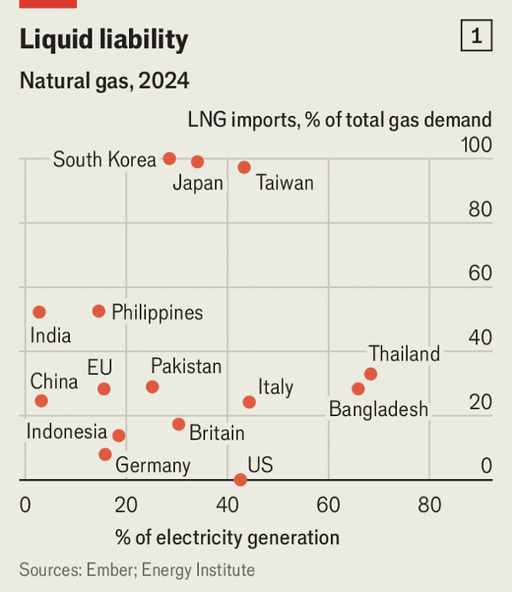
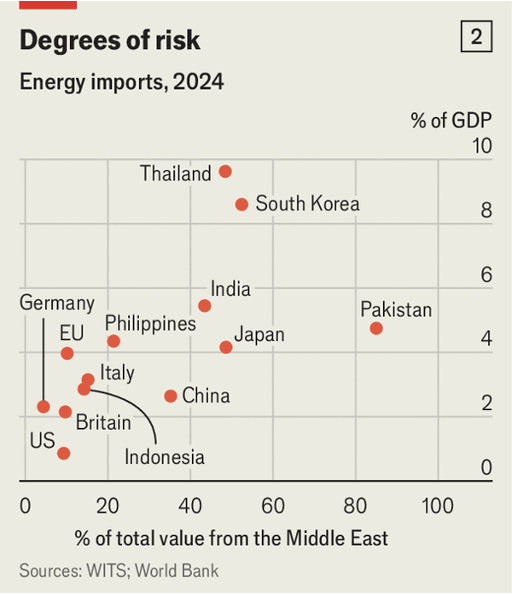
欧洲与亚洲的能源风险更高。欧洲对液化天然气依赖增加,基准天然气价格曾升至每兆瓦时56欧元以上,比战前高出超过75%。若霍尔木兹海峡扰动持续五周,欧元区通胀可能在一年内增加接近1个百分点。亚洲对进口能源依赖更强:中国、印度、日本和韩国约40%至80%的海运原油来自海湾地区,2025年亚洲吸收了经该海峡运输原油的87%和液化天然气的86%。日本能源消费中约87%依赖进口,韩国约84%。印度每年进口石油支出约占GDP的3%,泰国约5%,价格上升将迅速扩大经常账户赤字并削弱货币。
The energy shock triggered by the Iran war has become one of the largest supply disruptions in history. Missile attacks around the Strait of Hormuz have trapped roughly 15% of global oil supply, about twice the scale of the oil shocks of the 1970s, even though the world economy’s energy intensity has fallen by about 50% since then. The International Energy Agency announced the release of up to 400m barrels of emergency reserves, but this provides only temporary relief. Around one fifth of global liquefied natural gas shipments have also been halted, spreading disruptions to other commodities: fertiliser prices are surging because production relies on natural gas, sulphur prices are rising and affecting copper smelting, and helium shortages threaten semiconductor manufacturing. If the strait remains closed until the end of the month, some analysts estimate oil prices could reach $150–$200 per barrel.
Financial-market reactions indicate uneven regional impacts. American equities have fallen only about 1.5% in March, while European markets are down roughly 5–6%, Japanese stocks have dropped 7.3%, and South Korean stocks have fallen more than 10%. Since 2019 the United States has been a net energy exporter, and its oil consumption per unit of GDP has fallen by over 70% since the 1970s, cushioning the shock. Nevertheless consumers feel the impact: a common rule suggests each $10 rise in oil increases gasoline prices by about 25 cents per gallon, and average pump prices in the United States have already climbed nearly 20% since the war began. Market expectations for U.S. interest rates have also risen by about 0.4 percentage points to around 3.3%.
Europe and Asia face greater vulnerability. Europe’s reliance on liquefied natural gas has increased, pushing benchmark gas prices above €56 per megawatt-hour at one point, more than 75% higher than before the war. If disruptions in the Strait of Hormuz persist for five weeks, euro-area inflation could rise by nearly one percentage point over the following year. Asia depends even more heavily on imported energy: China, India, Japan and South Korea obtain roughly 40–80% of their seaborne crude from the Gulf, and in 2025 Asia absorbed about 87% of the crude and 86% of the LNG passing through the strait. Imports account for about 87% of Japan’s energy consumption and 84% of South Korea’s. India spends around 3% of GDP annually on imported oil and Thailand nearly 5%, meaning higher prices quickly widen current-account deficits and weaken currencies.