由于全年的成长目标已触手可及,决策者预计将暂缓进一步的宽松政策。尽管官方近期推出了针对投资的新刺激措施、加速发行地方专项债券并启动「六网」工程,但家庭仅获得有限的房贷补贴,且实际财政支出进度仍落后于计划。与此同时,房地产市场持续严重拖累经济,前九个月房地产投资暴跌20.6%,带动整体固定资产投资下滑7.2%。虽然9月份扣除汽车后的零售销售成长3.9%,但部分原因是受物价上涨与假期效应影响,整体内需依然疲软。
对外贸易虽然支撑了当前的经济扩张,但也使北京面临来自贸易伙伴日益沉重的压力。中国今年的贸易顺差预计将超越2025年创下的1.2兆美元纪录,促使欧盟准备建立新机制以限制中国进入其单一市场。此外,外国领导人呼吁让人民币升值,国际货币基金组织(IMF)更估计2026年人民币被低估幅度中间值达21.3%。经济学家普遍警告,在缺乏更强力的消费支撑与稳定的财政前景下,低迷的内需与贸易风险将持续困扰中国经济至2027年,届时经济成长率预计将下滑并逼近4%。
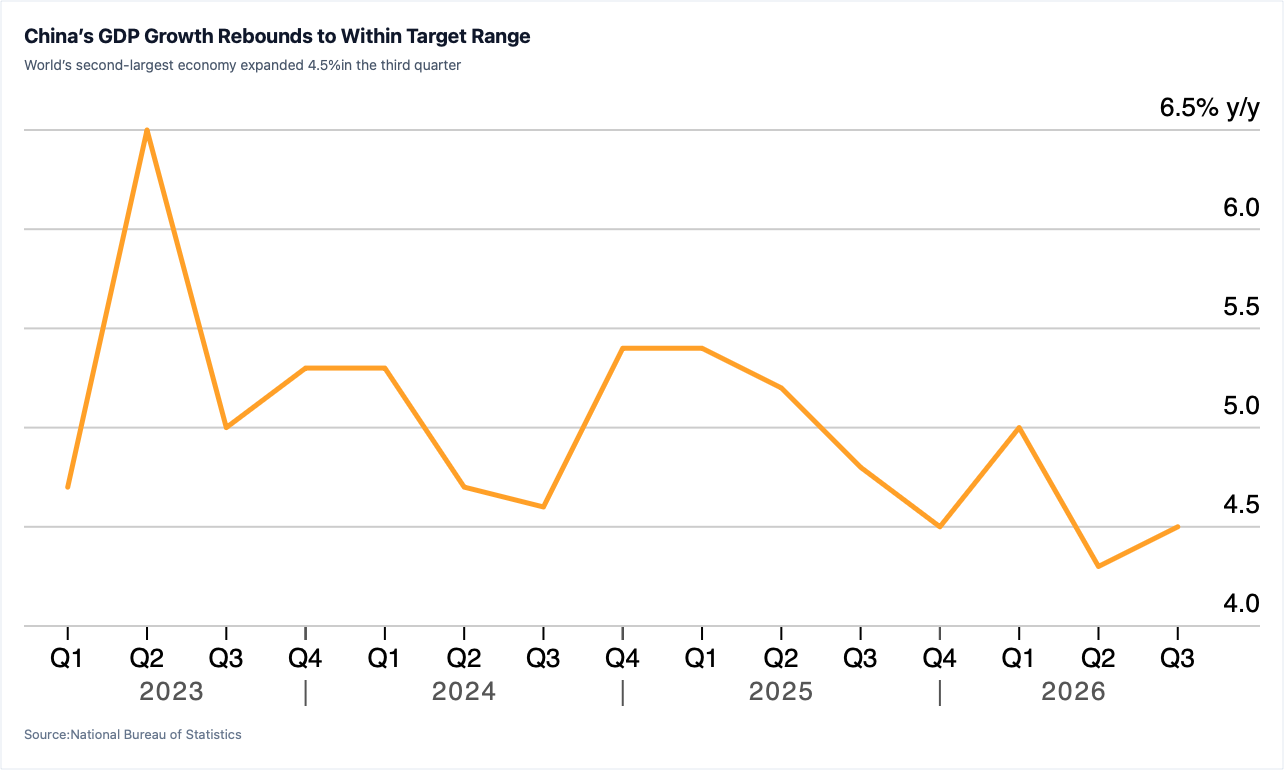
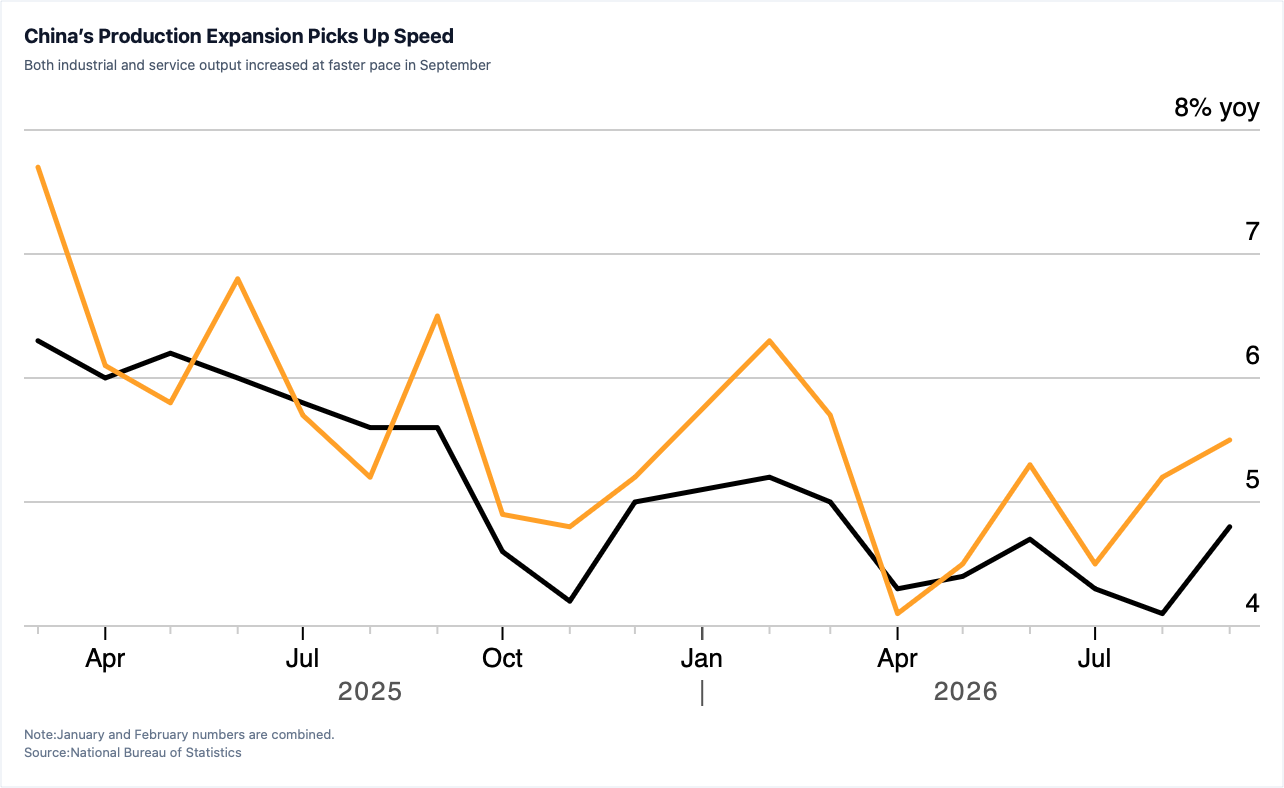
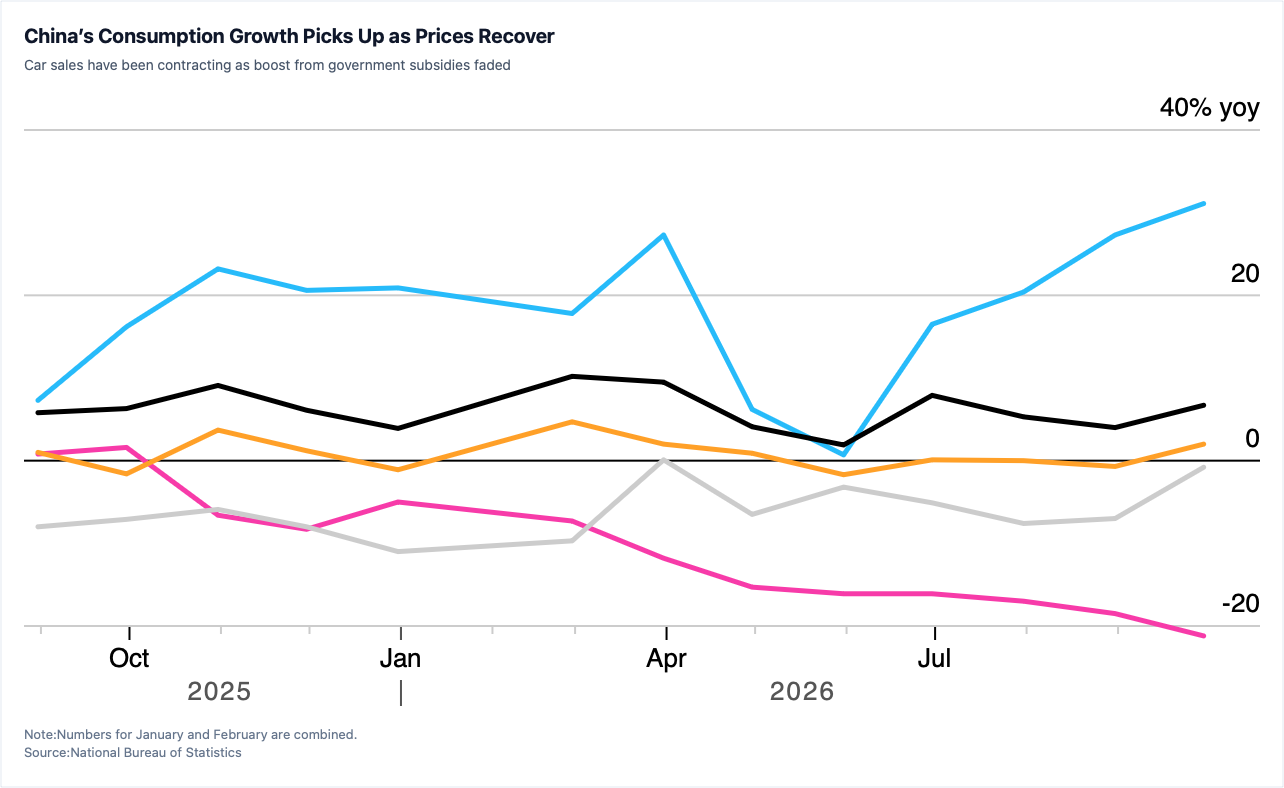
China's third-quarter economic growth beat expectations and rebounded into the government's target range, with gross domestic product (GDP) expanding 4.5% year-on-year, up from 4.3% in the second quarter, bringing growth for the first nine months to 4.6% and within the official annual goal of 4.5% to 5%. This rebound was primarily powered by factory output and the artificial intelligence (AI) supercycle, with industrial production hitting a six-month high of 5.5% in September. However, strong export and manufacturing performance has largely failed to boost domestic demand, as retail sales saw only a modest pickup to 1.1%, highlighting a widening divergence between the booming export sector and a struggling consumer economy.
With the annual growth target now within reach, policymakers are expected to hold off on further easing. Although officials recently rolled out fresh investment-focused stimulus, accelerated the issuance of special local bonds, and kicked off the Six Networks project, households received only limited mortgage subsidies and actual fiscal spending has remained slower than planned. Meanwhile, the real estate sector continues to be a major drag on the economy, with property investment plunging 20.6% in the first nine months and pulling overall fixed-asset investment down by 7.2%. While retail sales excluding automobiles grew 3.9% in September, the improvement was partly driven by faster inflation and holiday timing effects, leaving underlying domestic demand weak.
Although foreign trade is propping up current economic expansion, it has also placed Beijing under mounting pressure from trade partners. China's trade surplus is on pace to surpass the record $1.2 trillion set in 2025, prompting the European Union to prepare new powers that could restrict China's access to its single market. Additionally, foreign leaders have called for yuan appreciation, with the International Monetary Fund (IMF) estimating the currency's undervaluation at a midpoint of 21.3% in 2026. Economists widely warn that without stronger support for consumption and a stable fiscal outlook, subdued domestic demand and building trade risks will continue to haunt the economy into 2027, when growth is broadly expected to sink closer to 4%.