营养缺口很大:根据《2020-2025 美国人膳食指南》,超过90%的女性与97%的男性未达每日纤维需求,而一般建议约为每日28-35克,且许多人的摄取量不到一半。各品牌如今正以纤维密度竞争:Goodles mac and cheese 宣称每份约7克,而典型 Kraft 盒装仅1克;同时 Kraft 计划中的 PowerMac 目标为6克纤维加上17克蛋白质。其他例子包括 Poop Like a Champion 麦片每份23克,以及 SmartSweets 软糖每份6克;于2021年推出的 Goodles 表示,其目前已进入全美超过26,000家门市,且去年销售额成长超过一倍。
市场数据显示一波可衡量的商业化浪潮:在截至12月28日的52周内,符合 FDA「高纤维」标准的产品在早餐食品中增加了85%,在即饮茶与咖啡中增加了70%,在汽水中增加了29%。证据也将需求与 GLP-1 副作用管理,以及一部 2024 年 Netflix 纪录片加速提升的肠道微生物群认知连结起来,但营养专家仍提醒,应以全食物来源为主,强化产品应用来补足缺口。关键但书在于行为:过快增加纤维可能引发肠胃不适,因此即使企业将纤维行销为「下一个蛋白质」,摄取仍应分散于一整天。
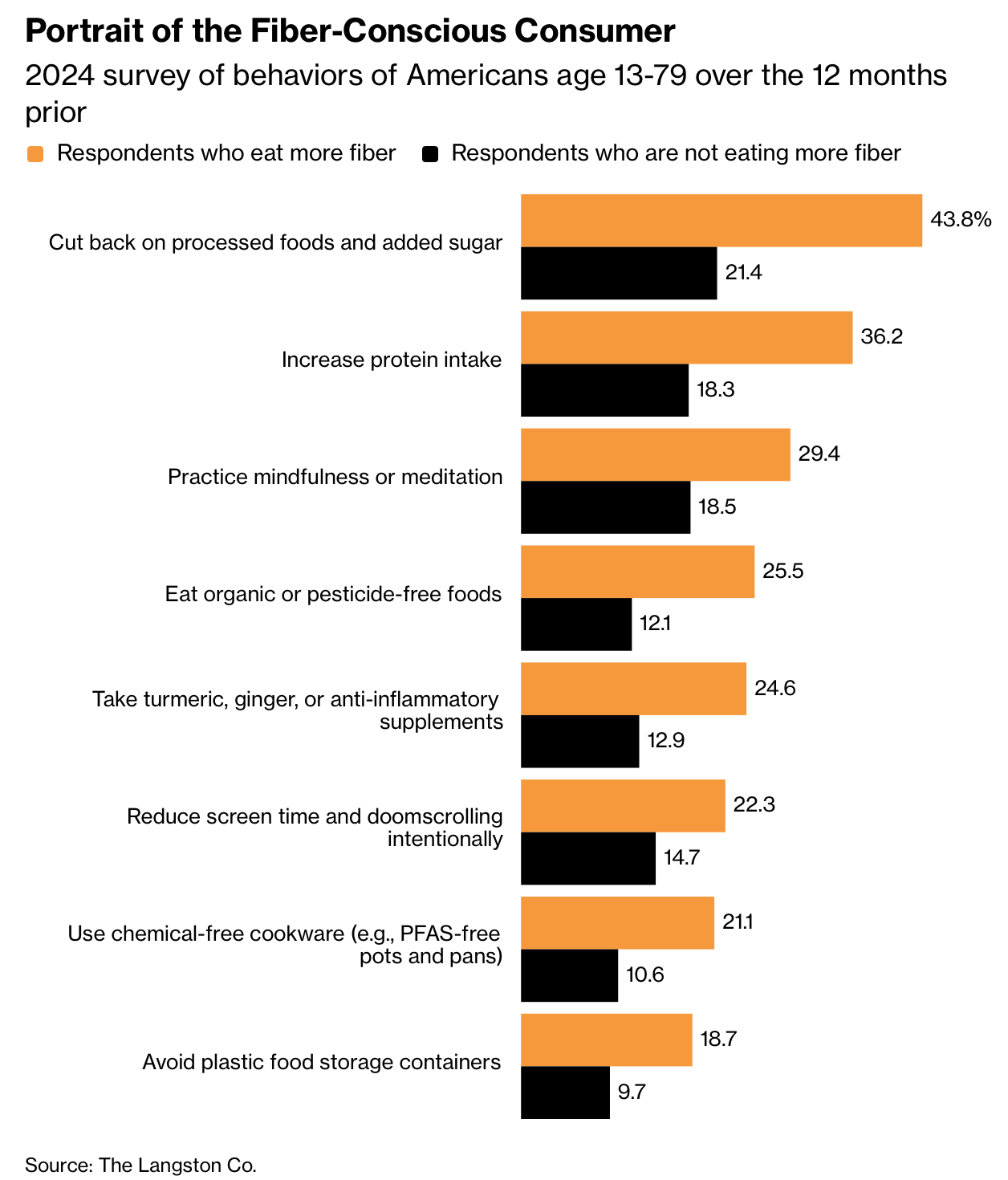
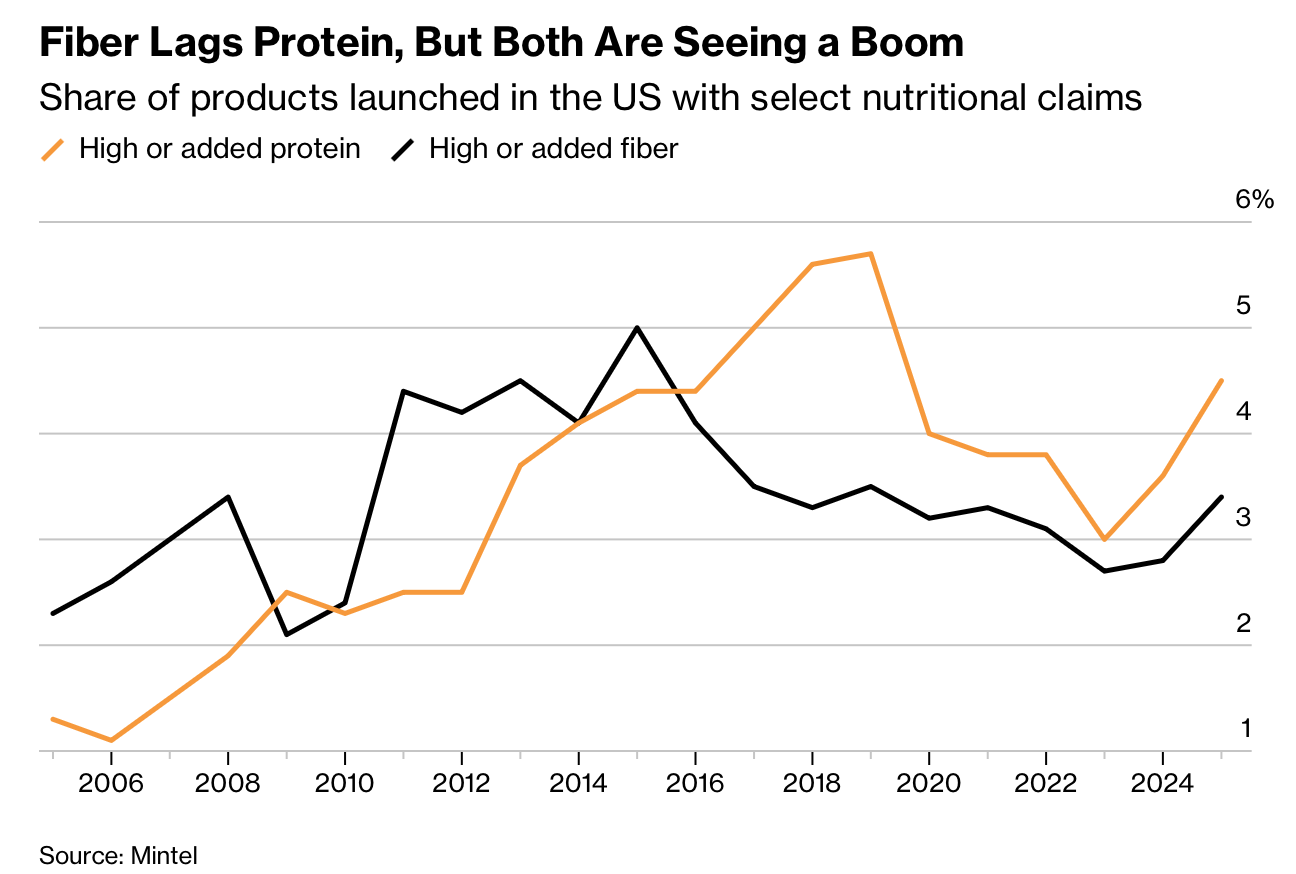
After years of low intake, fiber has moved into mainstream US food culture in 2025-2026, driven by product launches, social media, and major-brand marketing. Signals include a January 2025 launch of Floura fiber bars, TikTok “fibermaxxing,” and a survey showing 45% of Americans actively seek high-fiber restaurant options. The trend reached peak visibility with a Super Bowl ad for Raisin Bran, while executives at McDonald’s, PepsiCo, Coca-Cola, Starbucks, and WK Kellogg all flagged fiber as a priority for 2026.
The nutrition gap is large: according to the 2020-2025 Dietary Guidelines for Americans, more than 90% of women and 97% of men fall short of daily fiber needs, and typical guidance is about 28-35 grams per day, with many people consuming less than half. Brands are now competing on fiber density: Goodles mac and cheese advertises about 7 grams per serving versus 1 gram in a typical Kraft box, while Kraft’s planned PowerMac targets 6 grams of fiber plus 17 grams of protein. Other examples include Poop Like a Champion cereal at 23 grams per serving and SmartSweets gummies at 6 grams per serving; Goodles, launched in 2021, says it is now in over 26,000 US stores and more than doubled sales last year.
Market data suggests a measurable commercialization wave, with products meeting FDA “high fiber” standards rising 85% in breakfast foods, 70% in ready-to-drink tea and coffee, and 29% in soda over the 52 weeks ended Dec. 28. Evidence also links demand to GLP-1 side-effect management and microbiome awareness accelerated by a 2024 Netflix documentary, but nutrition experts still caution that whole-food sources should lead and fortified products should fill gaps. The key caveat is behavior: adding fiber too quickly can cause gastrointestinal distress, so intake should be spread across the day even as companies market fiber as “the next protein.”