AI 天气模型被描述为在 2026 年 1 月 22 日(GMT+8)已进入实用阶段:Google、Huawei、Microsoft、Nvidia 及大量初创与高校团队投入“数百万美元”开发工具,并被嵌入云平台,供能源、交通、商品交易等行业使用。叙事用 Hurricane Melissa(今年夏天摧毁 Jamaica)作为例子,称 Google 模型最早给出准确的路径与强度预测;同时 ECMWF 已运行全球 AI 模型,在若干基准上优于传统非 AI 模拟器,美国 National Weather Service 也在 12 月推出自家 AI 工具。核心差异被量化为时间步:传统数值模式只能“每次前进几分钟”,AI 却能一次性快速预测“许多小时”之后,且更快更便宜。
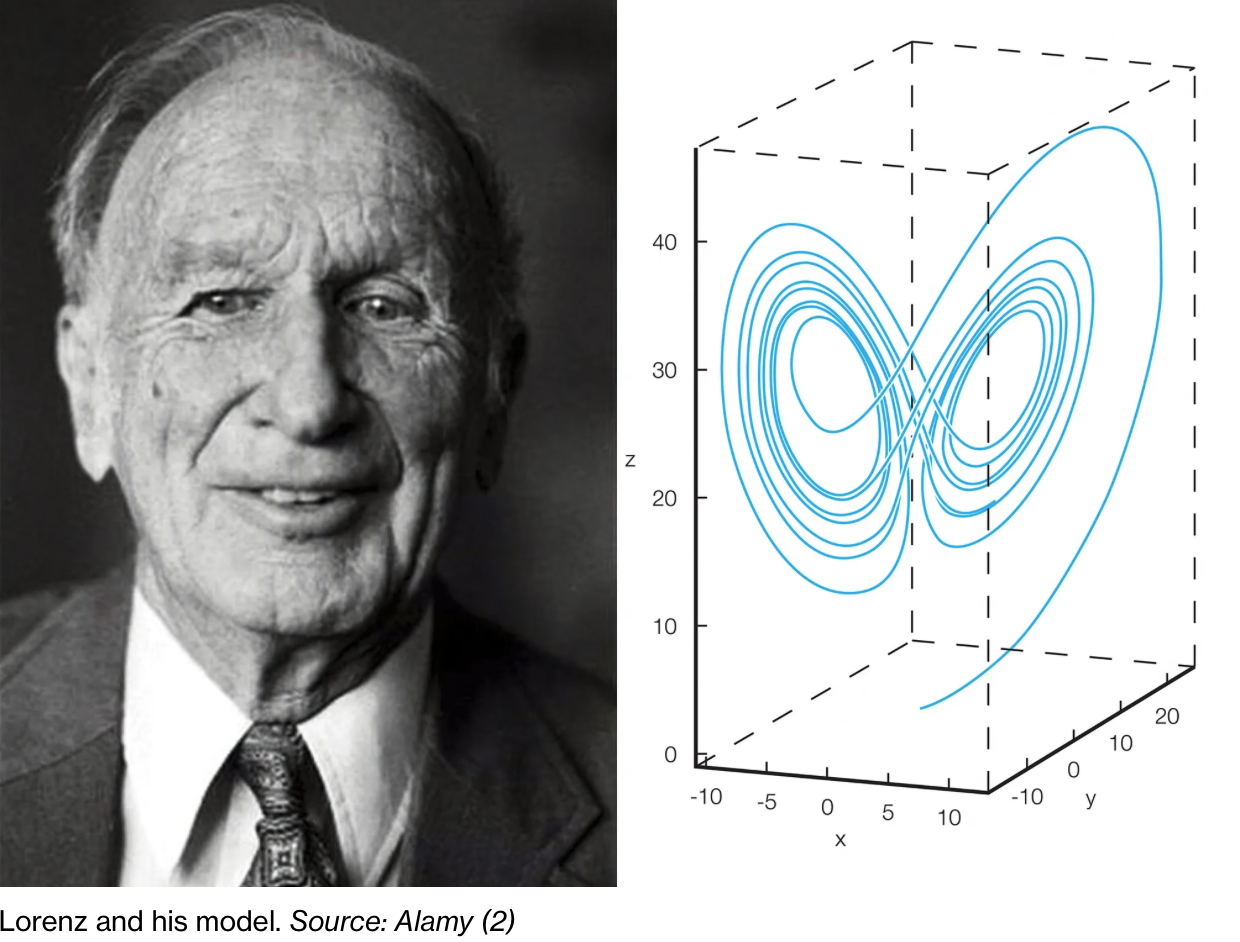
文章把可预报性边界与数值节点明确化:传统模型以三维网格生成常见的 10 天预报,但可靠性在 7 天后显著下降,14 天后“完全不可靠”。该上限追溯到 1960 年 Edward Lorenz:他仅把输入改动“几万分之一单位”,模拟结果就剧烈分岔,形成“butterfly effect/chaos theory”的预报极限观。近年 AI 让研究者重估这一上限:2021 年 Pacific Northwest 热浪在 Portland 持续 3 天、最高 116°F(≈46.7°C),并造成 72 人死于高温相关原因,为实验提供了高影响样本。
关键统计结果来自回溯优化:Hakim 与 Vonich 用 Google DeepMind 的 GraphCast 对该热浪做 backpropagation 以反推“最优初始条件”,再回灌模型后,预报改进超过 90%。他们随后把方法扩展到“整整一年”的预报,论文称在最优初始条件下,深度学习模型能把“有用预报”推进到“接近 1 个月”提前量,从而挑战“两周上限”。争议点是 AI 可能只是模式匹配(例如在无水汽条件下仍可生成降水),但作者强调其不解析某些尺度反而减少误差增长;硬件门槛也下移到“配一块合适 GPU 的桌面机”,不再需要“数亿美元级”超算。另一项量化外部性是:若初始条件改进带来“再提前几天”的预报,一项近期估计称可新增年度全球产出 21 亿美元。
AI weather models are portrayed as already practical as of Jan. 22, 2026 (GMT+8): Google, Huawei, Microsoft, Nvidia, plus many startups and universities, have spent “millions of dollars” building tools now embedded in cloud platforms and used by energy, transit, and commodity trading. The story cites Hurricane Melissa (devastating Jamaica this summer) where a Google model delivered the earliest accurate track and intensity calls; ECMWF is running a global AI model that beats traditional non-AI simulators on several benchmarks, and the US National Weather Service rolled out AI tools in December. A key quantified contrast is the timestep: traditional models advance minutes at a time, while AI can jump many hours ahead, faster and cheaper.
The article pins down forecast horizons: traditional 3D-grid models underpin 10-day forecasts, but skill drops sharply past 7 days and is flat-out unreliable after 14 days. That limit is linked to the 1960 Lorenz finding that changing inputs by only a few ten-thousandths of a unit can yield wildly different outcomes—the butterfly effect framing of predictability. AI has revived challenges to that ceiling using a high-impact case: the 2021 Pacific Northwest heat wave lingered over Portland for 3 days, reached 116°F (≈46.7°C), and contributed to 72 heat-related deaths.
The main numerical result comes from backpropagation to infer “optimal initial conditions.” Hakim and Vonich applied it to Google DeepMind’s GraphCast for the 2021 event and, after feeding the inferred initial state back in, improved the heat-wave forecasts by more than 90%. Extending the method to a full year of forecasts, they report deep-learning models can produce useful guidance almost a month ahead, contradicting a two-week theoretical cap. Critics argue models may be pattern machines (e.g., producing precipitation without moisture), yet proponents note reduced error growth and sharply lower compute barriers—from “multi-hundred-million-dollar” supercomputers to a desktop with the right GPU. One estimate says pushing forecasts forward by just a few days could add $2.1 billion in annual global output.