近期全球政府债券遭遇剧烈抛售,收益率普遍飙升。9月1日日本10年期国债收益率30年来首次触及3%,美国30年期国债收益率逼近8月中旬创下的5.31%这一19年高点,英国同期限国债收益率达到5.9%,创1998年以来新高。尽管欧洲基准收益率仍低于2008年的峰值,但基准德国10年期国债收益率已打破8月后通常上涨0.15个百分点的历史节奏提前走高。与主要由强劲内需驱动的美国通胀不同,欧洲面临伊朗战争引发的外部能源供给冲击,市场预期欧洲央行基准利率将在2027年年中升至2.9%,远高于冲突爆发前的2.0%。这种供给冲击导致股债同跌,削弱了债券的多元化配置价值,迫使投资者要求更高的期限溢价。
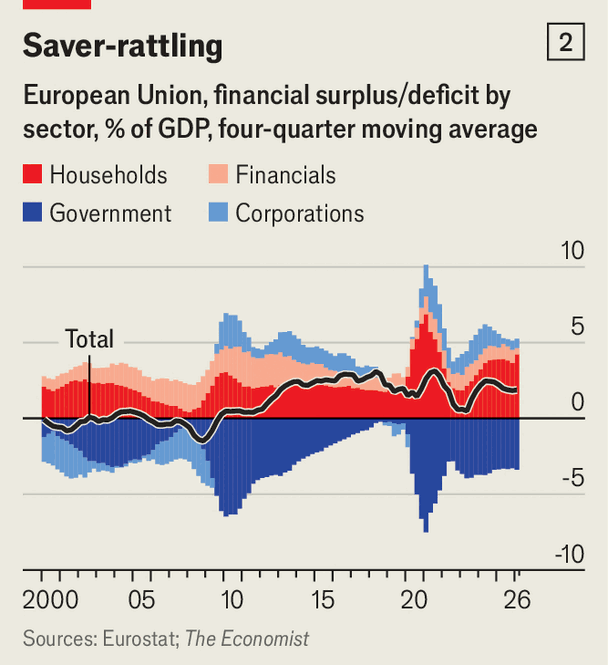
财政压力进一步加剧了欧洲主权债务的融资困境。德国转向举债投资以及法国长期的财政扩张自2025年以来持续推高利率与偿债成本。据惠誉评级估算,法国偿付债券利息占政府财政收入的比重将从2019年的3%跃升至2028年的6%,同期意大利的这一比重也将从7%攀升至8.8%。鉴于欧洲各国的宏观税负占GDP比重已显著高于美国,进一步加税的空间极度受限,而在民粹主义势力崛起的背景下,大幅削减公共支出在政治上也难以推行。
此外,全球资本正被欧洲以外地区的大规模投资所虹吸。美国科技巨头预计在2025年至2030年间投入逾5万亿美元建设人工智能数据中心,据高盛估算,这些企业今年将发行2500亿美元长期债券,2027年发行规模更将达4000亿美元,目前已占据欧元区企业债发行总量的近十分之一,直接与主权债务争夺资金。与此同时,欧洲央行自2022年以来已累计缩表1.2万亿欧元,加之传统养老基金从确定收益型向确定缴费型计划转型并转向高风险资产,接盘的对冲基金要求更为严苛的回报,导致全球高收益率格局将在新宏观周期中长期持续。
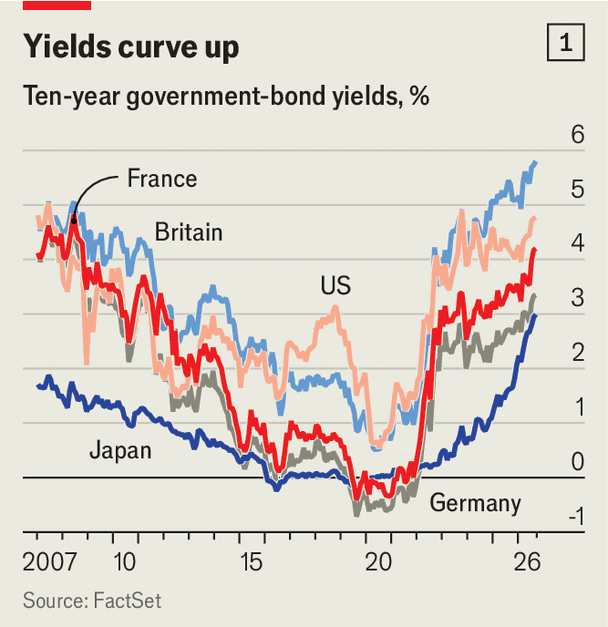
Global sovereign bond markets have experienced severe selling pressure, driving yields sharply higher across major economies. On September 1st, yields on Japan’s ten-year government bonds reached 3% for the first time in three decades, while US 30-year Treasuries hovered near their 19-year peak of 5.31% and equivalent British gilts offered 5.9%, their cheapest levels since 1998. Although European yields remain below their 2008 peaks, German ten-year bund yields surged ahead of their typical seasonal post-August rise of 0.15 percentage points. Unlike demand-driven inflation in America, Europe faces uncontrollable supply-side energy shocks stemming from the Iran war, leading markets to project European Central Bank (ECB) benchmark rates climbing to 2.9% by mid-2027 from 2% prior to hostilities. This supply shock has caused stocks and bonds to tumble simultaneously, eroding diversification benefits and increasing required inflation risk premia.
Europe’s fiscal vulnerabilities are compounding sovereign debt distress. Germany’s shift toward debt-funded capital expenditures alongside persistent French budget deficits have escalated borrowing costs since 2025. Fitch Ratings estimates that debt servicing will absorb 6% of French government revenue by 2028 compared to 3% in 2019, while Italy’s share will increase from 7% to 8.8% over the same timeframe. Because European taxes represent a substantially higher proportion of GDP than in the United States, governments have virtually no scope to raise levies, while curtailing public expenditures remains politically impossible amid the widespread electoral rise of populist factions.
Compounding these challenges, massive capital demands outside Europe are draining liquidity away from European sovereign issuers. Leading American technology firms are projected to spend over $5trn on artificial-intelligence infrastructure between 2025 and 2030. Goldman Sachs projects these tech giants will issue $250bn in long-dated bonds this year and $400bn in 2027, already accounting for nearly one-tenth of all euro-denominated corporate bond issuance and competing directly with sovereign debt. Concurrently, bond supply is swollen as the ECB has shrunk its balance sheet by €1.2trn since 2022, while traditional defined-benefit pension funds rotate into equity-focused defined-contribution schemes, leaving price-sensitive hedge funds to dictate elevated market clearing yields in a structurally higher rate regime.
Source: Europe’s bond markets are suffering a post-holiday shock
Subtitle: Reasons for rising yields differ somewhat from those in America, but are no less problematic
Dateline: Sep 3rd 2026