财政支出放缓对整体投资造成拖累,中国第二季经济成长表现弱于预期。高盛估计,第二季「负面财政冲击」贡献了实质GDP环比降幅的逾40%。基础建设相关支出年减近9%,而教育、医疗及社会保障支出则增长4.9%。
财政部表示将持续推行「更积极」的财政政策,并将加快现有政策落地及合理加快支出步伐。各省预计在第三季大举发行基建债券,尚余约1.9兆人民币的地方债配额待使用;另有8000亿人民币的政策性融资工具亦规划于第三季积极投放,以提振投资与经济成长。
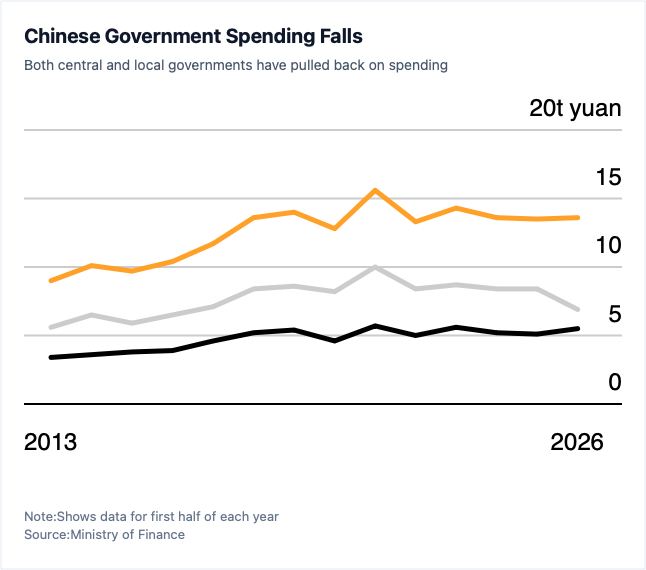
China's public spending fell 11.9% in June from a year earlier, the steepest drop since October, signaling further fiscal tightening even as the economy slows. The broad deficit in the first half shrank 13% year-on-year to 4.57 trillion yuan, and Goldman Sachs estimates the fiscal drag accounted for more than 40% of the sequential GDP growth decline in the second quarter.
Infrastructure-related spending under the general public budget dropped nearly 9% in April-June, while combined outlays on education, healthcare, and social security rose 4.9%. On the revenue side, total income rose 1.8% in June, supported by a recovery in industrial prices, stronger corporate earnings, and a near-doubling of stamp duty revenue from stock trading, though land sales by local governments slumped 31.5%.
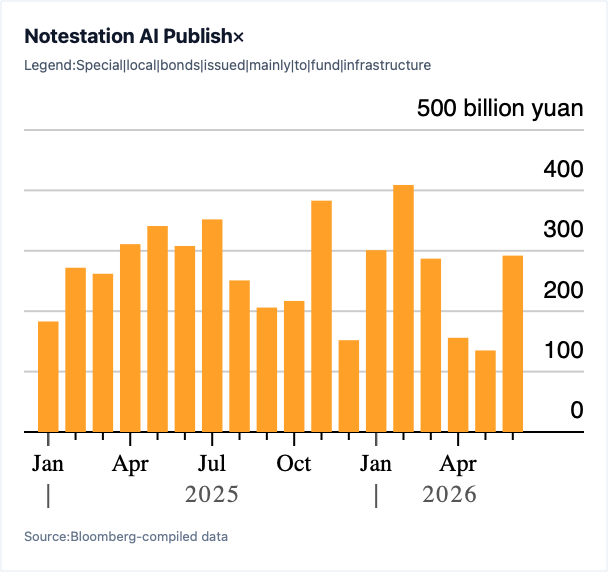
The Ministry of Finance pledged to accelerate spending in the second half, and Chinese provinces still hold nearly 1.9 trillion yuan in remaining bond quota for infrastructure investment. An additional 800 billion yuan in new policy financing tools is set for aggressive deployment in the third quarter. Analysts widely expect the upcoming Politburo meeting to reinforce easing rhetoric and expedite demand-side stimulus, though resilient exports and an still-achievable full-year growth target of 4.5%-5% reduce the urgency for large-scale immediate measures.