我们的母星系银河系是透过吞噬较小的星系而成长至现今规模的。最近,NASA 和 ESA 的哈伯太空望远镜提供了明确的证据,表明在银河系演化的最早期阶段,有一个名为 LKH 的矮星系与年轻的银河系发生了合并。这项发表在《自然天文学》上的新发现,将我们对银河系历史的了解向更久远的过去推进了18亿年。
随著科学家试图回溯更久远的星系历史,辨识合并的痕迹变得更加困难。研究团队利用哈伯望远镜观测了银河系内部的39个球状星团,这些星团就像宇宙的考古遗址,保存著来自其他星系的古老恒星。透过精确测量这些星团的年龄和金属含量,研究人员成功区分出了一组与众不同的球状星团。
这些独特的星团比起100亿年前的盖亚-香肠-恩克拉多斯合并事件还要古老。它们来自约118亿年前的一场更早期的合并,当时银河系吸收了 LKH 矮星系,其恒星质量大约是太阳的5亿倍。这一发现表明,在银河系演化的最早期阶段,外部星系诞生的恒星也扮演了关键角色。
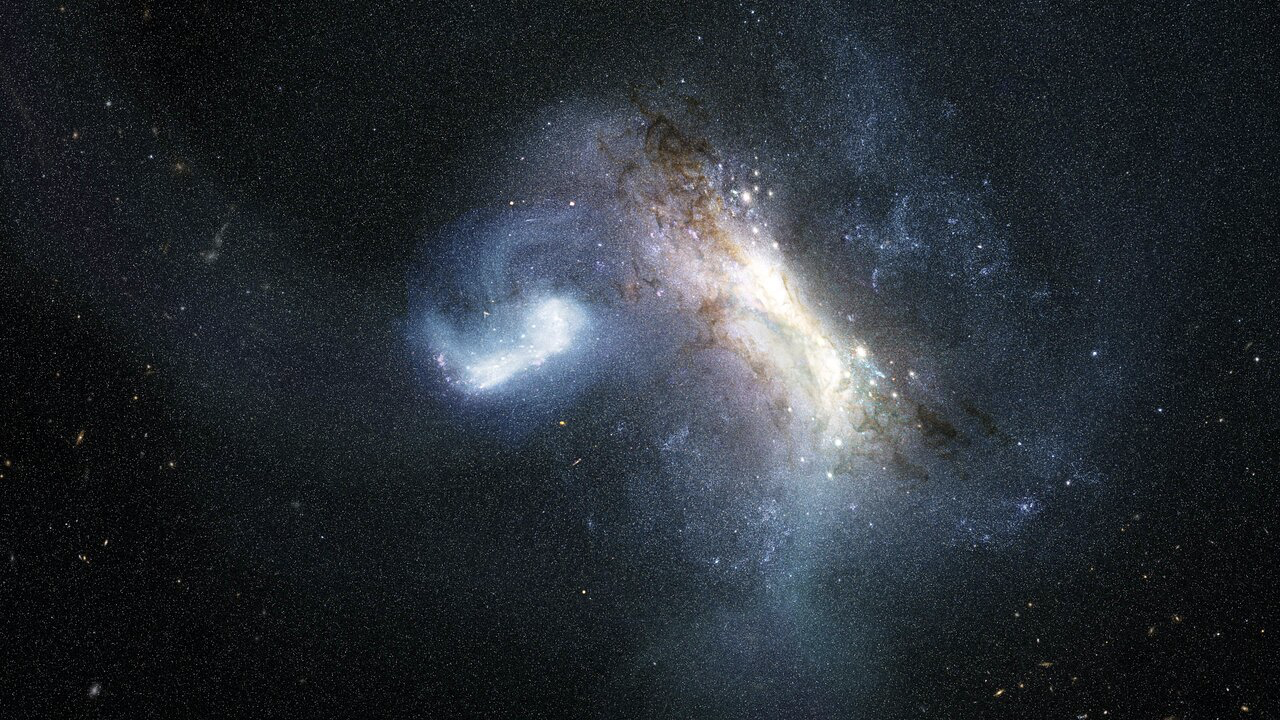
Our home galaxy, the Milky Way, grew to its current size by consuming smaller galaxies. Recently, the NASA/ESA Hubble Space Telescope provided definitive evidence of a dwarf galaxy named LKH merging with the young Milky Way during its earliest evolutionary phases. This new discovery, published in Nature Astronomy, pushes our understanding of the galaxy's history 1.8 billion years further back in time.
As scientists attempt to look further back into the galaxy's history, identifying signs of past mergers becomes increasingly difficult. The research team used the Hubble telescope to observe 39 globular clusters in the inner Milky Way, which act as cosmic archaeological sites preserving ancient stars from other galaxies. By precisely measuring the age and metal content of these clusters, researchers successfully distinguished a unique population of globular clusters.
These distinct clusters are older than those from the Gaia-Sausage-Enceladus merger that occurred 10 billion years ago. They originated from an even earlier merger about 11.8 billion years ago, when the Milky Way absorbed the LKH dwarf galaxy, which contained a stellar mass about 500 million times that of the Sun. This finding demonstrates that stars born in external galaxies also played a crucial role in the earliest phases of the Milky Way's evolution.