根据《自然》杂志的一篇新论文,天文学家透过韦伯太空望远镜(JWST)发现了一种被称为「黑洞星」的奇特天体。这个位于早期宇宙的物体大小与我们的太阳系相当,并在深空中发出明亮的红光。
这个名为 MoM-BH*-1 的天体虽然外观像是一颗巨大的恒星,但其释放的能量却是核融合所能产生极限的一千亿倍。此外,它发出的光有一部分会突然消失,科学家认为这是因为黑洞周围存在著极其致密的气体包层吸收了光线。
黑洞星的假说为 JWST 在早期宇宙中频繁发现的神秘红点提供了解释。与其他红点不同,MoM-BH*-1 的黑洞光芒几乎完全掩盖了其宿主星系,让科学家得以观察到纯粹的黑洞星光,这项发现将改变我们对宇宙的认知。
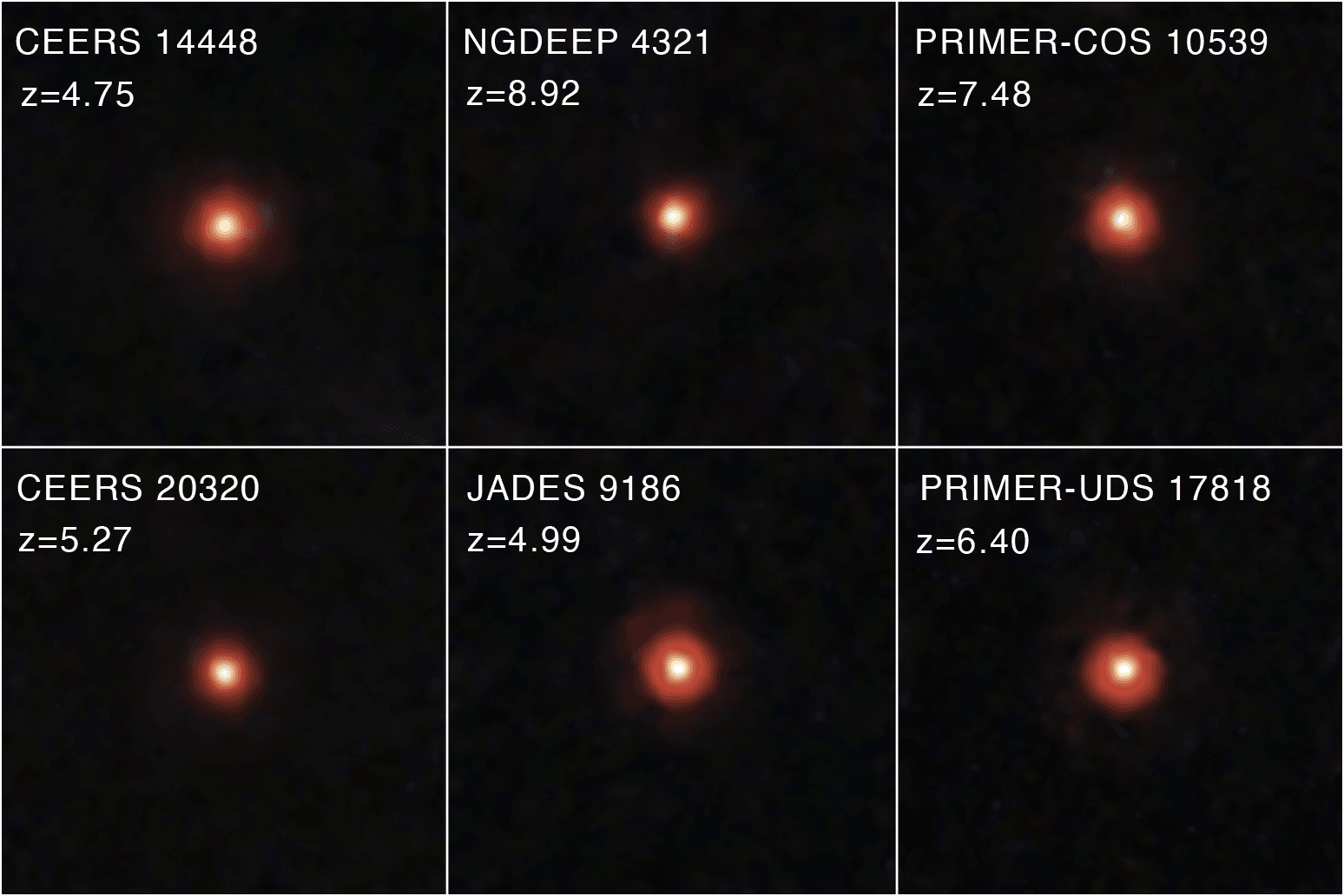
According to a new paper in Nature, astronomers have discovered a peculiar celestial body dubbed a "black hole star" using the James Webb Space Telescope (JWST). This object, located in the early universe, is the size of our solar system and emits a bright red glow in deep space.
The object, known as MoM-BH*-1, appears to be a gigantic star but releases 100 billion times more energy than nuclear fusion could produce. Furthermore, part of its light abruptly disappears, which scientists attribute to an extraordinarily dense envelope of gas surrounding the black hole absorbing the light.
The black hole star hypothesis provides an explanation for the mysterious red dots frequently found by JWST in the early universe. Unlike other red spots, the light from MoM-BH*-1's black hole almost completely outshines its host galaxy, allowing scientists to observe pure black hole starlight and potentially changing our understanding of the cosmos.