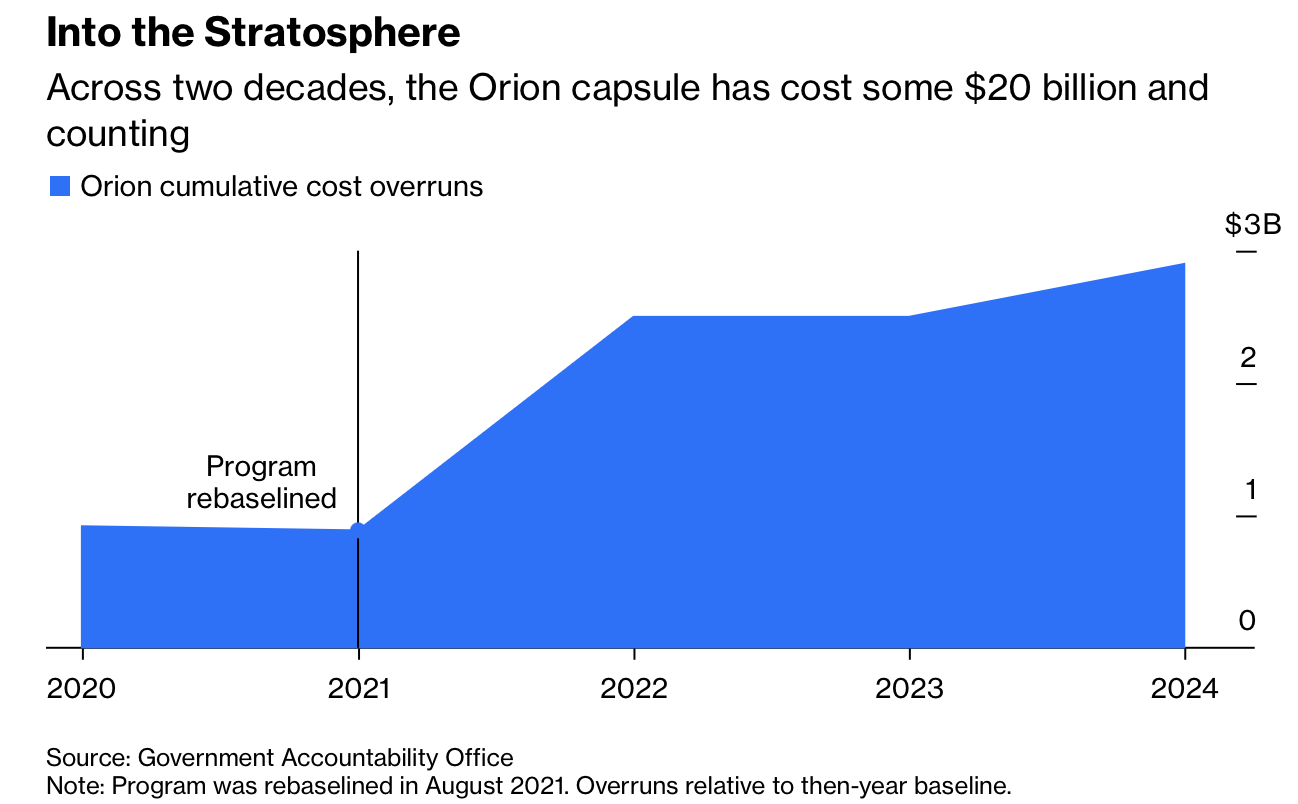
风险集中在Orion。其研发跨约20年,成本已超过200亿美元;至少自2009年起即有专家警示其缺陷,且生命维持系统关键部件尚未完全测试。2022年无人试飞中,分离螺栓出现异常熔融与侵蚀,配电系统在飞行中回报约二十多次中断;事后监察报告亦列出硬体、软体、影像、电路、电池、发射碎片等多项问题。最关键的是再入热盾:再入速度约25,000英里/小时(约40,200公里/小时),外层涂层困气导致意外裂纹、材料烧蚀流失与碎屑尾迹;NASA以模拟替代再次试飞,并以改变再入路径作为操作性绕行,监察报告警告此举可能引入新的失效或未知数。
整体层面,Artemis被描述为成本飙升且延宕:总成本约1,000亿美元且仍在增加,每次SLS发射成本超过40亿美元;文章暗示高沉没成本可能促使决策接受本可避免的风险,并援引Diane Vaughan对Challenger事故的「normalization of deviance」概念,指风险会在一次次合理化偏差中累积。讽刺在于,行政部门最新预算请求已主张在登月后淘汰现行Artemis架构,转向更具成本效益的商业系统;因此当前高风险高成本飞行被用来验证一套被判定走向淘汰的设计。
The piece frames NASA’s Artemis plan around a near-term crewed flight: next month, four astronauts are expected to fly the Orion capsule on the Space Launch System (SLS), leave low-Earth orbit for the first time since 1972, and conduct an ~10-day lunar flyby. The central claim is that the mission’s risk level is higher than necessary given the program’s technical and managerial history.
Risk is concentrated in Orion. After ~20 years of development, costs exceed $20 billion; experts have warned of deficiencies since at least 2009, and key life-support elements remain not fully tested. In the 2022 uncrewed test, separation bolts showed unexpected melting/erosion, and the power-distribution system logged roughly two dozen in-flight disruptions; an inspector-general review also cited issues spanning hardware, software, imagery, circuitry, batteries, and launch debris. The most critical concern is the heat shield needed for reentry at 25,000 miles per hour (≈40,200 km/h): trapped gases in the outer coating produced cracking, “char loss,” and a debris trail. NASA chose simulation over another test flight and adopted an operational workaround by altering the reentry path, with the warning that changes can introduce new failures or unknowns.
At the program level, Artemis is presented as a cost-and-delay spiral: about $100 billion and rising, with each SLS launch exceeding $4 billion. The argument is that sunk costs can bias decisions against additional testing, aligning with Diane Vaughan’s “normalization of deviance,” where successive rationalized deviations accumulate risk. The stated irony is that the executive branch’s latest budget request calls for scrapping the current Artemis architecture after a moon landing in favor of more cost-effective commercial systems, making the expensive, risky flight a test of a design already judged obsolete.