首尔住房危机已成为韩国最重要的政治与经济问题之一。2024年大首尔地区房价收入比升至8.7,公寓价格在过去一年上涨9%,为近20年来最快增速。韩国超过一半人口居住在大首尔地区,住房需求长期高于供应。总统李在明自2025年6月上任后推出多项措施遏制投机,包括收紧按揭贷款、要求新购房屋必须自住两年,以及计划在5月取消多套房业主出售房产的资本利得税豁免。
韩国住房市场结构也加剧了价格压力。私人房东而非机构投资者提供首尔超过86%的租赁住房供应,许多采用“全租”(jeonse)制度,即租户支付一次性巨额押金而非月租。近年来首尔全租押金平均约5.9亿韩元(约40万美元),使许多居民难以承担。由于部分房东无法退还押金的风险增加,更多租客转向“月租”(wolse)模式,其交易占比已升至约60%,比五年前提高超过20个百分点。与此同时,独居人口增长至首尔家庭的近40%,吸引机构投资支持的企业房东进入市场。
政府政策目前获得一定公众支持。民调显示,十年来首次有超过一半韩国人认可总统的住房政策,也有类似比例认为房价最终会下降,但租金可能上涨。市场已出现初步变化,例如江南等高端地区房价开始趋稳。然而人口结构变化才可能带来更大供应:约15年内,首尔大量婴儿潮一代将接近平均寿命,其住房将逐步进入市场。尽管这种人口趋势可能缓解住房紧张,但速度可能不足以在短期内解决李在明政府面临的政治压力。
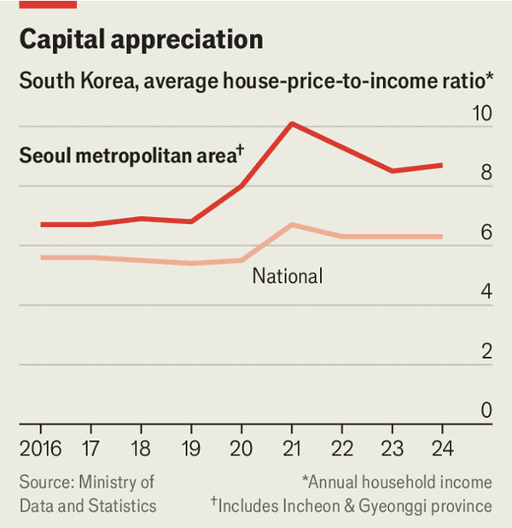
Seoul’s housing crisis has become one of South Korea’s most significant political and economic challenges. In 2024 the house-price-to-income ratio in the greater Seoul area reached 8.7, and apartment prices rose 9% over the past year, the fastest increase in nearly two decades. More than half of South Korea’s population lives in the greater Seoul region, keeping housing demand far above supply. Since taking office in June 2025, President Lee Jae Myung has introduced measures to curb speculation, including tighter mortgage rules, a requirement that newly purchased homes be owner-occupied for two years, and the planned expiration in May of capital-gains-tax exemptions for owners of multiple properties.
The structure of South Korea’s rental market also contributes to price pressure. Individual homeowners rather than corporations provide over 86% of Seoul’s private rental housing. Many rely on the jeonse system, under which tenants pay a large deposit instead of monthly rent. In recent years the average deposit in Seoul has been about 590m won (around $400,000), placing such housing beyond the reach of many residents. Concerns that some landlords fail to return deposits have pushed renters toward the wolse system of monthly payments, which now accounts for about 60% of rental transactions, up by more than 20 percentage points from five years ago. Meanwhile nearly 40% of Seoul households consist of single residents, attracting institutional investors into the rental market.
Government policies currently enjoy some public support. For the first time in a decade of polling, more than half of South Koreans approve of the president’s housing policies, and a similar share expect home prices eventually to fall, though rents may rise. Early market signals show moderation, with prices in upscale districts such as Gangnam stabilizing. However demographic change may ultimately reshape supply: within about 15 years many baby-boomers living in Seoul will approach the country’s average life expectancy, eventually releasing more housing into the market. Although this demographic shift could ease shortages, it may occur too slowly to relieve the immediate political pressure facing Lee’s presidency.