尽管ChatGPT在三年半前就已推出,但学术界经济学家在研究AI方面依然迟缓,NBER关于该主题的研究论文比例上升缓慢。相比之下,2020年的新冠疫情瞬间吸引了NBER近三分之一的工作论文,而经济学家对AI持怀疑态度,只有11%的人认为它将在未来十年内显着提高发达国家的失业率。
这种怀疑态度体现在增长预测中:在AI快速进展的情景下,中位数经济学家预计2050年美国GDP增速仅为3.5%,而AI研究人员的预测为5.3%。因此,AI经济学正在转向私营部门,吸引了数十位学术界经济学家加入Anthropic和OpenAI等大型实验室,那里的年薪起步为30万美元。
这一迁移反映了更广泛的趋势:在工业界工作的AI研究人员比例从2001年的不足一半增长到2019年的三分之二以上。尽管企业经济学家产出了引人注目的研究(例如绘制了在2024年和2025年均飙升超过2000%的“AI GDP”),但他们的流向引发了对利益冲突以及从开放科学向专利创新转变的担忧。
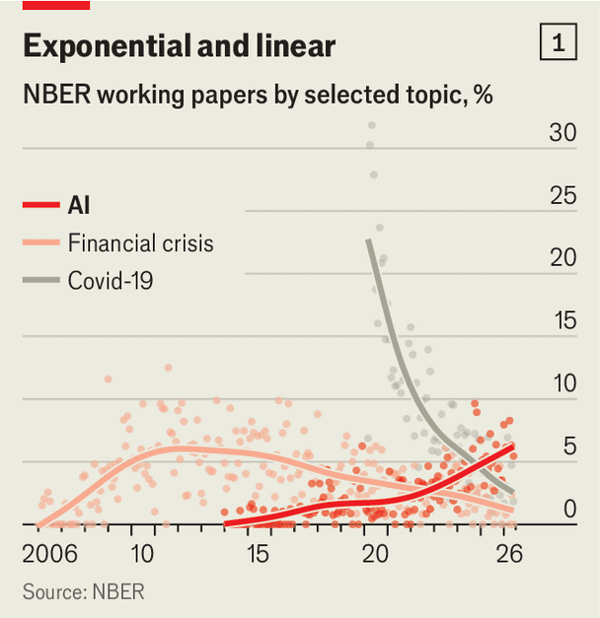
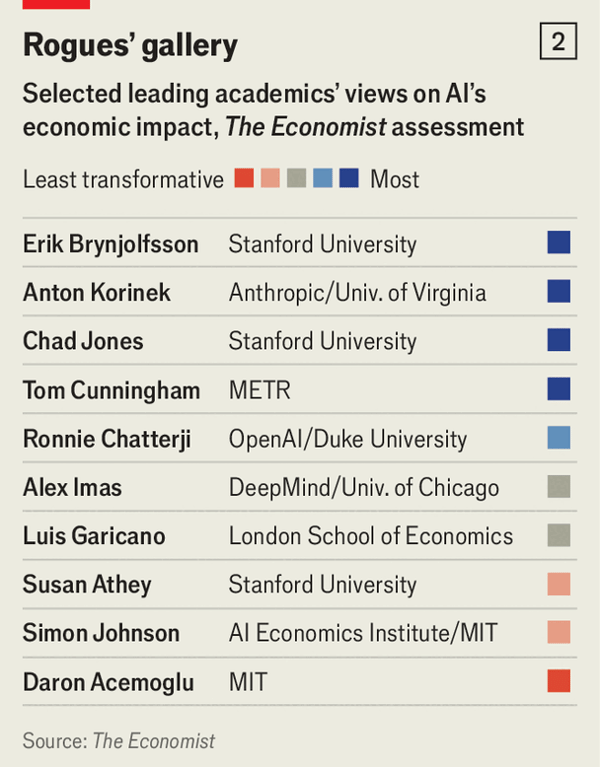
Despite the launch of ChatGPT three and a half years ago, academic economists remain slow to study AI, with the share of NBER research papers on the topic rising slowly. While 2020's COVID-19 pandemic instantly captured nearly one-third of NBER working papers, economists are skeptical about AI, with only 11% believing it will substantially raise unemployment in advanced countries over the next decade.
This skepticism is reflected in growth forecasts: under a rapid AI progress scenario, the median economist expects US GDP growth of just 3.5% in 2050 compared to the 5.3% predicted by AI researchers. Consequently, AI economics is shifting to the private sector, drawing a few dozen academic economists to major labs like Anthropic and OpenAI, where salaries start at $300,000.
This migration mirrors a broader trend where the share of AI researchers in industry grew from under half in 2001 to over two-thirds by 2019. While corporate economists have produced notable research, such as mapping an "AI GDP" that surged by over 2,000% in 2024 and 2025, their relocation raises concerns about conflicts of interest and a shift from open science to proprietary innovation.
Source: Meet the world’s top AI-pilled economists
Subtitle: Most of them are not found in ivory towers
Dateline: 6月 18, 2026 03:54 上午 | Paris