英国人的储蓄率近年来大幅上升,2025年第二季度达到了10.7%,高于2000年至2019年平均的7.3%,但仍低于欧元区的15.4%。虽然短期内高储蓄可能抑制消费和经济增长,但从长远来看,这意味着有更多资金可用于公共和私人投资——这是英国提高生产力亟需的。储蓄增加主要受利率上升推动,预计未来随着利率下降,储蓄率可能会有所回落,但仅有20%的受访者将高利率列为储蓄增加的主要原因。
37%的人表示,储蓄增加源自两个更持久的动因:一是通胀上升后重建财富的需要,二是风险厌恶情绪上升。自2016年脱欧公投以来,英国经济大幅波动;新冠疫情和通胀进一步加剧了不确定性。这些不稳定促使人们更重视储蓄以应对未来可能的困难。高储蓄是否成为常态,取决于人们对经济冲击记忆的持续时间。历史经验表明,重大经济创伤可能长久影响国家储蓄行为。
如果储蓄持续上升,英国投资或将复苏。高储蓄未必自动转化为更高总投资,但通常本国储蓄高的国家,国内投资也较多。储蓄还让个人有能力建立应急基金和养老金,英国对此尤为迫切:政府估算,超过40%的成年人养老金储蓄不足。然而,财政大臣蕾切尔·里夫斯正考虑加重储蓄税,限制免税储蓄额度,这可能削弱新形成的储蓄习惯。若想从高储蓄中获益,政府政策需与之协同,而非相反。
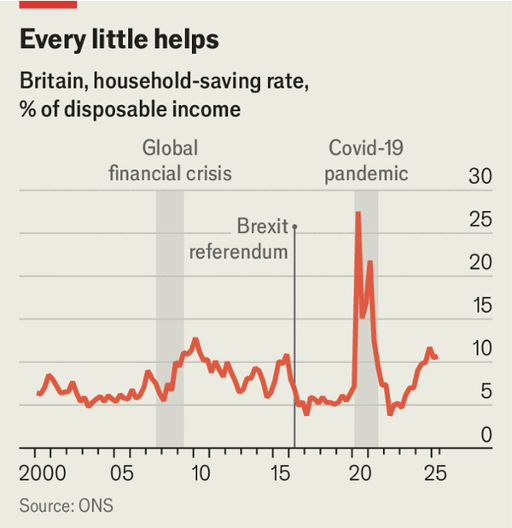
Britons’ household saving rate has risen sharply to 10.7% in Q2 2025, above the 2000-19 average of 7.3% but still lower than the euro zone’s 15.4%. While higher saving can dampen consumption and growth short-term, over time it enables more public and private investment—critical for boosting UK productivity. The current uptick is largely driven by higher interest rates, but with only 20% of surveyed people citing rates as their main motive, savings rates may fall as rates do, though this doesn’t explain the full trend.
Instead, 37% say increased saving is due to two longer-term causes: rebuilding wealth after the inflation surge and rising risk aversion. Since the 2016 Brexit vote, Britain has endured major economic volatility, intensified by the pandemic and inflation, making people more inclined to save for uncertainty. Whether these higher savings persist depends on how long memories of recent shocks last—historic traumas can shift national saving habits for generations.
If higher savings endure, British investment could revive. Higher saving won’t automatically lift total investment, but countries with greater domestic savings usually invest more at home. Saving also helps individuals build emergency funds and pensions, which is crucial since the government estimates over 40% of adults are not saving enough for retirement. Yet, Chancellor Rachel Reeves is reportedly planning to tax savings more, risking reversal of recent gains. To reap the benefits, government policy should encourage, not penalize, sustained thrift.