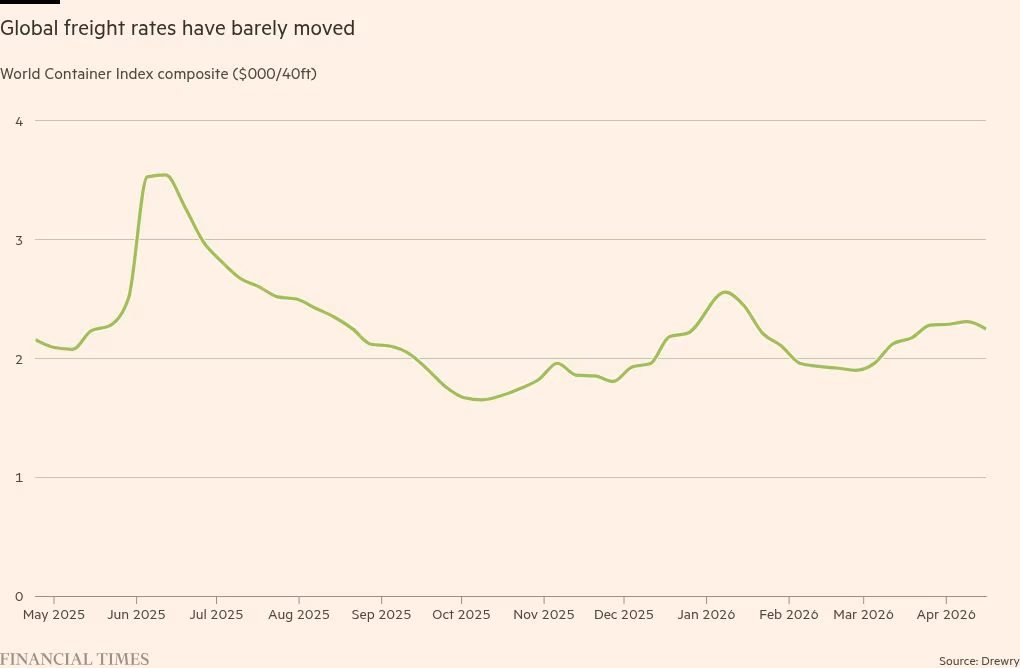
早期对航运本身将会“冻结”的担忧同样没有成真。全球不足 3% 的集装箱贸易经过霍尔木兹海峡,这对最终用户虽具不便,但对全球化体系并非生死攸关。可见的摩擦主要集中在船舶燃料与保险附加费,属于正常的成本转嫁议价,并未损害核心运作。进入海湾的运费虽大幅上升,但全球货运费率几乎没有变化,且上周反而下跌。Drewry 的基准情境(扰动持续到 6 月)预测只有由燃料附加费主导的暂时性上冲,全球运量只出现小幅下降,主要集中在流向中东,且供应链可能快速适应。
战争初期,集装箱物流仍有富余运力;与 Covid 后需求回升期间不同,并不存在明显的货物需求“反弹”高涨。先前被担忧的场景,如东亚转运港因改道货物流量而堵塞,至今未出现。更即时的威胁现在反而来自空运:jet fuel 上涨已推高空运费,若燃料供应进一步受限,压力可能更大,而海运在相对程度上较少受影响。文章核心观点是,全球贸易系统目前帮助经济吸收能源冲击,而非成为新的系统性破坏源,这使 Donald Trump 在更广泛经济损害迫使让步前,还拥有更多时间。
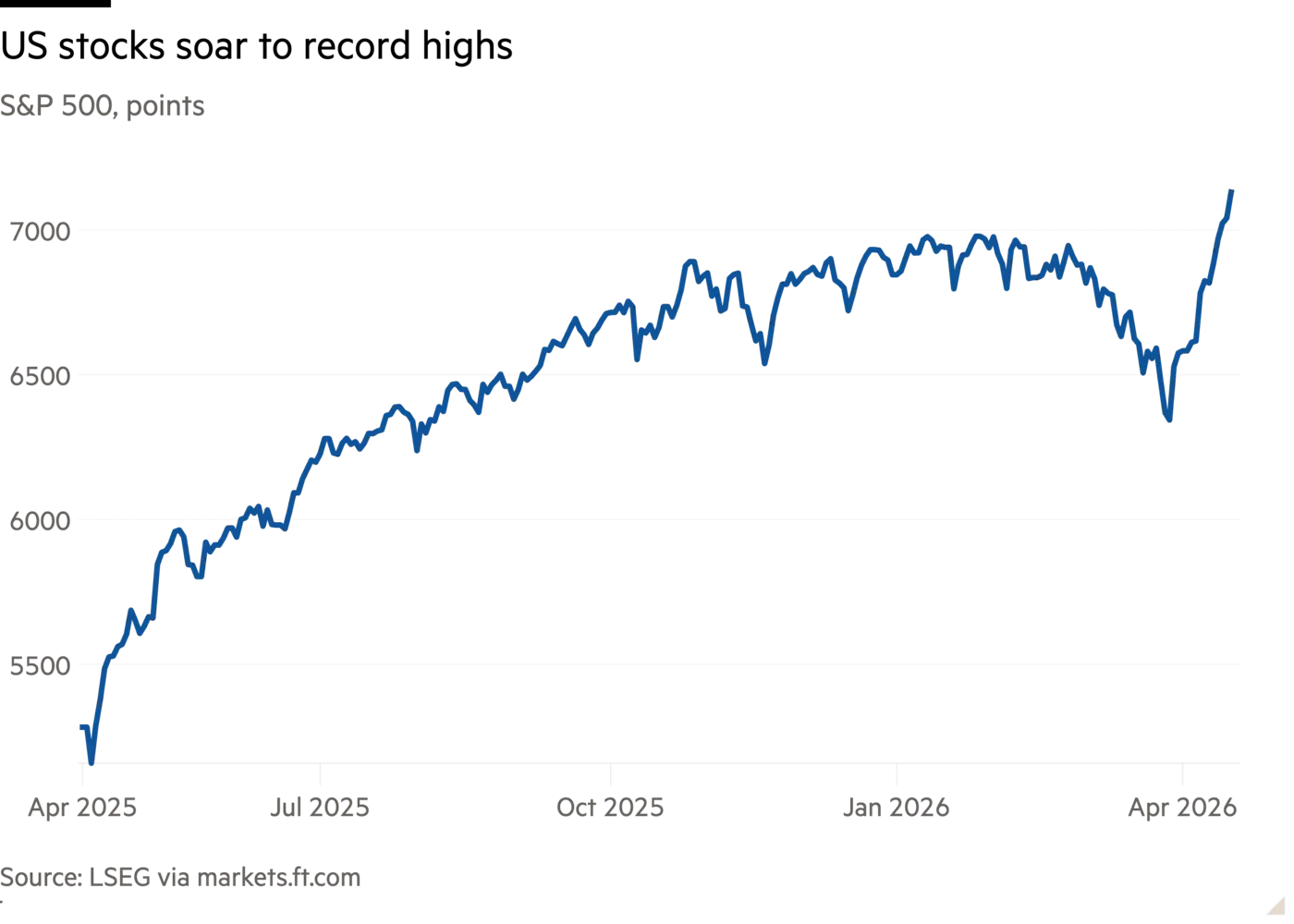
The latest weeks in the Strait of Hormuz moved from Friday optimism to a renewed double blockade and then a U.S. claim it had seized an Iranian ship, and the dispute now revolves around whether Donald Trump, Mojtaba Khamenei, and the Islamic Revolutionary Guard Corps can absorb more pain than the other side. Decades of sanctions have left Iran only weakly embedded in global trade, so in relative terms the disruption hurts Washington’s equities, oil prices, and broader economy more than Tehran’s. Since the conflict began, markets have been pricing a quick end to the stand-off, implying confidence that the shock is temporary rather than a long-term break in trade and output.
Early fears that shipping itself would seize up have also not materialized. Less than 3 per cent of global container trade passes through the Strait, which is annoying for end-users but not existential for the globalisation system. The visible frictions were mainly over bunker-fuel and insurance surcharges, normal cost pass-through bargaining that does not impair core operations. Gulf rates rose sharply, yet global freight barely moved and even fell last week. Drewry’s base-case forecast through June sees only a temporary spike, driven mostly by fuel surcharges, with only a modest dip in global volumes—especially into the Middle East—and a likely quick supply-chain adjustment.
At the start of the war, container logistics still had spare capacity and, unlike the post-Covid reopening phase, there is no obvious pent-up boom in goods demand. Alarmist scenarios such as East Asian transshipment congestion from rerouted Gulf traffic have so far not appeared. A more immediate threat is air freight: rising jet-fuel prices are already lifting air rates and could tighten further if fuel supplies tighten, while sea freight remains comparatively insulated. The core point is that global trade is currently helping the economy absorb the energy shock rather than creating a new systemic disruption, giving Donald Trump additional time before broader economic damage forces concessions.