中国治理空气污染的第一阶段成效显著,但改进速度明显放缓。基于卫星与人口加权数据,2013 至 2021 年 PM2.5 从每立方米 66 微克降至 33 微克,年均下降 4.2 微克;但 2021 至 2024 年年均降幅仅剩 0.5 微克。也就是说,后期改善速度约为前期的八分之一,表明在 2014 年“向污染宣战”之后,最容易取得的减排成果已基本耗尽。
放缓的原因既有技术结构,也有外部条件。早期治理主要依赖“末端治理”,如给电厂烟囱加装净化设备,这类低垂果实已经收完;下一阶段要求从源头改变行为,例如交通电气化,难度和成本都更高。天气也会放大波动:2020 年强风和降雨帮助降低污染,但 2023 年北方沙尘暴使北京 PM2.5 飙升逾 30%。与此同时,公众压力减弱;中国已连续多年达到 2012 年设定的全国标准,即 PM2.5 年均不高于 35 微克。
当局如今正重新收紧标准。生态环境部 2 月 24 日宣布,平均 PM2.5 限值将从 35 降至 25 微克;3 月 1 日起先实行 30 微克的“过渡”标准,2031 年起全面实施 25 微克标准。但这仍远高于 WHO 2021 年提出的 5 微克指导值。污染的健康负担依然巨大:2021 年 PM2.5 导致中国 230 万人死亡,占全部死亡的 19%。核心矛盾因此变得更尖锐:继续快速减污有健康收益,但更严格监管也可能压低经济增长。
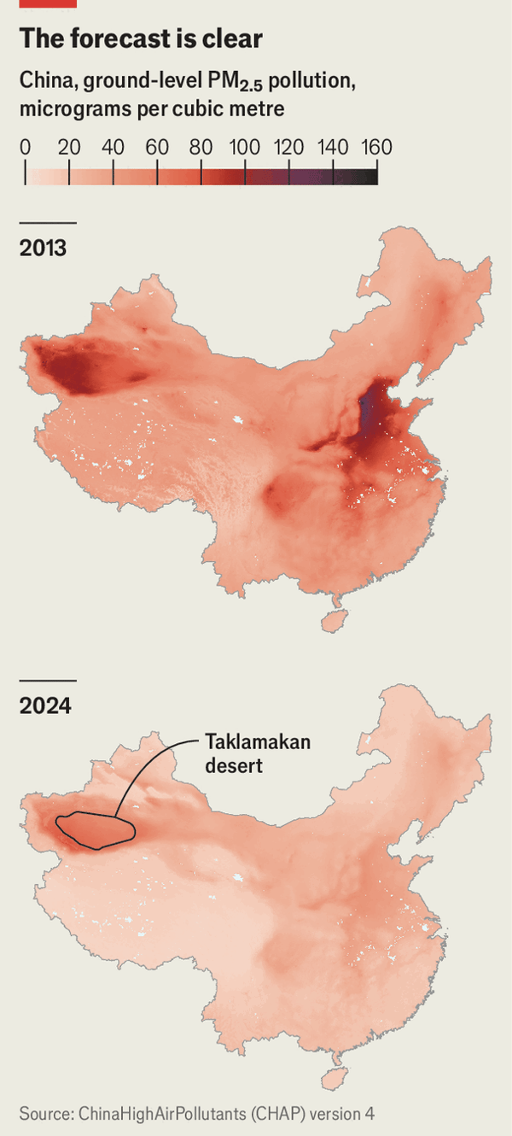
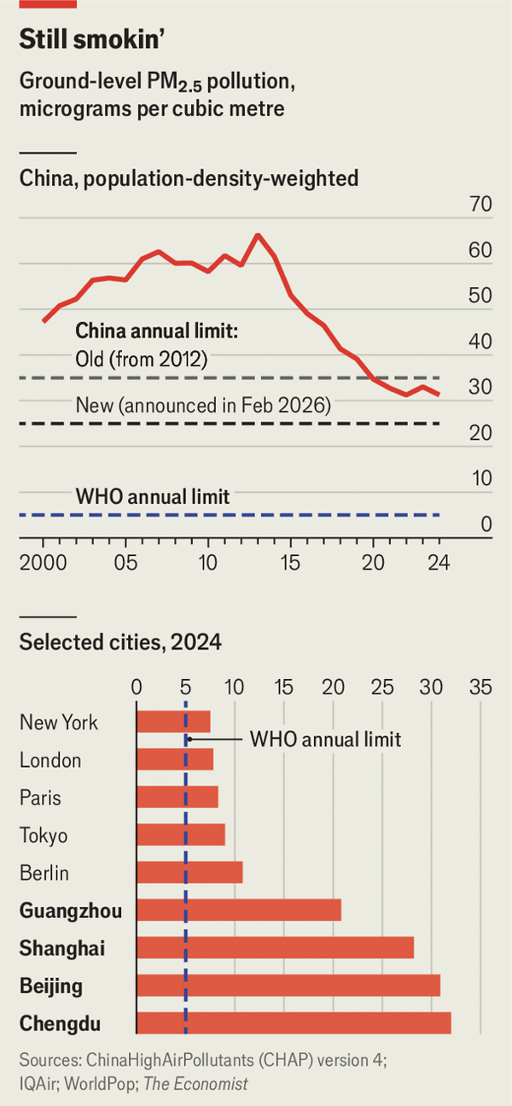
China’s first phase of air-pollution control delivered large gains, but improvement has slowed sharply. Using satellite and population-weighted data, PM2.5 fell from 66 micrograms per cubic metre in 2013 to 33 in 2021, an average decline of 4.2 a year; from 2021 to 2024, however, the annual decline was only 0.5. That means the later pace was about one-eighth of the earlier rate, suggesting that after the 2014 “war on pollution”, the easiest reductions had largely been exhausted.
The slowdown reflects both technical structure and external conditions. Early progress relied heavily on “end-of-pipe” fixes, such as scrubbers on power-plant chimneys, and those low-hanging gains are mostly gone; the next phase requires source-level change, such as transport electrification, which is harder and costlier. Weather also drives volatility: strong winds and rainfall helped in 2020, but dust storms in 2023 pushed Beijing’s PM2.5 up by more than 30%. At the same time, public pressure has eased; China has met its 2012 national annual PM2.5 limit of 35 for several years.
Officials are now tightening standards again. On February 24th the environment ministry said the average PM2.5 limit would fall from 35 to 25 micrograms; a transitional 30-microgram limit began on March 1st, with the full 25-microgram cap taking effect in 2031. Even so, that remains far above the WHO’s 2021 guideline of 5 micrograms. The health burden is still huge: in 2021, PM2.5 caused 2.3m deaths in China, or 19% of all deaths. The central trade-off is therefore sharper: faster cleanup brings health gains, but stricter regulation could also weigh on economic growth.