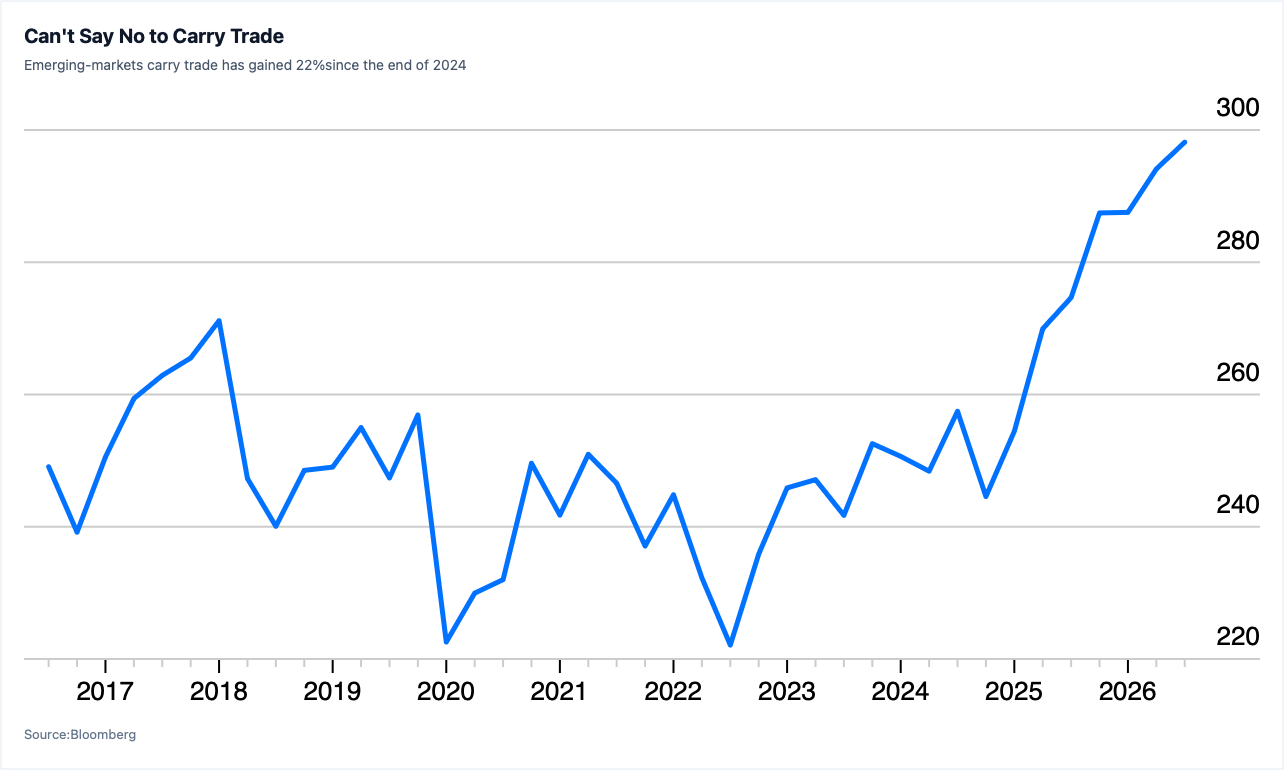
除了AI热潮带来的分歧,套利交易的吸引力也支撑了新兴市场的表现。投资人借入低成本货币(如日圆)并投入高收益新兴市场资产,该策略自2024年底以来已取得约22%的报酬率,并实现连续七个季度的正资本利得,为新兴市场资产提供了强劲的资金支撑。
最后,市场开始对已开发国家脆弱的财政可持续性进行定价,例如法国的预算谈判、日本激增的长期借款成本以及美国高达40兆美元的联邦债务;相反地,曾经历多次债务危机教训的新兴市场(如阿根廷)如今采取了稳固财政的艰难措施,推动其主权信用评级获得调升并引领资产表现。
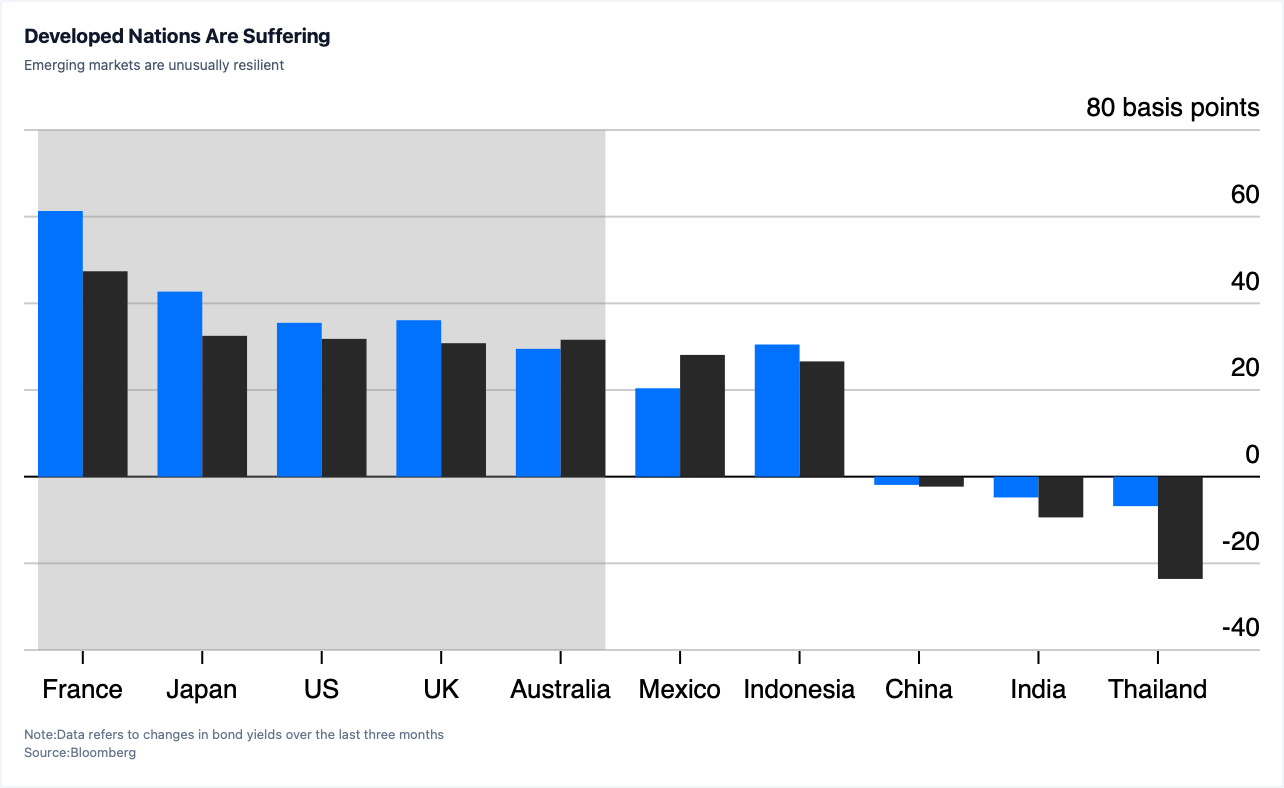
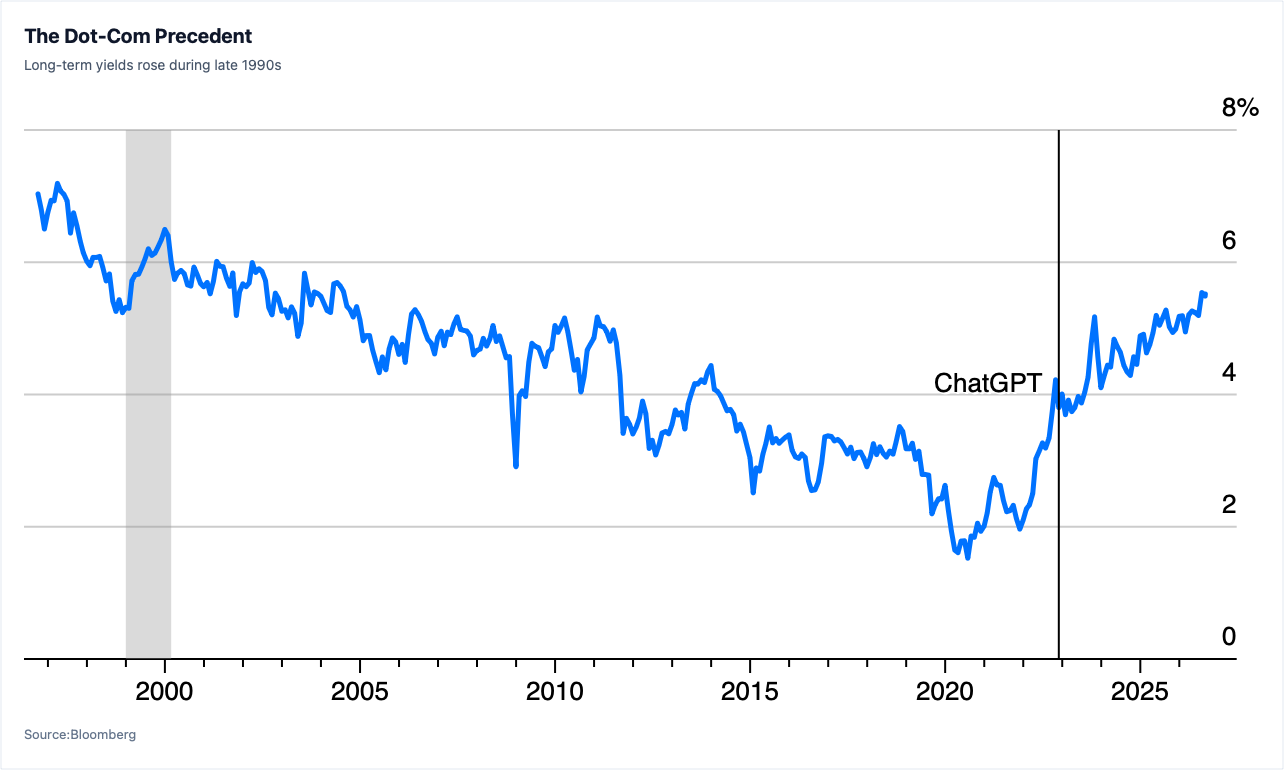
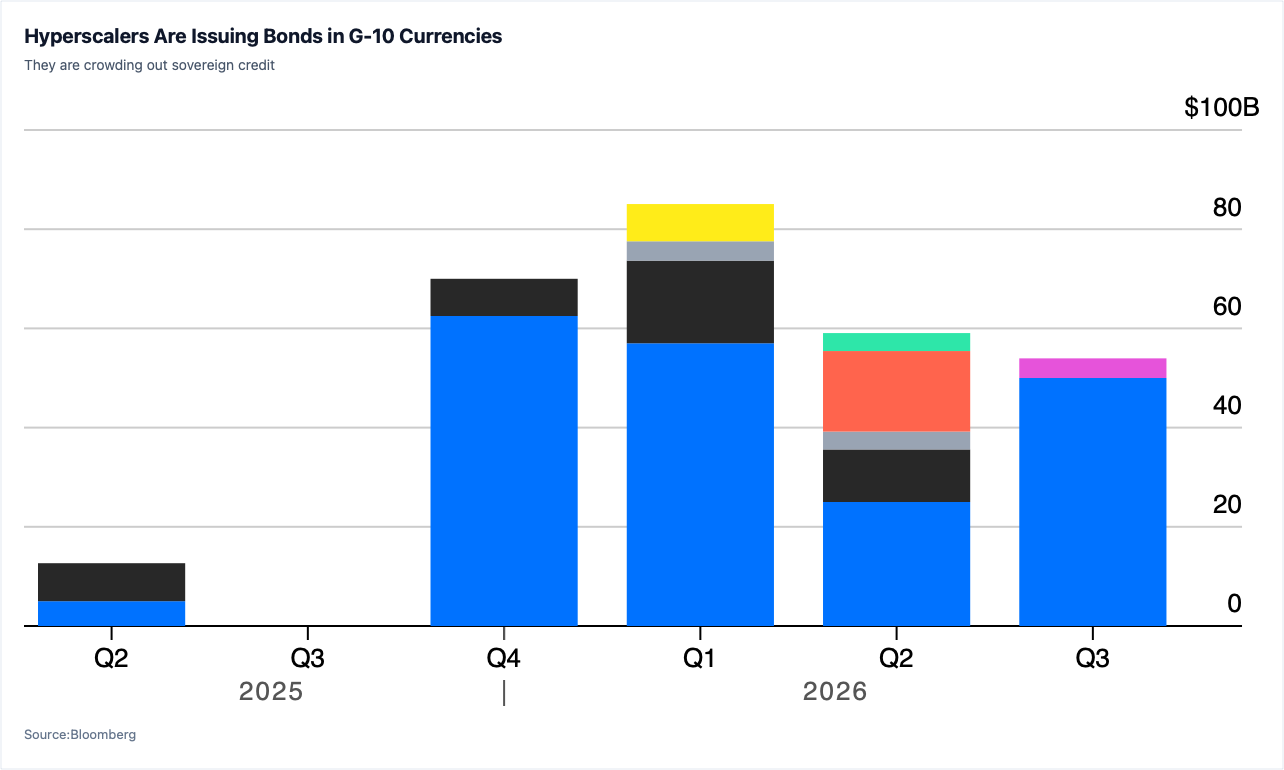
Global bond yields have surged to their highest levels in nearly two decades, elevating mortgage repayments and corporate borrowing costs, yet emerging markets have demonstrated unusual resilience. The AI-driven investment cycle is structurally pushing up interest rates in developed nations, while massive bond issuance by tech hyperscalers has created a reverse crowding-out effect on sovereign debt in major economies, leaving emerging markets largely shielded.
Beyond the AI divergence, the allure of the carry trade continues to heavily support emerging market performance. Investors borrowing cheaply in low-yielding currencies like the Japanese yen to fund purchases of higher-yielding emerging-market assets have generated returns of around 22% since late 2024, achieving positive capital gains for seven consecutive quarters.
Finally, financial markets are increasingly pricing in the precarious fiscal sustainability of advanced economies—highlighted by France's budget friction, Japan's soaring borrowing costs, and the $40 trillion US debt burden—whereas emerging economies like Argentina are actively enforcing fiscal discipline and reaping sovereign credit upgrades after decades of past penalties.