如今,古巴普通民众几乎无法维持生计。官方的平均月薪为6,506比索(按非正式汇率算仅为14.46美元),大部分专业人士仅此收入,而清洁工和博物馆看护员只有2,500比索(约5美元)。但30个鸡蛋售价2,800比索,米和豆每公斤售价650和300比索,低收入者需工作十天才能买这两种主食。89%的家庭生活在极端贫困中,70%每天至少少吃一顿饭,58%的70岁以上老人月收入低于4,500比索,仅3%的人能在药店买到所需药品。
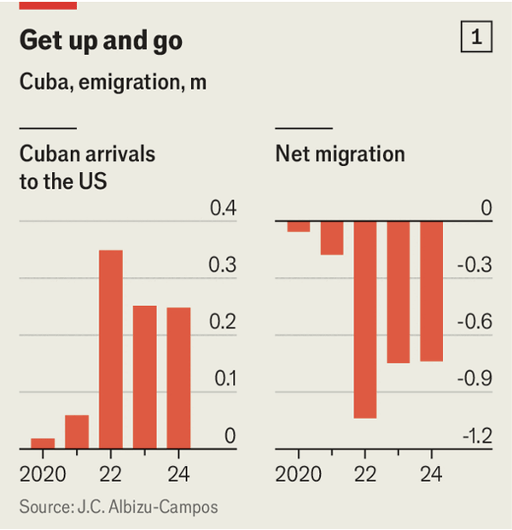
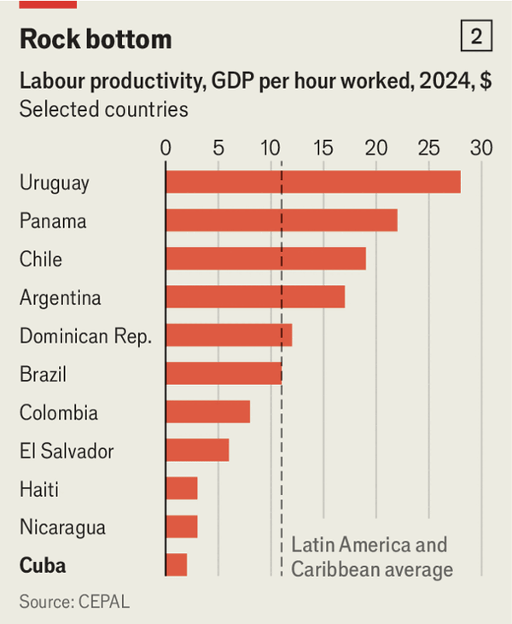
公共交通几乎瘫痪,加油站缺油或仅收美元,40升汽油售价46美元,远超月薪。过去五年约有四分之一人口出走,2023年有78.8万人移民。专业阶层大规模流失,去年家庭医生人数减半,古巴芭蕾舞团人员也减半。拉美和加勒比地区劳动生产力排名古巴垫底,糖产量跌至150,000吨,为一百年来最低。旅游业也未从疫情后复苏,大型酒店基本空置。
比索兑美元汇率自2019年从20:1贬到450:1,通胀维持在15%,经济自2019年以来萎缩11%。私营企业成为唯一亮点,自2021年允许成立以来,现占零售贸易55%、劳动力的三分之一,但政府对私营经济依然模棱两可。绝大多数古巴人已疲惫至不愿反抗,这一体制被认为已无法修复,大量人选择移民或依靠海外汇款维生。
Nowadays, ordinary Cubans struggle to survive as basic necessities far exceed the official average monthly wage of 6,506 pesos ($14.46 at the informal rate). Most professionals live on this amount, while cleaners and museum attendants receive just 2,500 pesos ($5). Thirty eggs cost 2,800 pesos, and a kilo of rice and beans cost 650 and 300 pesos respectively—equivalent to ten days’ wages for the lowest earners. 89% of families live in extreme poverty, 70% forgo at least one meal daily, 58% of those older than 70 earn less than 4,500 pesos monthly, and only 3% of Cubans can obtain needed medicines at pharmacies.
Public transport has all but vanished, petrol is scarce or dollars-only, and 40 litres cost $46—multiple times the average monthly salary. About a quarter of the population has emigrated in the past five years, with 788,000 leaving in 2023 alone. The professional class is fleeing: the number of family doctors halved, as did the national ballet corps. In regional labour productivity, Cuba now ranks last of 28 countries, sugar output has plunged to 150,000 tonnes (the lowest in a century), and tourism has not recovered post-pandemic, leaving hotels largely empty.
The peso’s value against the dollar collapsed from 20:1 in 2019 to 450:1, with inflation steady at around 15% and the economy shrinking by 11% since 2019. Private firms offer the only bright spot, now making up 55% of retail trade and a third of jobs since a 2021 legal change, but government support remains ambiguous. Most Cubans are now too exhausted to resist, seeing the system as irreparable; many depend on remittances or emigrate to survive.