9 月 8 日与 9 日的尼泊尔青年暴动造成官方统计的 76 人死亡、2,429 人受伤,经济损失达 225 亿美元,约为 2024 年经济总量的一半。暴力事件中政府军警先以致命武力镇压和平抗议,随即在失控局势中撤离,使大规模纵火与抢劫蔓延至多地。包括约 120 公里外的 Madhyabindu 在内的城镇均遭袭,仅市长 Adhikari 一家的住宅即被数十名蒙面男子焚毁。青年反建制运动的导火索为社交媒体禁令,但更深层的不满指向长期僵化、腐败且无法创造就业的政治结构,反映与孟加拉国与斯里兰卡类似的区域趋势。
执政联盟被推翻后,由前最高法院院长 Sushila Karki 领导的临时政府接管,并筹备 3 月重选,同时展开对 9 月事件的问责。由退休法官 Gauri Bahadur Karki 主持的三人司法调查委员会需在 12 月底前提出责任认定,但其权限、与警方的协调、以及是否逮捕前总理 Oli 与其他官员,均存在高度政治争议。警方已逮捕 580 名涉嫌在 9 日参与纵火、抢劫与破坏的人,但尚未就 8 日对示威者开枪的军警采取行动。国际人权组织批评调查缺乏透明且存在选择性执法风险。
9 月暴力影响遍及加德满都、Madhyabindu 与 50 公里外的博卡拉等地,商户与居民提交监控录像寻求司法追责,要求调查“指挥链”并结束长期逍遥法外的模式。此前真相与和解委员会及强迫失踪委员会曾收集约 6 万份证词却多年未出结果,使公众对当前调查能否避免重蹈覆辙心存疑虑。受害者家属已对 Oli 与前内政部长等提起控诉,并警告若国家不依法处理,社会可能出现报复性暴力。
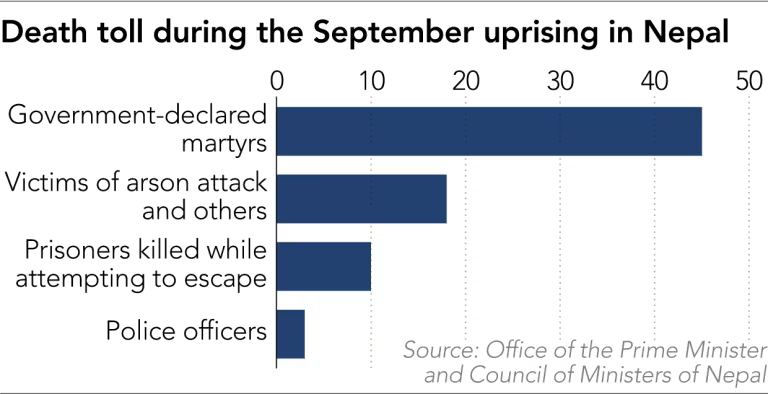
Official figures show that the Sept. 8–9 youth uprising in Nepal caused 76 deaths, 2,429 injuries, and an estimated USD 22.5 billion in damage—roughly half of the country’s 2024 economic output. Security forces used lethal force against peaceful demonstrators before withdrawing and enabling widespread arson and looting across multiple regions, including Madhyabindu, 120 km west of Kathmandu, where Mayor Adhikari’s home was destroyed by dozens of masked attackers. The unrest began after a social-media ban but reflected deeper discontent with entrenched, corrupt, and economically stagnant politics, echoing movements that toppled leaders in Bangladesh and Sri Lanka.
Following the collapse of the ruling coalition, an interim government led by former chief justice Sushila Karki assumed power, preparing elections for March while investigating responsibility for both the shootings on the 8th and the arson on the 9th. A judicial commission chaired by retired judge Gauri Bahadur Karki is due to deliver recommendations by late December, but disputes over its mandate—including whether to arrest former Prime Minister Oli and other officials—have hampered progress. Police have arrested 580 suspects for Sept. 9 violence but have taken no action against officers who opened fire on protesters, drawing criticism from human rights groups for selective enforcement and insufficient transparency.
Violence extended to Kathmandu, Madhyabindu, and Pokhara, 50 km to the north, where businesses and residents have submitted surveillance footage demanding accountability and investigation of the “chains of command.” Past mechanisms—namely the Truth and Reconciliation Commission and Commission on Enforced Disappearances—collected roughly 60,000 testimonies yet produced no conclusions, heightening doubts about the current process. Victims’ families have filed complaints against Oli and former Home Minister Lekhak, warning that failure to prosecute perpetrators may trigger retaliatory violence.