周一的市场走势凸显了投资人对人工智慧估值过高以及动能能否持续的疑虑,特别是庞大的基础设施支出是否能带来相应回报备受质疑。此外,中东局势引发油价上涨,以及市场对联准会升息预期的升温,进一步加剧了科技股的抛售压力。投资机构指出,面对高度不确定性,投资人倾向先卖出持股离场观望,这使得近期估值偏高的人工智慧相关股票格外脆弱。
尽管晶片制造商与供应链类股短期承压,但部分市场策略师认为放缓研发步伐长远来看未必是坏事。这有助于拉长发展周期,使企业有更多时间将现有建置的基础设施转化为实际商业获利,推动产业重心从单纯投资硬体转向全面变现。那斯达克100指数与相关期货虽同步下挫,但业界对晶片、电力及运算设施的基本需求前景依然稳固。
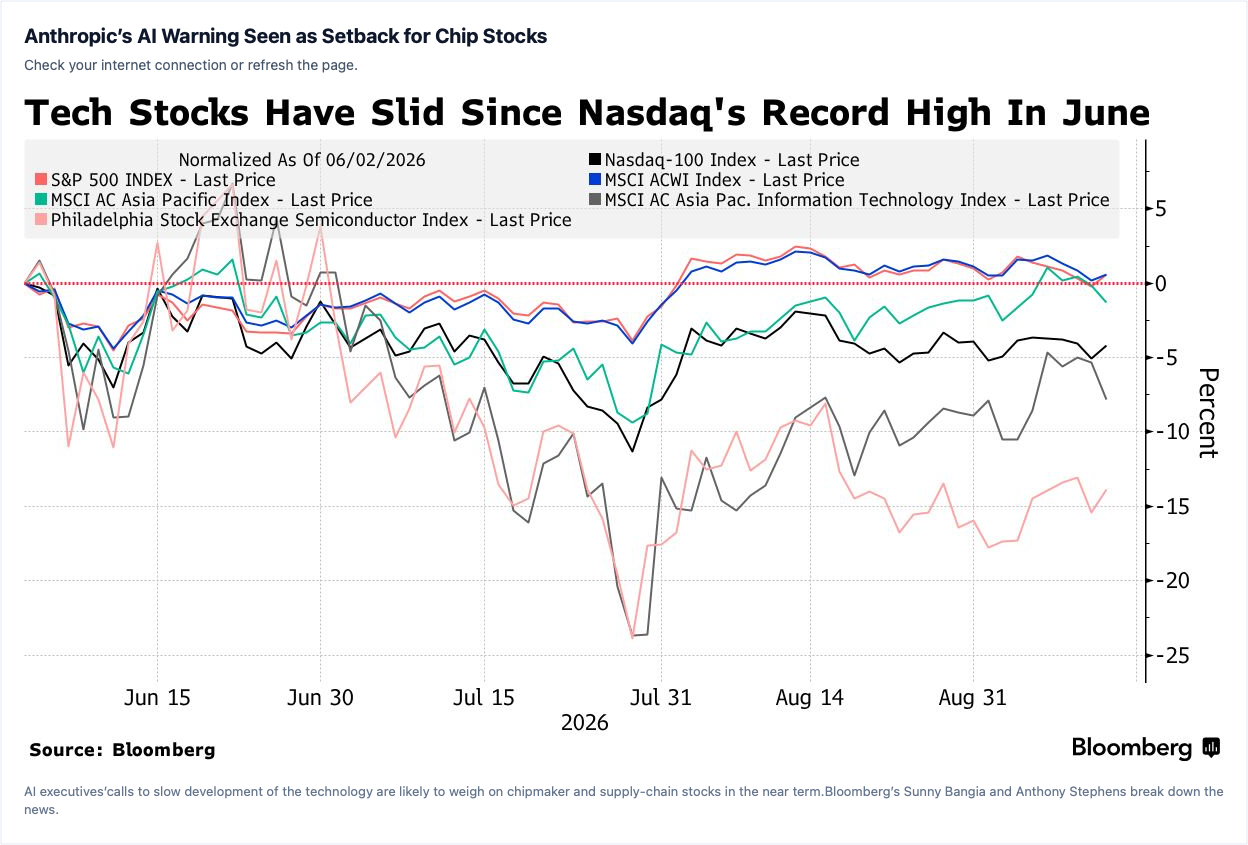
Asian semiconductor and equipment stocks dropped significantly after major artificial intelligence leaders called for slowing model development amid escalating technological risks. Memory makers SK Hynix and Kioxia led the selloff with drops exceeding 5% and 9%, while Samsung Electronics and Advantest also slid. Anthropic CEO Dario Amodei advocated for enhanced safety measures and an industry-wide slowdown, a stance endorsed by OpenAI's Sam Altman and xAI's Elon Musk, despite US President Donald Trump downplaying these concerns.
Monday's market movement highlights growing investor anxiety regarding high AI valuations and sustainability, as markets scrutinize whether future corporate earnings can justify the colossal capital expenditures poured into infrastructure. Compounding the pressure on Asian technology equities are rising crude oil prices driven by Middle East tensions and strengthening market expectations of a Federal Reserve interest rate hike. Consequently, investors have adopted a sell-first approach, leaving richly valued tech shares especially susceptible to pullbacks.
While chipmakers and supply chain firms face near-term turbulence, some market strategists suggest that moderating the pace of model development could ultimately benefit the industry by providing companies adequate time to monetize existing infrastructure. A calibrated timeline allows the sector to pivot from massive capital expenditures toward commercial adoption and tangible revenue generation. Although tech indices like the Nasdaq 100 retreated, analysts maintain that underlying capital commitments to chips, energy, and computational architecture remain resilient.