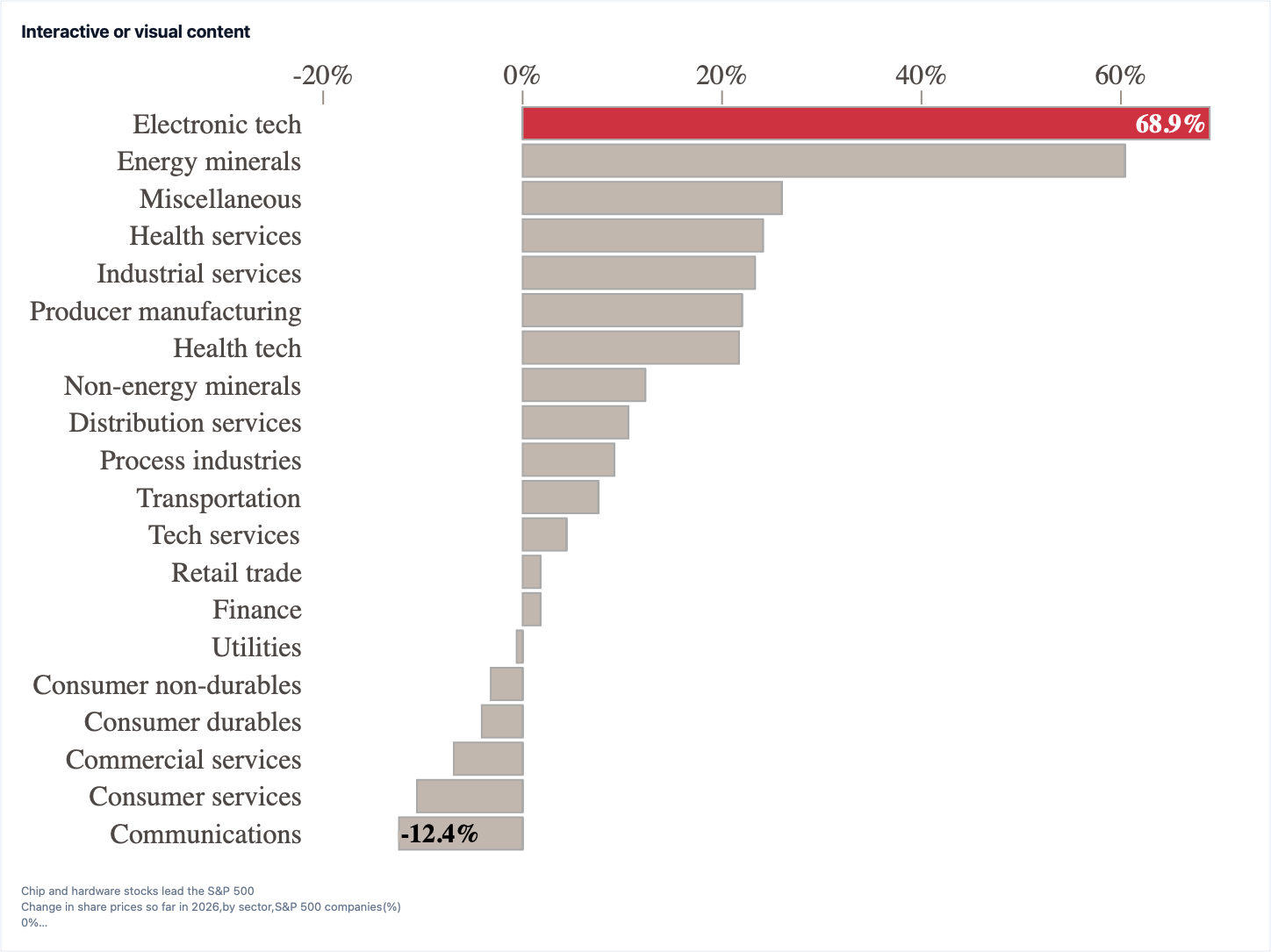
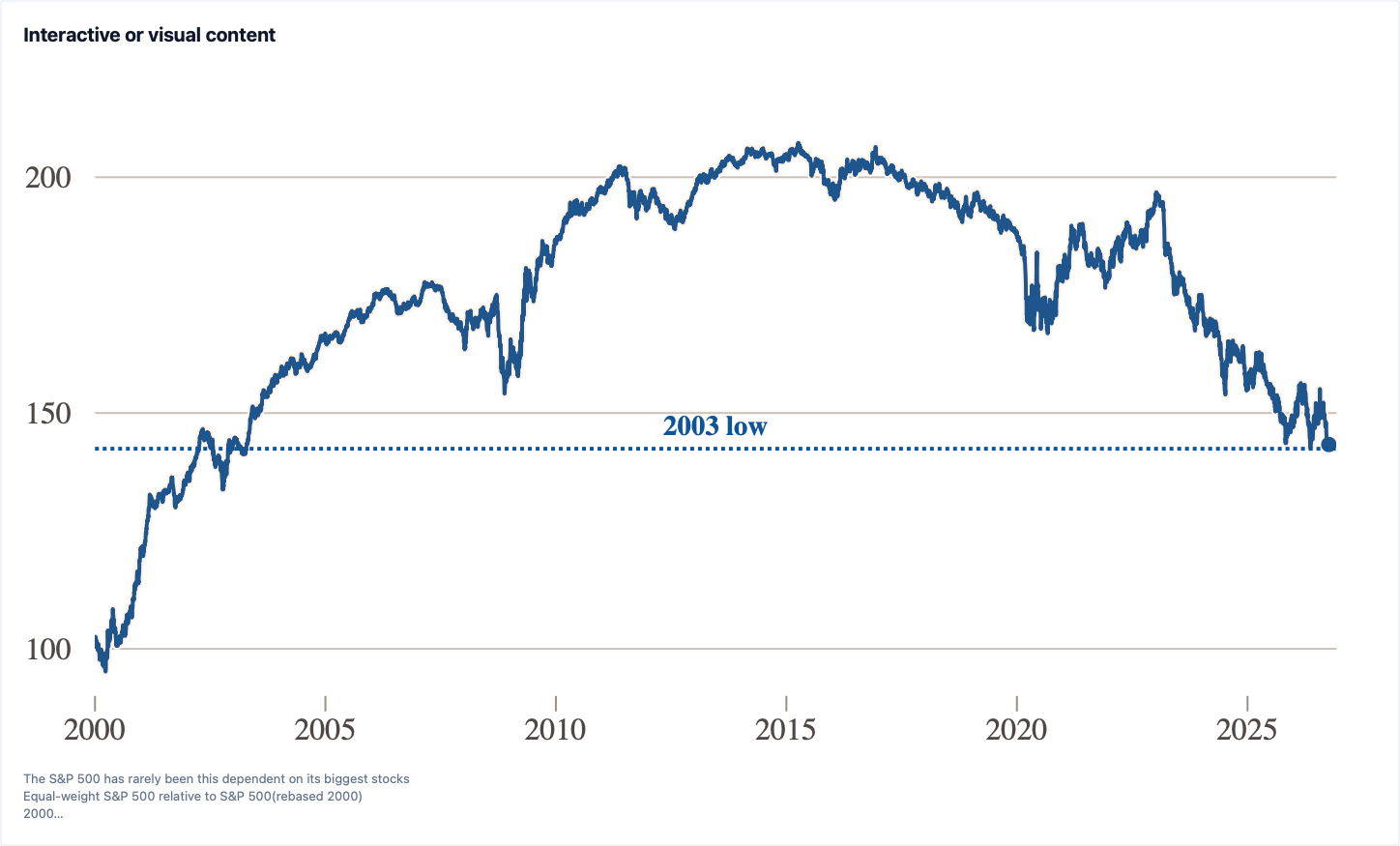
表面上的繁荣掩盖了市场深层的分歧,若剔除AI相关成分股,标普500指数自8月底以来实际上已下跌7%,且等权重指数与市值加权指数的差距已达近24年来的最宽水准。上个月标普指数中有四分之三的股票下跌,全靠科技巨头与资料中心相关能源股支撑,这使专业投资人极难进行有效避险与资产配置分散。
庞大的全球资金涌入美元资产进一步推升了美元与美股,但AI未来的长期经济效益仍充满不确定性与极度乐观的商业假设,例如预估2031年需有高达6兆美元的市场规模以支撑每年1.5兆美元的基础设施支出。同时,联准会内部对AI究竟会降低还是推升通膨亦存在分歧,全球投资人如今几乎全数押注于此一难以规避风险的AI热潮。
Artificial intelligence has evolved from a popular investment theme into the single dominant trade overshadowing global finance, creating an alarming correlation across stocks, real estate, and energy. Despite severe macroeconomic headwinds—including oil prices hovering near 100 dollars per barrel and benchmark 10-year US Treasury yields wedged above 5 percent—both the S&P 500 and Nasdaq have defied traditional market gravity to reach record highs.
This headline index strength conceals a sharply divided market: stripping out the AI components reveals that the remainder of the S&P 500 has tumbled 7 percent since late August, widening the gap with its equal-weighted counterpart to a 24-year extreme. Three-quarters of the constituent stocks fell last month, leaving gains almost entirely reliant on big tech and data centre power plays, which severely hampers fund managers' ability to achieve meaningful portfolio diversification.
Global capital continues to pour into unhedged US dollar assets to fund this frenzy, yet the long-term economics rely on heroic commercial assumptions—such as needing a 6 trillion dollar annual AI market to justify 1.5 trillion dollars in infrastructure spending by 2031. Furthermore, Federal Reserve policymakers remain split on whether AI will suppress inflation through productivity or fuel it via capital spending, leaving investors worldwide inextricably tethered to an almost unhedgeable bet.