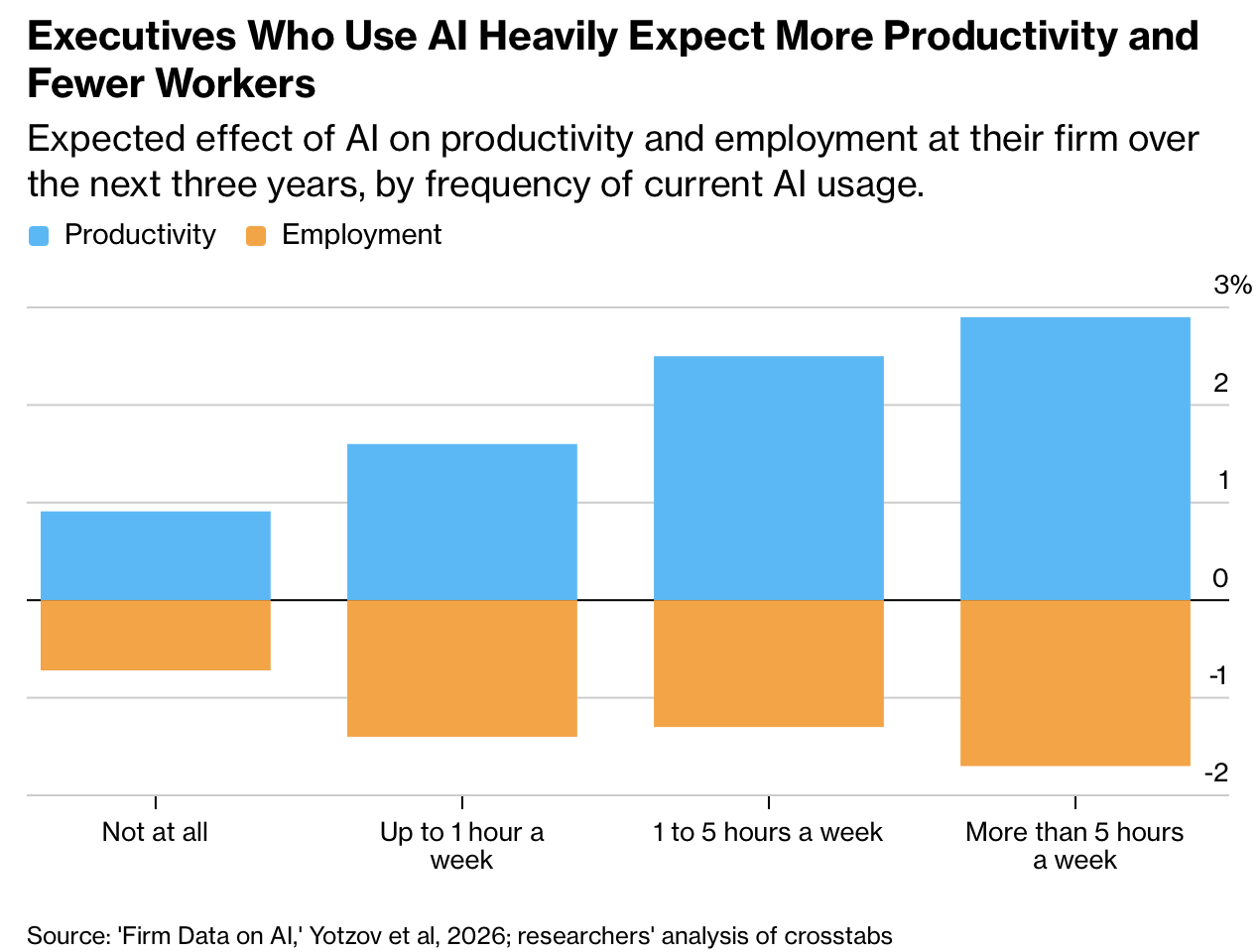
在人工智慧与就业面向,对美国、英国、德国、澳洲 6,000 名管理者的调查显示,AI 使用更频繁者预期未来三年内生产力提升幅度更大,但也预期裁员更明显;在控制年龄与产业后,这种关系仍具统计显著性。Nicholas Bloom 解释,这是自然结果:高频使用者一方面受惠于技术浪潮而感到较有保护,另一方面也预见到自身企业内部替代压力。整体上,AI 的效益与风险并非平均分配,而是呈现更集中于既有采用者的趋势。
《Bloomberg Weekend》的情境分析指出到 2050 年或出现 AI abundance 的路径(有规范、约每周四天工作制)或 digital Darwinism(成果集中于算力富国和其投资者,企业权力上升,工作监控与零工化加剧)。BCG 报告还指出,2030 年代可能出现大规模网路攻击,促使签署 AI 条约,意即危机亦可能改变轨道。文中还列出 57 英里(约 91 公里)沿日内瓦湖下的 Future Circular Collider 计划,估价 190亿美元,并首度纳入私募捐助;LEAP 专家小组将 AI 机器人通过「咖啡测试」的中位数年份预测为 2034 年,超级预测者为 2032 年,意味未来十年机器人于陌生居家环境煮咖啡可能成真。
The newsletter frames climate change as a price-risk factor that is becoming structural. In the 2022 European heatwave, temperatures in Spain reached 46°C (115°F), UK chicken-meat output fell 9% from the previous year, and northern Italy faced its worst 70-year drought, hitting risotto rice harvests. Researchers linked that summer to climate change through a +1.25°C Europe-wide mean temperature rise and local peaks of +5.7°C, a rare direct estimate of climate-linked inflation. As extremes become more frequent, supply shocks from droughts and storms may stop being temporary and persist through inflation expectations. Mark Blyth warned textbook inflation theory omits scarcity from a warming planet; Marcus Mølbak Ingholt argued that only a global green transition is the best mitigation path.
On labor and AI, a survey of 6,000 managers in the US, UK, Germany, and Australia found a clear pattern: heavier AI users expect stronger productivity gains and larger workforce declines over the next three years. The relationship stayed statistically significant after controlling for age and sector. Nicholas Bloom characterized this as intuitive—AI adopters are riding the tech wave and may feel protected, yet also foresee bigger internal job displacement. The report signals that AI’s benefits may be concentrated among firms already intensively using it, while displacement risk rises in parallel.
The forward-looking section presented two divergent 2050 futures from BCG. One is “AI abundance” with global AI governance and four-day workweeks. The other is “digital Darwinism,” where gains flow to compute-rich nations and investors, corporations gain power, gig work expands, and workplace surveillance intensifies. The report also suggests large cyberattacks in the 2030s could force an AI treaty, so a setback may be what redirects policy. Other quantifiable points include a proposed 57-mile (~91-km) Future Circular Collider under Lake Geneva with a $19 billion cost and first-time private CERN funding, and LEAP forecasts that robots pass the coffee test by a median 2034 (2032 for superforecasters), implying home-coffee autonomy in the coming decade.