研究显示从清醒到入睡的过渡具有可量化的认知效应与脑区时序特征。2021 年的实验表明,在入睡初段 N1(约 15 秒的催眠期)被唤醒者在发现隐藏数学规则上的成功率提升近 3 倍;2023 年另一项研究通过引导梦境进一步增强该阶段的创造力。此阶段伴随丘脑首先关闭外界输入、随后前额叶到枕叶的皮层顺序下线,形成部分脑区沉睡、部分仍保持活动的“自由联想”状态。EEG 数据显示在技术上仍处于清醒时可出现梦样意象,而在技术性睡眠中仍可能保持自我思考,显示意识内容不完全受睡眠—清醒二分法支配。
睡眠到清醒的跃迁同样存在时序渐进性。对 1,000 余次觉醒事件分析发现,非 REM 睡眠中出现一个来自深部脑区的慢波信号,其后皮层以“前到后”的方式恢复快速波动;REM 觉醒则无该慢波。该慢波与较低的醒后昏沉程度正相关。觉醒信号传播需数秒,但完全恢复认知可需数分钟至一小时。局部睡眠现象显示清醒大脑中仍可出现典型慢波,让部分神经元进入休整状态,进一步模糊睡眠分类。
睡眠障碍可视为状态切换失败的量化表现:失眠为无法进入或维持转换;睡眠瘫痪为皮层提前醒来而下行运动系统仍滞后;矛盾性失眠的弱慢波信号使个体“感觉清醒”;梦游者在深睡期间出现觉醒相关信号。此类并行脑节律的冲突使催眠意象、清明梦与睡眠紊乱得以发生,体现脑网络跨区域同步与解同步过程的复杂性。
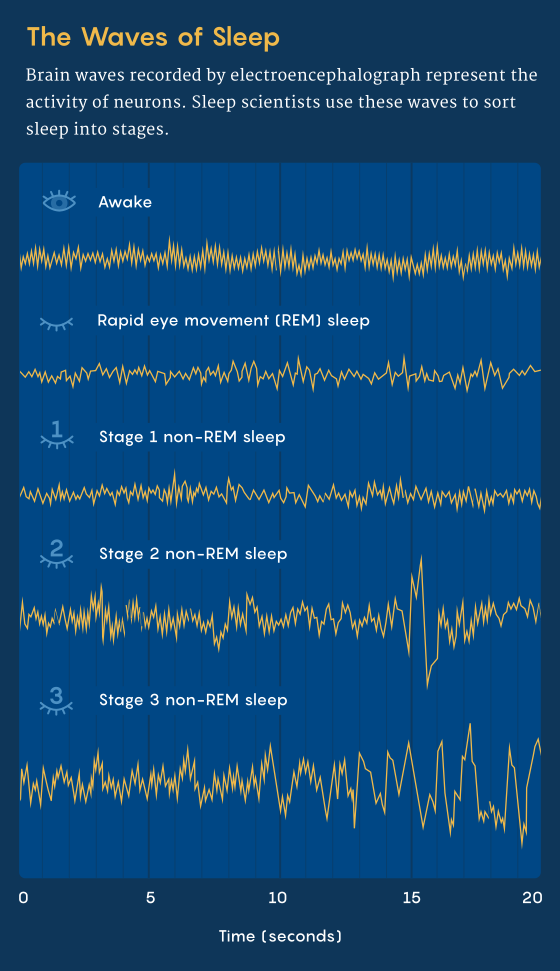
Studies show the transition from wake to sleep has measurable cognitive effects and ordered neural dynamics. A 2021 experiment found that waking subjects from roughly 15 seconds of N1 hypnagogia made them nearly three times more likely to discover a hidden rule in a math task; a 2023 study enhanced this creativity further by guiding dream content. This period features thalamic shutdown of sensory relays followed minutes later by frontal-to-occipital cortical deactivation, producing a state in which some regions sleep while others remain active. EEG data show dreamlike imagery can arise during technical wakefulness, and deliberate thought can persist during technical sleep, indicating that conscious content is not fully determined by the sleep–wake binary.
The wake-up transition also shows graded timing. Analysis of more than 1,000 arousals identified a slow wave from deep brain regions preceding frontal-to-posterior cortical reactivation during non-REM awakenings; REM awakenings lacked this wave. The slow wave correlated with reduced grogginess. Wave propagation takes seconds, while full cognitive recovery can take minutes to an hour. Local sleep further blurs definitions: classic slow waves can emerge in otherwise awake brains, allowing subsets of neurons to rest.
Sleep disorders quantifiably reflect failures of state switching: insomnia impairs initiation or maintenance of the transition; sleep paralysis occurs when cortex wakes while motor-control centers lag; paradoxical insomnia involves weak arousal waves that produce a feeling of wakefulness; sleepwalking shows awakening-linked signals during deep sleep. These overlapping rhythms enable hypnagogia, lucid dreaming and parasomnias, revealing the complexity of synchronization and desynchronization across brain networks.