独立智库 CELIOS 预估 2025 年印尼经济因苏门答腊北部三省的强烈气旋与洪灾蒙受 68.67 兆卢比(41.3 亿美元)损失,相当于其灾前全年 GDP 预测的 0.29%,并警告影响将延续至明年。灾情自 11 月 25 日起连锁扩大,至周二晚造成 744 人死亡、2,600 人受伤、330 万人受灾,其中 110 万人流离失所,另有 551 人失踪;物损包括 9,400 户住宅(3,600 户重损)、323 所学校与 299 座桥梁。三省在 2025 年第三季贡献全国经济产出 7.5%,而农业、基础设施与贸易(不含机动车)损失初估 2.2 兆卢比。BMKG 指出气旋形成条件将持续至次年 2 月,全国多地将面临热带气旋风险。
灾害冲击物流与交通枢纽,CELIOS 指北苏门答腊作为国家工业中心,其受损将影响邻省商品流动与工业需求。气候冲击加剧农产风险,官方估计稻作收割面积将从 10 月的 86 万公顷降至 11 月的 60 万与 12 月的 44 万公顷。政府原预测全国增长 5.2%,但多名经济学者认为已不具现实性,因消费、投资与初级产业产出假设皆被灾情打破。统计局警告 2025 年底作物失收风险显著攀升,并预计到 2026 年 1 月仍将出现强降雨。
地方政府灾后应对能力迅速枯竭,多地因中央财政削减而预算不足,Aceh 多个县区已宣布财政无力。多方呼吁总统 Prabowo 立即宣布“国家灾难”,以启动大规模资源动员并开放国际援助。整体趋势显示极端气候频率增高、经济损失连锁放大、农业与工业受到双重冲击,将对印尼 2025–2026 年增长路径形成系统性下行压力。
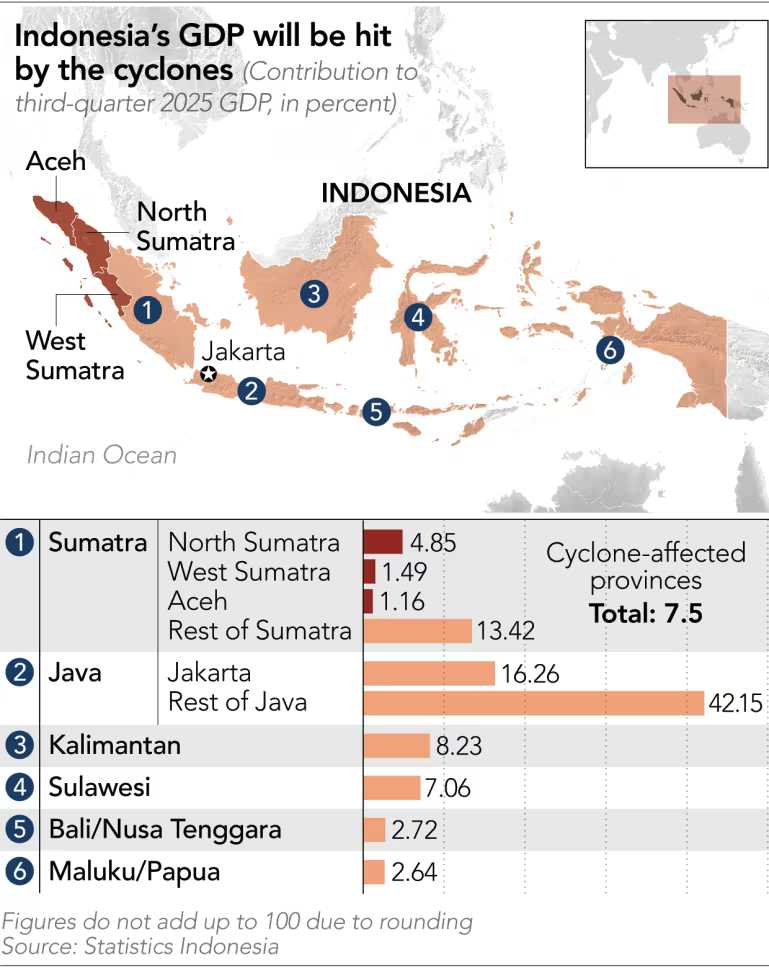
Indonesia’s economy is projected to take a 68.67 trillion rupiah ($4.13 billion) hit in 2025 from cyclones and floods across three northern Sumatra provinces, equal to 0.29% of pre-disaster GDP estimates, according to CELIOS. Since Nov. 25 the disasters have killed 744 people, injured 2,600, affected 3.3 million, displaced 1.1 million, and left 551 missing; physical damage includes 9,400 homes (3,600 heavily damaged), 323 schools, and 299 bridges. The three provinces contributed 7.5% of national Q3 2025 output. Sectoral losses in agriculture, infrastructure, and non-vehicle trade are estimated at 2.2 trillion rupiah. BMKG forecasts cyclone-forming conditions through February, with widespread national exposure to tropical systems.
Transport and logistics disruptions in North Sumatra — a major national industrial hub — are expected to drag on wider supply chains and industrial demand. Crop vulnerability is worsening: rice-harvest area is projected to fall from 860,000 hectares in October to 600,000 in November and 440,000 in December. Economists argue the government’s 5.2% growth target is unrealistic given shocks to consumption, investment, and primary-sector output. Statistics Indonesia warns of sharply rising crop-failure risk toward late 2025 alongside heavy rainfall expected through January 2026.
Local administrations report exhaustion of disaster-response capacity, worsened by budget cuts tied to central reallocations, with multiple Aceh regencies declaring fiscal incapacity. Calls are mounting for President Prabowo to declare a national disaster to enable large-scale resource mobilization and international assistance. Overall trends indicate escalating extreme-weather frequency, compounding economic losses, and mounting agricultural–industrial strain likely to depress Indonesia’s 2025–2026 growth trajectory.