在巴西,许多城市正投入巨资建设以人脸识别为代表的智能监控网络。以圣保罗在2024年推出的“Smart Sampa”系统为例,该系统目前拥有5万个摄像头,计划到2028年翻倍至10万个。据监督机构统计,巴西20多个州已部署了560个活跃的人脸识别项目,覆盖了约9900万人,占全国人口的47%以上。圣保罗市长指出,该网络中超过半数的摄像头为私人所有。尽管当局宣传该系统已协助逮捕了3000多名逃犯和近6000名现行犯,但其效果和公平性引发了隐私倡导者和安全专家的担忧,例如里约热内卢因该系统导致的错误逮捕中,约80%涉及黑人。
此外,监控技术无法掩盖刑事司法系统的根本性失败。在巴西,仅有三分之一的谋杀案得以破案,而在圣保罗州,警方仅能破解约2%的登记盗窃案。安全与公民研究中心(CESeC)对比了Smart Sampa运行首年的数据,发现圣保罗的盗窃、抢劫或谋杀案并未减少,警方的逮捕率也未见提高。而且,在这些技术普及之前,巴西的犯罪率自2018年以来就已显著下降,圣保罗的抢劫案在2025年创下了25年来的新低。目前犯罪团伙已转向合法市场的渗透与洗钱,2022年其通过燃油、黄金等商品获利达1470亿雷亚尔,而可卡因贩运仅获利150亿雷亚尔,这种犯罪模式很难被摄像头捕获。
最后,智能监控的高昂成本也引发了关于机会成本的质疑。圣保罗的Smart Sampa系统每年运行费用达1.18亿雷亚尔,而里约热内卢州在公共安全人脸识别技术上已花费了超过6.7亿雷亚尔。在一些贫困地区如戈亚斯州,地方政府在连基本卫生设施都无法保障、且暴力犯罪罕见的城镇斥巨资购买监控设备。尽管法院已开始予以抵制,但由于官员缺乏监督的技术专业知识,新规的执行面临重重困难。随着十月大选临近,这类能直观展现“严打犯罪”姿态的科技投入依然深受巴西政客的青睐。
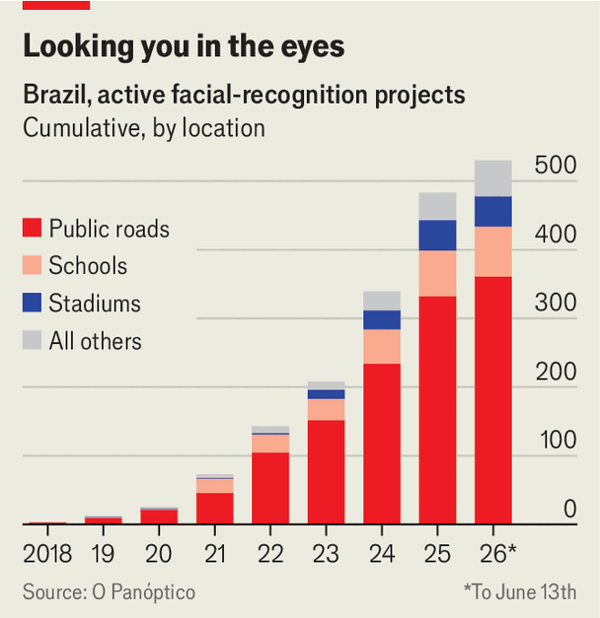
Brazilian cities are heavily investing in crime-fighting technologies, with a strong emphasis on facial recognition. São Paulo's "Smart Sampa" system, introduced in 2024, currently runs a network of 50,000 cameras and aims to double this to 100,000 by 2028. According to the watchdog O Panóptico, there are 560 active facial-recognition projects across more than 20 states, monitoring 99 million people, which represents over 47% of Brazil's population. São Paulo's mayor noted that more than half of these cameras are privately owned. While officials claim the system has led to the arrest of over 3,000 fugitives and caught nearly 6,000 criminals in the act, privacy advocates warn of racial bias; in Rio de Janeiro, 80% of wrongful arrests via facial recognition involve black citizens.
Furthermore, critics argue that surveillance tech cannot fix structural failures in the justice system. Nationwide, only one-third of homicides are solved, and São Paulo state police solve only 2% of recorded thefts. A study by the CESeC think-tank found no reduction in homicides, robberies, or thefts during Smart Sampa's first year compared to other municipalities. Additionally, Brazil's crime rates had already been falling since 2018, with São Paulo robberies reaching a 25-year low in 2025. Modern organized crime has shifted from street violence to white-collar activities; in 2022, gangs generated 147 billion reais ($29 billion) from legal goods smuggling compared to just 15 billion reais from cocaine trafficking, making them hard to catch on camera.
Finally, the immense financial cost of these networks poses serious resource allocation concerns. Operating Smart Sampa costs 118 million reais annually, and Rio de Janeiro state has spent over 670 million reais on facial recognition. In poorer states like Goiás, governments have bought advanced surveillance systems for peaceful towns where over half of households lack basic sanitation. While courts have begun pushing back, enforcing regulations is difficult because public officials lack the technical expertise to audit these tools. Nevertheless, with general elections approaching in October, politicians continue to embrace eye-catching tech to project a tough-on-crime image.
Source: Brazilian cities are building vast surveillance networks
Subtitle: Can they combat the country’s biggest security threats?
Dateline: Jul 09, 2026 06:31 AM