在2000年至2024年间,美国郊区的老年人口增加了一倍以上,而新生儿与退休婴儿潮一代的替代比率从每100名退休人员对应109名婴儿降至仅88名。这种人口结构的变化正在改变住房市场,导致2012年至2023年间郊区小学的入学率下降了14%。
由于老年人选择留守,郊区严重的住房短缺问题进一步加剧,目前有27%的三居室及以上房屋仅由65岁或以上的老年人居住。财务激励和税收优惠鼓励老年人留在自己家中,而在2024年建造的新单户住宅中,仅有10%提供了适合缩减居住规模的两居室选择。
这种人口老龄化正在影响地方政治和资金,因为老年居民的投票率更高,并且经常反对为学校加税。因此,郊区社区面临着学校入学率下降和缺乏多样化住房选择的问题,这给地方政府带来了一个具有挑战性的反馈循环。
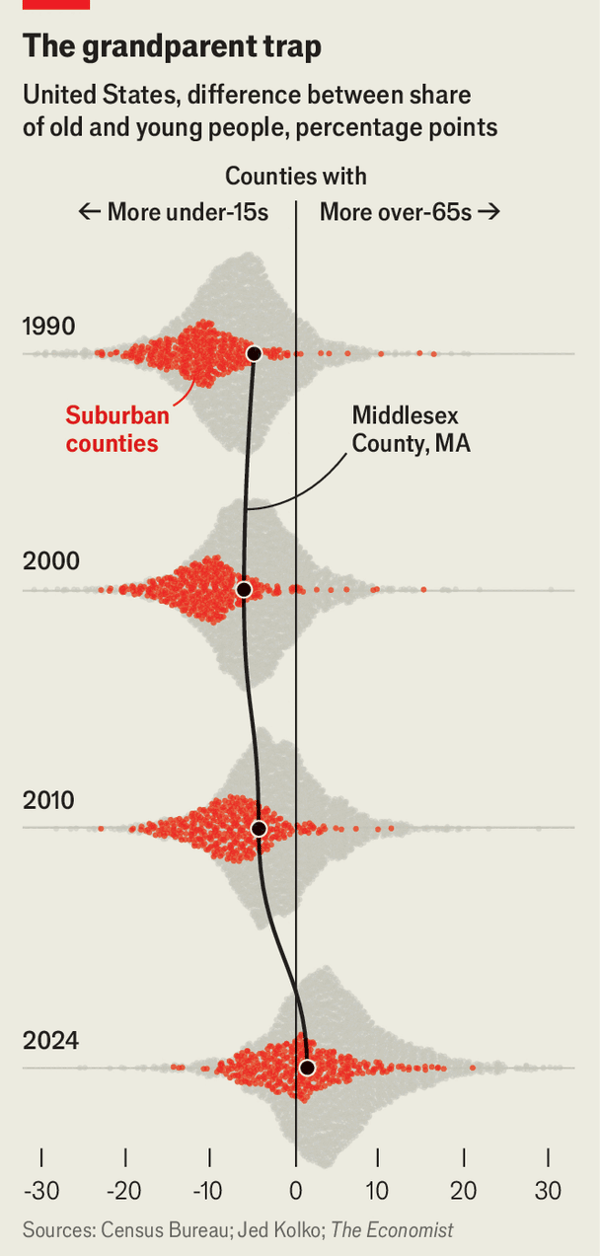
Between 2000 and 2024, the elderly population in American suburbs more than doubled, while the replacement ratio of newborns to retiring baby-boomers fell from 109 to just 88 infants per 100 retirees. This demographic shift is altering housing markets, causing elementary school enrolment in suburban areas to drop by 14% between 2012 and 2023.
A severe suburban housing shortage has been exacerbated by older adults staying put, with 27% of homes with three or more bedrooms now occupied solely by people aged 65 or older. Financial incentives and tax benefits encourage seniors to remain in their homes, while only 10% of new single-family homes built in 2024 offered two-bedroom downsizing options.
This demographic aging is impacting local politics and funding, as elderly residents vote at higher rates and often oppose tax increases for schools. Consequently, suburban communities face declining school enrolments and a lack of diverse housing options, creating a challenging feedback loop for local governments.
Source: America’s quintessential places are getting old, fast
Subtitle: Welcome to the greying suburbs
Dateline: 6月 11, 2026 04:21 上午 | Winchester, Massachusetts