美国官方劳工与支出统计的调查回应率大幅下滑:每月面向约60,000户家庭的《当前人口调查》曾接近“十人中九人”同意参与,如今降至“十人中不足七人”;每月覆盖3,700户家庭的《消费者支出调查》回应率也从68%降到40%。这种参与率下滑会削弱GDP增长、失业、通胀等关键指标数据质量,增加企业和投资者的不确定性,并可能延后资本配置与招聘决策。
一篇由尼古拉斯·布卢姆(Nicholas Bloom)、埃里卡·格罗申(Erica Groshen)、邓肯·霍布斯(Duncan Hobbs)与迈克尔·斯特雷恩(Michael Strain)联合撰写的工作论文估算,维系官方统计“完整性与质量”的经济收益约为每花1美元在美国劳工统计局(BLS)支出可带来25美元,BLS年预算约为7亿美元。论文将2025年8月1日唐纳德·特朗普解雇前任委任的BLS局长埃里卡·麦恩特费(Erika McEntarfer)一事视为案例,后者被指近期就业数据大幅下修“作假”以抹黑共和党与特朗普本人,且缺乏证据。
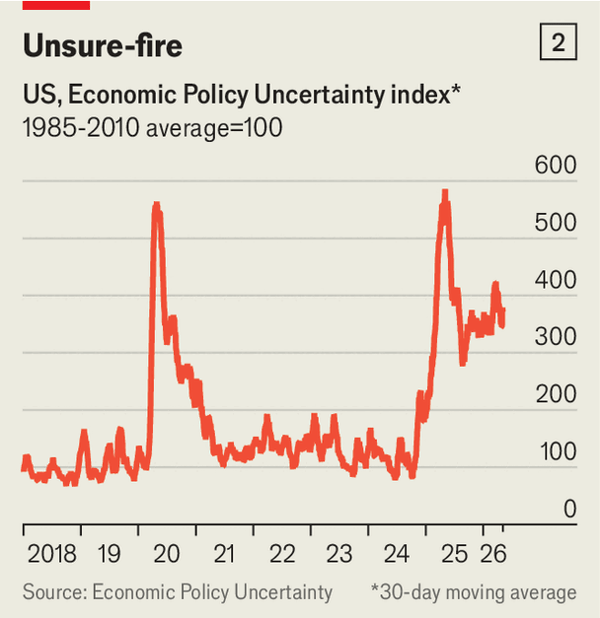
在该事件后的七天内,美国经济政策不确定性指数(EPU)相对前一周上升了50%,该跃升在与2025年4月贸易战及两个月前伊朗局势冲突带来的波动相比仍更显著;依据作者此前关于EPU对企业投资、工业产值与就业的估计,他们据此将损失判定为超过1000亿美元(0.3%)GDP与16.8万份非农工资单岗位(0.1%)。即便控制了就业大幅修订和同日联储理事会离任等混杂因素,该事件仍被估计至少拉低GDP 200亿美元并减少3.1万个就业岗位,并由此强调:不可信统计的冲击可能远超表面,而稳定可靠的统计体系具有不可替代的经济价值。
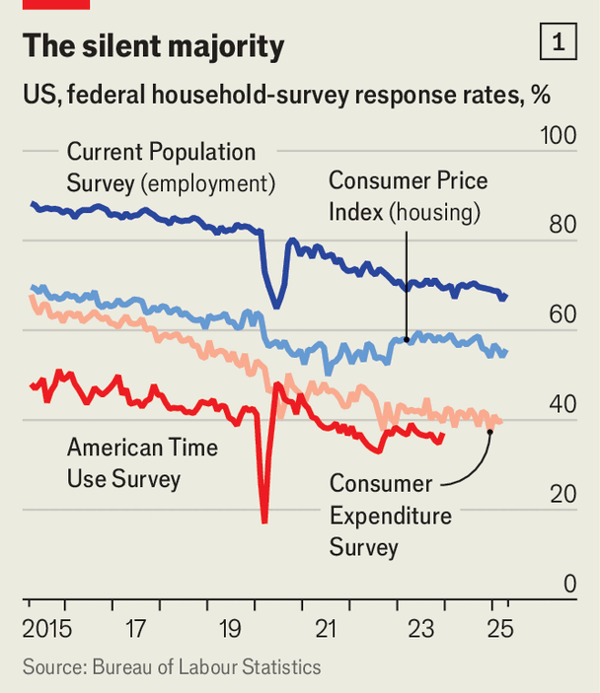
Survey response rates for U.S. official labor and spending statistics have fallen sharply: the Current Population Survey, sent to about 60,000 households each month and covering employment, has dropped from nearly 9 in 10 respondents to fewer than 7 in 10, while the Consumer Expenditure Survey’s monthly response rate fell from 68% to 40%. This decline in participation erodes data quality on GDP growth, unemployment, inflation, and related indicators, raising uncertainty for businesses and investors and potentially delaying capital allocation and hiring decisions.
A working paper by Nicholas Bloom, Erica Groshen, Duncan Hobbs, and Michael Strain estimates that trusted official statistics generate about $25 of value for every $1 spent by the Bureau of Labor Statistics, whose annual budget is about $700m. The paper treats the August 1, 2025 firing of BLS Commissioner Erika McEntarfer by Donald Trump—who alleged without evidence that a recent jobs revision was rigged to hurt Republicans and himself—as a shock to statistical trust.
Within seven days, the Economic Policy Uncertainty (EPU) index rose 50% relative to the prior week, exceeding the spike seen during the April 2025 trade-war period and the Iran-related crisis two months earlier; applying the authors’ prior EPU estimates for business investment, industrial output, and employment, they attribute this rise to over $100bn (0.3%) in GDP loss and 168,000 lost non-farm payroll jobs (0.1%). Even after controlling for confounders such as the large jobs revision and the contemporaneous resignation of a Federal Reserve governor, they still estimate the McEntarfer event alone reduced GDP by at least $20bn and employment by 31,000 jobs, arguing that assaults on statistical credibility can be economically damaging and that reliable statistics are essential to avoid an incalculable loss.
Source: Bad government statistics can cost the economy billions
Subtitle: A new study tries to put a number on the value of reliable numbers
Dateline: 5月 07, 2026 06:28 上午