英伟达正从芯片霸主扩张为更广泛的 AI 基础设施帝国。公司在 3 月 16 日的开发者大会上发布了新芯片、模型与系统,并声称未来几年可售出超过 1 万亿美元的 AI 硬件。尽管工程师反应热烈,投资者更谨慎:自 10 月高点以来,股价下跌约 13%,而美国芯片股指数上涨约 6%。但经营数据仍极强:截至 1 月的年度收入达 2160 亿美元,是 3 年前的 8 倍;市值近 30 年才到 1 万亿美元,却在随后约 2 年跃升至 4 万亿美元,并在再过 4 个月后一度突破 5 万亿美元。
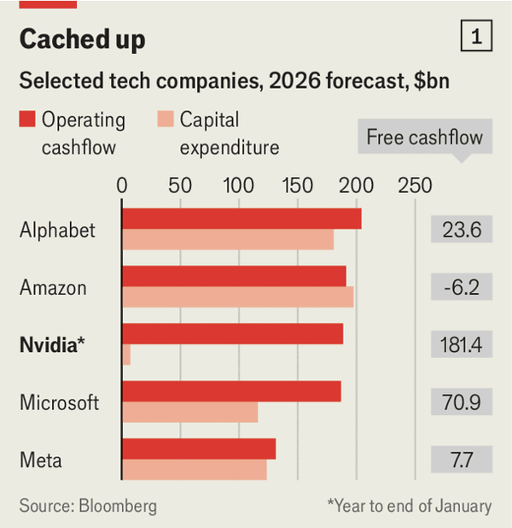
支撑扩张的是异常雄厚的财务实力与仍在扩大的版图。公司持有超过 620 亿美元现金,其中三分之一是在过去一年产生的,自由现金流也超过其他科技巨头。竞争却在加剧:2025 年初创芯片公司融资 170 亿美元,超过此前两年总和;同时,Alphabet、Amazon、Microsoft 和 Meta 等超大规模客户既贡献了上一财年逾一半应收账款,也在自研处理器,可将 AI 芯片成本削减逾一半。地缘政治压力同样显著:Bernstein 估计,中国本土供应商在中国 AI 芯片市场的份额将从 2023 年不足五分之一升至 2027 年超过十分之九。
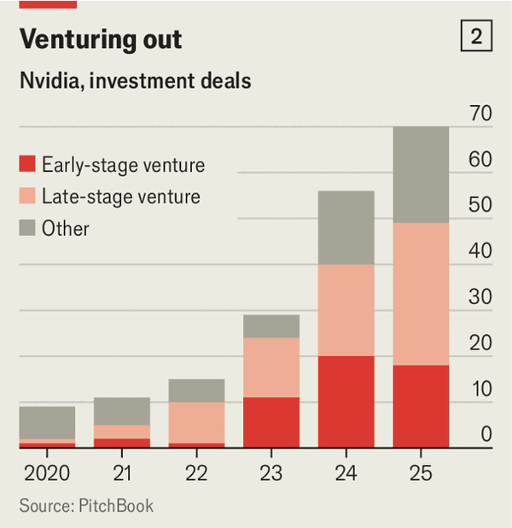
英伟达的回应是纵向一体化与多线下注。它计划在 AI “五层蛋糕”中至少吃下 3 层:芯片、网络和模型。公司 12 月以 200 亿美元获取推理芯片技术与人才,网络业务最近一个季度收入达 110 亿美元,主权 AI 收入上一财年增至 300 多亿美元,约占 AI 销售的 15%。自 2020 年以来,英伟达已进行约 200 笔投资,承诺资金超过 650 亿美元,其中包括对 OpenAI 的 300 亿美元投资;同时还预付采购了今年及明年部分关键内存。风险仍在,但其策略显示,英伟达正试图把 AI 热潮从单一产品优势转化为整个平台控制力。
Nvidia is expanding from a chip champion into a broader AI-infrastructure empire. At its March 16th developer conference, the firm unveiled new chips, models and systems, and said it could sell more than $1trn of AI hardware in the coming years. Engineers were enthusiastic, but investors were cautious: since its October peak, the share price has fallen about 13%, while an American chip index has risen around 6%. Yet operating numbers remain extraordinary: revenue in the year to January reached $216bn, 8 times the level of 3 years earlier; market value took nearly 30 years to hit $1trn, then about 2 years to reach $4trn, and briefly surpassed $5trn another 4 months later.
The expansion is funded by exceptional financial strength and aimed at a widening competitive field. Nvidia holds more than $62bn in cash, one-third generated in the past year, and its free cashflow exceeds that of other tech giants. Competition is intensifying: chip startups raised $17bn in 2025, more than in the previous 2 years combined; meanwhile Alphabet, Amazon, Microsoft and Meta accounted for over one-half of receivables last fiscal year, yet are also designing their own chips, potentially cutting AI-chip costs by more than half. Geopolitics adds pressure: Bernstein estimates local suppliers could grow from less than one-fifth of China’s AI-chip market in 2023 to more than nine-tenths by 2027.
Nvidia’s response is vertical integration and investment across layers. It aims to take at least 3 of AI’s “five layers”: chips, networking and models. In December it spent $20bn to license inference-chip technology and hire engineers; networking generated $11bn in the latest quarter; and sovereign-AI revenue rose to more than $30bn last fiscal year, about 15% of AI sales. Since 2020, Nvidia has made about 200 investments committing over $65bn, including a $30bn bet on OpenAI, while also pre-buying most of this year’s advanced memory and part of next year’s. Risks remain, but the strategy shows Nvidia trying to convert a product lead into control of a full AI stack.