数据显示,AI 可能正在削弱部分毕业生的就业前景:近期毕业生的失业率高于美国平均水平,只有不到五分之一的人认为现在是找好工作的好时机,而美国总体这一比例超过四分之一。校园招聘也在走弱,Handshake 上的职位发布比 2022 年峰值低 50%。
关于 AI 的影响,各方看法不一,但数字提示风险正在集中于某些专业。哈佛一项民调显示,超过一半的雇主考虑用技术替代入门级员工,超过一半的年轻美国人也把 AI 视为就业威胁;而斯坦福 2025 年论文发现,AI 暴露度高的年轻工种就业人数相对较低暴露领域下降了 16%。
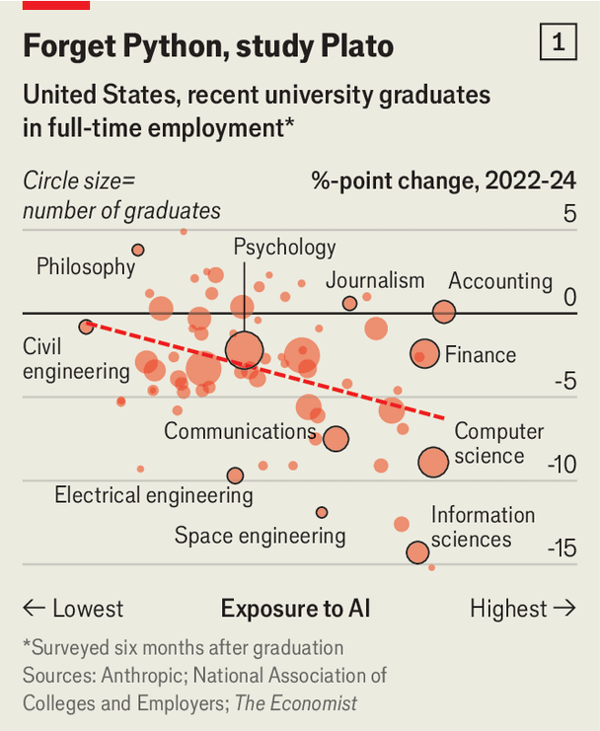
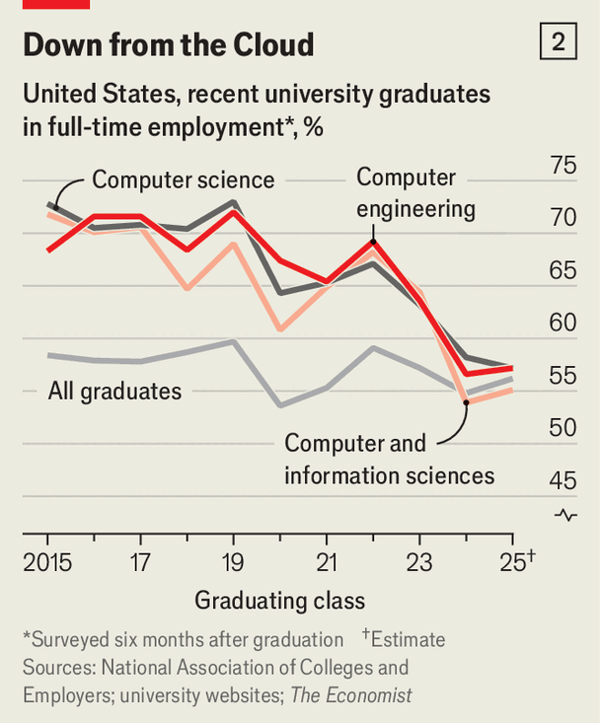
《经济学人》使用近十年毕业生调查进一步发现,AI 暴露度越高,毕业生结果越差:2022 至 2024 年,暴露最低五分位的全职就业率仅下降 1.5 个百分点,而暴露最高五分位下降 6.6 个百分点。对 13 所大学的更新数据显示,最暴露专业的全职就业率在三年内从接近 70% 降至 55%,而且在 ChatGPT 于 2022 年推出后这种下滑才明显加速。
The data suggest that AI may be weakening the job prospects of some graduates: recent graduates are more likely to be unemployed than the average American, and less than a fifth say it is a good time to find a good job, versus more than a quarter of Americans overall. Campus recruiting is also softening, with job postings on Handshake 50% below their 2022 peak.
Views on AI’s role are mixed, but the numbers point to concentrated risk in some fields. A Harvard Kennedy School poll found that more than half of employers have considered replacing entry-level workers with the technology, and more than half of young Americans see AI as a threat to their job prospects; a 2025 Stanford paper found employment in AI-exposed jobs among young workers fell 16% relative to less-exposed fields.
The Economist’s own analysis, using nearly ten years of graduate surveys, finds worse outcomes where AI exposure is higher: from 2022 to 2024, the least-exposed fifth saw full-time employment fall by 1.5 percentage points, while the most-exposed fifth fell by 6.6 points. Updated data from 13 universities show full-time employment in the most exposed fields dropped from nearly 70% to 55% in three years, with the decline accelerating after ChatGPT’s 2022 release.
Source: Is AI putting graduates out of work already?
Subtitle: If you are studying coding, we might have some bad news
Dateline: 5月 14, 2026 11:24 上午