人工智能正在制造显著的市场定价困惑。高盛构建的“最易受 AI 冲击企业指数”在过去 1 年下跌 超过 20%,而“长期 AI 受益者指数”同期也下降 约 5%,尽管许多股市接近历史高位。个股波动更极端:语言学习公司 Duolingo 在 2024 年 5 月至 2025 年 5 月期间股价 翻倍,随后却 下跌 80%;Alphabet 的股价在过去 1 年上涨 85%。债券市场却表现冷静:30 年期美国国债收益率约 4.9%,与年初几乎相同。MIT 研究还发现,在大型 AI 模型发布时长期收益率反而下降,显示市场对 AI 宏观影响判断分裂。
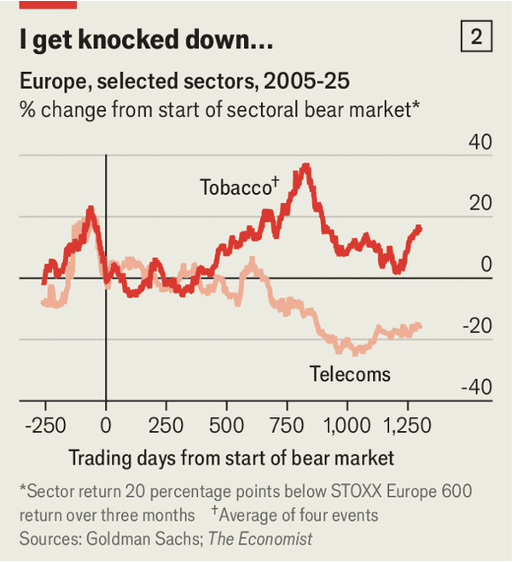
历史表明市场经常难以定价技术革命。对 2005–2026 年欧美股票的研究发现,大约 80 次行业熊市事件,其中行业股价在 3 个月内相对整体指数下跌至少 20 个百分点。在这些事件中,行业股价 约一半长期维持低位,说明投资者成功预判结构性变化,例如中国竞争削弱欧洲太阳能行业或互联网冲击电信行业;但 另一半随后重新跑赢市场,表明最初判断错误。烟草行业多次因电子烟等创新引发股价暴跌,却随后恢复。
AI 的不确定性比过去技术转型更高。技术进展不均衡,例如编程能力显著提升,但开放式写作和创意任务进步有限。同时,超级智能 AI 的利润归属不明:如果 AI 降低进入壁垒,企业利润率可能下降。领先 AI 实验室收入增长迅速,但计算成本巨大。一些研究认为新技术会引发市场泡沫,而另一些研究指出股市可能下跌,因为投资者预期尚未上市的新企业将获得未来利润。因此当前市场既可能高估 AI 对某些企业的威胁,也可能低估对其他企业的冲击。
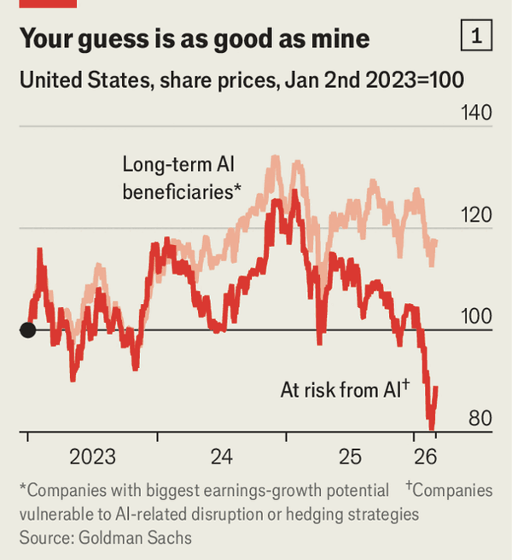
Artificial intelligence is generating significant uncertainty in financial markets. Goldman Sachs created an index of companies most vulnerable to AI disruption, which has fallen more than 20% over the past year, while its index of “long-term AI beneficiaries” has declined about 5% despite many stock markets nearing record highs. Individual stocks show extreme volatility: Duolingo’s share price doubled from May 2024 to May 2025 but later fell 80%, whereas Alphabet’s shares rose 85% in the past year. Bond markets appear calmer: 30-year U.S. Treasury yields remain around 4.9%, little changed from the start of the year. Research from MIT also found that long-term yields actually declined around major AI model releases.
Historical evidence suggests markets often struggle to price technological revolutions. Analysis of American and European equities from 2005–2026 identified about 80 sectoral bear-market events in which an industry’s share prices fell at least 20 percentage points relative to the broader index within three months. In roughly half of these cases the sector remained depressed, meaning investors correctly anticipated structural change, such as Chinese competition weakening Europe’s solar industry or the internet harming telecoms firms. In the other half, prices later recovered and outperformed the broader market, indicating early judgments were wrong, as seen repeatedly in tobacco stocks despite concerns over vaping.
Uncertainty surrounding AI is greater than for many past technologies. Progress is uneven: AI performance has improved rapidly in areas such as coding but less clearly in open-ended writing and idea generation. The economic distribution of profits from potential artificial general intelligence is also unclear; if AI lowers barriers to entry, corporate profit margins could shrink. Leading AI laboratories report rapid revenue growth but extremely high computing costs. Some research argues new technologies create speculative bubbles, while other work suggests stock markets may decline because investors expect future profits to accrue to yet-unlisted firms. As a result, markets may currently overestimate AI risks for some companies while underestimating them for others.