位于怀俄明州大蒂顿国家公园的杰克逊湖水库在2026年9月初的蓄水量已降至20%,码头提前两个月干涸关闭。尽管自1909年有记录以来,该湖水位低于当前水平的天数约占16%,并不算空前绝后,但作为斯内克河流域的“最后蓄水池”面临干涸,暴露出美国西部水资源分配日益尖锐的制度性冲突。这不仅是气候波动的结果,更是人类用水政策与法律框架碰撞的产物。
美国西部的用水机制遵循“先占优先”(prior appropriation)的历史原则,拥有斯内克河最高优先水权的是下游爱达荷州的灌溉区与运河公司。20世纪初联邦政府筑坝蓄水后,灌溉系统支撑了爱达荷平原苜蓿、土豆和甜菜的繁荣种植,该州农业产值在2025年已接近450亿美元。今年爱达荷州的干旱迫使农户大量抽取上游水源;由于杰克逊湖地势最高且水源调出后无法回流,农户通常将其作为兜底储备,如今连该湖也被大幅抽空,凸显了干旱对农业供水的沉重压力。
这一局面加剧了跨州与跨产业的利益对立:下游爱达荷州的农业经济要求加大放水以保灌溉,而上游怀俄明州的旅游与水上休闲产业则依赖充盈的湖面与河流。长远来看,气候变化导致大黄石地区冬季降雪量比20世纪50年代平均减少了约25%,厄尔尼诺现象更可能进一步削减北部落基山脉的降雪补给。联邦垦务局在多方博弈中进退维谷,沿用了逾一个世纪的“先到先得”水权分配体系正面临越来越不可持续的体制性危机。
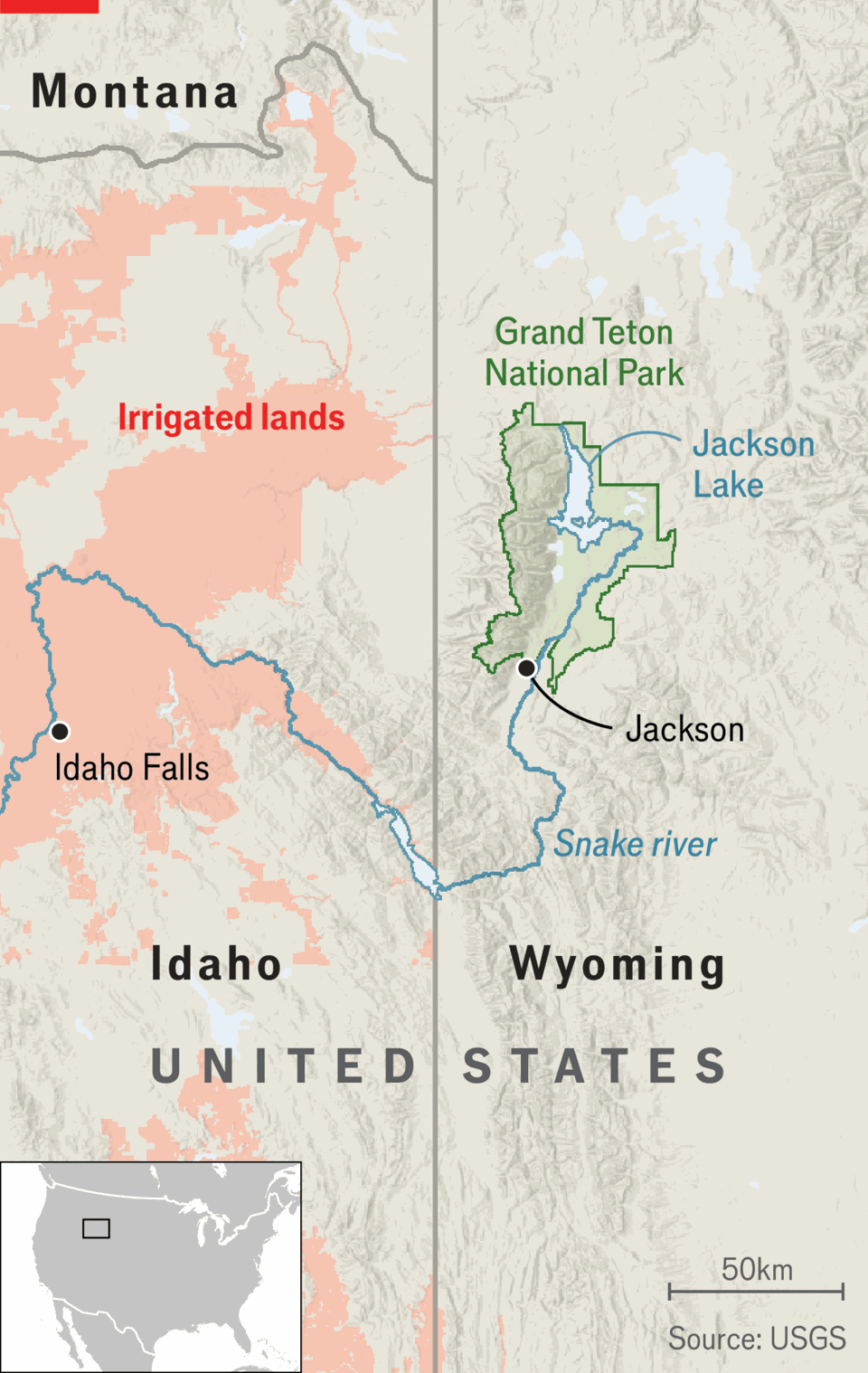
By early September 2026, Jackson Lake in Wyoming’s Grand Teton National Park—which doubles as a critical irrigation reservoir—shrank to just 20% of its capacity, forcing marina facilities to shut down two months early. While the lake has fallen below this level on roughly 16% of days since records began in 1909, its depletion exposes intensifying structural tensions over water governance across the American West. Although the upper Snake River headwaters received near-normal snow-water volume, the drying lakebed underscores how archaic water policies collide with escalating climatic strains.
Under the West's foundational "prior appropriation" legal doctrine, downstream irrigators in Idaho hold senior water rights that supersede recreational or local Wyoming needs. Enabled by federal dams built in the early 20th century, Snake River irrigation created a powerhouse agricultural sector in Idaho valued at nearly $45bn in 2025. Because Jackson Lake sits at the highest altitude in the basin, downstream farmers customarily treat it as a reservoir of last resort to prevent water from being prematurely drained downstream. Its precipitous drawdown demonstrates the severity of this year's regional agricultural water deficits.
This crisis lays bare the intractable zero-sum conflict between Idaho's multi-billion-dollar farming sector, which demands upstream discharges, and Wyoming’s outdoor recreation industry, which requires high lake levels for tourism. Moreover, long-term climate trends exacerbate this instability: average winter snowfall in the Greater Yellowstone ecosystem has declined by roughly 25% since the 1950s, while recurring El Niño patterns threaten future snowpack replenishment. As federal water managers at the Bureau of Reclamation struggle to balance competing interstate claims, the century-old “first in time, first in right” legal framework is becoming increasingly fragile.
Source: A reservoir of last resort is running dry in Wyoming
Subtitle: Competing water uses in the American West are getting harder to manage
Dateline: Sep 10th 2026