连串冲击已可见端倪:在先前美国政策引致的关税波动及安全支出压力后,政府又面对燃料配给与交通中断。各国已启动紧急措施,如宣布全国能源紧急状态、提早关闭高校、限制用电,并呼吁民众减少耗能。随著胡塞活动提高红海航运风险,亚洲各地再出现示威与供应不安;菲律宾出现运输工人罢工、泰国有恐慌性抢购、印度因液化石油气供应紧张爆发国会抗议。菲律宾总统 Ferdinand Marcos Jr. 甚至提出在南海有争议海域与中国进行联合油气开采,这显示能源稀缺正在改变地缘政治算盘。
中国在博鳌论坛等场合自我定位为全球调停者,新加坡总理 Lawrence Wong 也呼吁北京在区域稳定与增长中扮演更大角色。实际情况却更复杂:中国经济增速目标已降至 4.5% 到 5.0%,且超过 1 兆美元(约 1,000,000,000,000 美元)的贸易顺差正在加剧其他亚洲经济体的就业压力;同时,中国人民解放军持续军事扩张、南海摩擦频仍及台海压力仍推高区域安全焦虑。对亚洲而言,务实路径并非选边站,而是分散能源供应、扩大战略储备并深化区域合作,澳大利亚与新加坡的能源安全合作可作为可行样板。
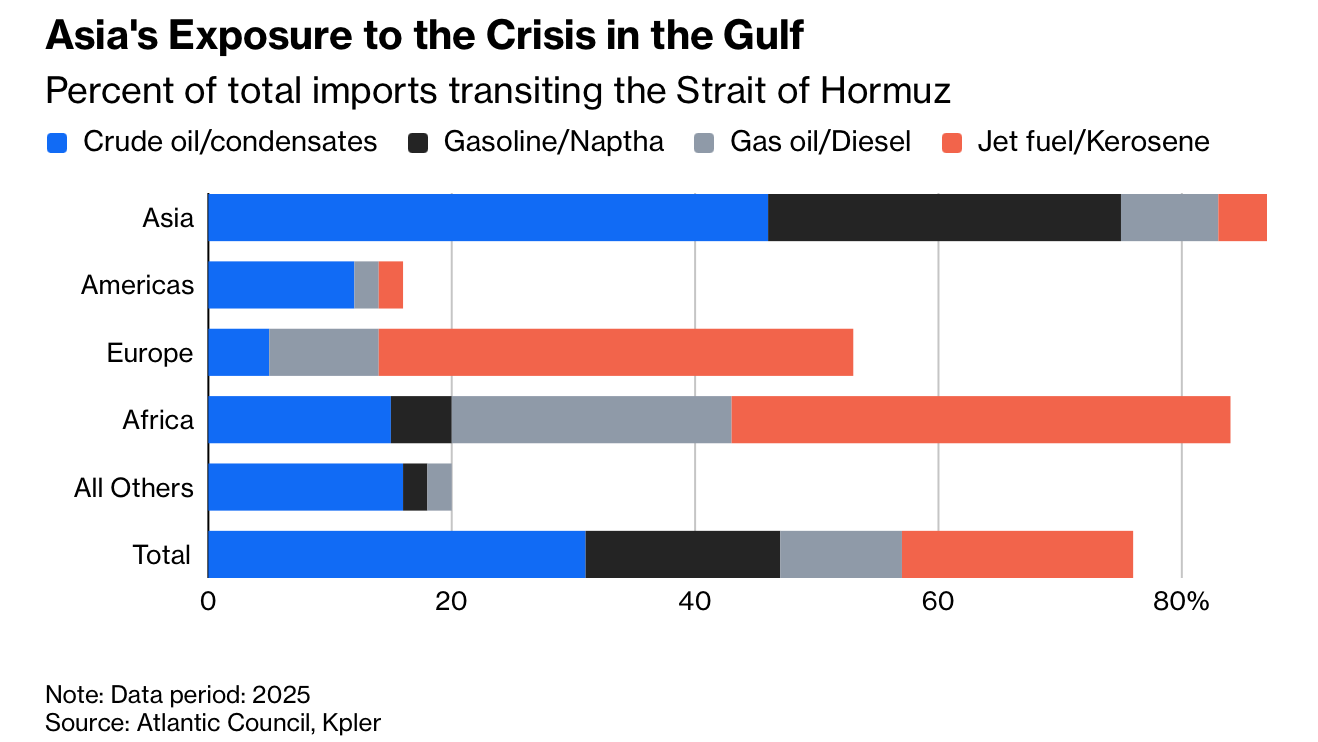
The Iran conflict has become a direct energy shock for Asia. Singapore Foreign Minister Vivian Balakrishnan says U.S. actions have weakened the postwar order, and around 90% of oil and 83% of LNG normally transiting the Strait of Hormuz are bound for Asia. If the strait is disrupted, this is effectively an "Asian crisis." Singapore, Japan, and China can cushion the impact in the short term through deep pockets and strategic reserves, but most Southeast Asian states have oil stocks that last only 20 to 50 days, forcing budget strain, higher consumer costs, and emergency controls.
Layered shocks are already visible: after tariff volatility and defense-cost pressure linked to U.S. policy, governments now face fuel rationing and transport disruption. Measures include national energy emergencies, early closure of universities, power use restrictions, and public appeals to cut consumption. As Houthi activity raises Red Sea shipping risk, unrest in Asia has expanded; the Philippines has seen transport strikes, Thailand panic buying, and India protests over LPG shortages in parliament. Even long-time rivals are recalibrating: Philippines President Ferdinand Marcos Jr. has floated joint oil and gas exploration with China in disputed South China Sea waters, showing how far energy scarcity is reshaping geopolitical tradeoffs.
China is projecting itself as a global mediator at forums such as Boao, and Singapore Prime Minister Lawrence Wong also urges Beijing to play a larger regional role. Yet the picture is complex: China has revised its growth target to 4.5–5.0%, and a trade surplus of more than US$1 trillion is intensifying job pressure in other Asian economies, while rapid PLA military buildup, more frequent South China Sea friction, and Taiwan pressure keep security anxiety high. Asia’s practical response is therefore not choosing sides, but diversifying energy supply, building larger strategic reserves, and deepening regional cooperation; the recent Australia–Singapore energy-security partnership offers a practical template.