在中美首脑会晤中唐纳德·特朗普敦促中方扩大成品油出口以缓解全球柴油荒仅一周后,中国自10月1日起全面无限期叫停燃料出口许可证审批。此前中国在应对霍尔木兹海峡危机中表现灵活,曾在4月至6月间将原油日进口量减半至600万桶以平抑油价,并动用储备使9月柴油出口触及四年新高。然而,其高度集中的指令性调控正引发严重副作用:随着国际柴油每桶精炼利润突破三位数美元,拥有出口配额的国有巨头为满足发改委每月20日“库存高于战前2月水平”的考核标准,不仅大肆收购东部沿海民营“茶壶”炼厂的成品油,更将原定12月交付的远期原油置换为四周内到港的现货,加剧了全球市场扭曲并推高即期布伦特原油突破100美元大关,将阿曼原油运往中国的油轮运费从年初的每桶1.5美元推升至创纪录的36美元。
国内供需价格严重倒挂与原材料短缺引发连锁危机。由于官方严格控制成品油零售端价格,国内批发价与生产成本倒挂,部分地区零售价甚至低于批发成本,导致巨头缺乏供应内销市场的动力,加油站甚至出现捆绑销售香烟才配售柴油的怪象。自开战以来,中国成品油库存已剧烈消耗6500万桶至约3亿桶,阿格斯公司估算国有油企9月底库存已较2月基准低2%,且大部分为应付出口资质的“死库存”。屋漏偏逢连夜雨,依靠秘密折扣进口伊朗与委内瑞拉原油的民营茶壶炼厂陷入停滞:伊朗遭美国全面封锁无法出港,委内瑞拉原油制裁解除后价格水涨船高,导致依赖低价原油的加工链条彻底断裂。
为保障国庆黄金周及国内需求而紧急叫停出口,将给国内外市场带来剧烈反噬。9月份占全球汽柴油及航油出口8%的中国,其10月燃料出口预计暴跌40%;国有油企因无法交货被迫在公开市场高价平仓,单笔典型柴油出口或将从获利2000万美元逆转为亏损1000万美元。标普全球估算,若不进一步消耗原油战略储备,中国需将原油进口推高至每日950万至1000万桶(较上月增加200万桶),同时还得在公开市场填补失去伊委原油所造成的200万桶日缺口。目前中国原油战略储备自5月以来日均消耗不足100万桶,仍保有11亿桶(相当于战前约100天进口量),但在中东战事未决之际,中国正被迫在高昂能源补贴、通胀外溢与削弱战略安全缓冲之间艰难抉择。
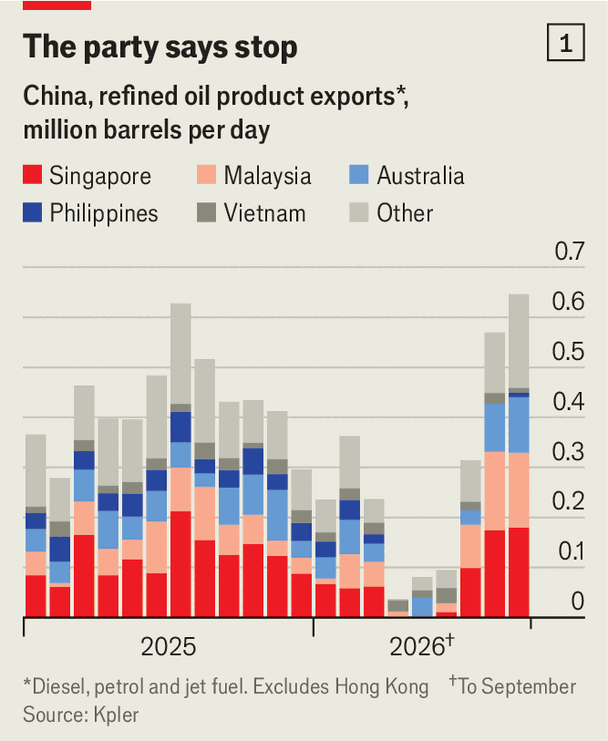
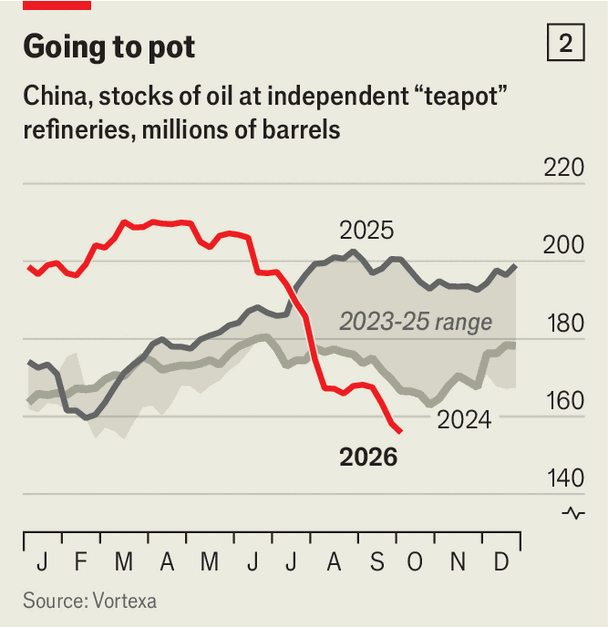
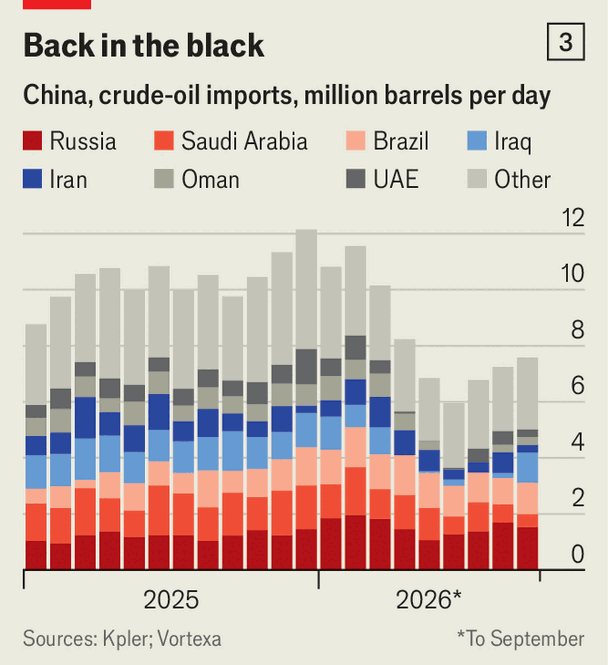
Just a week after Donald Trump urged Xi Jinping to expand fuel exports to alleviate global diesel shortages, China imposed an indefinite freeze on fuel-export licences on October 1st. While Beijing previously demonstrated tactical agility—halving crude imports to 6m barrels a day (b/d) between April and June to stabilize prices and permitting diesel exports to reach four-year peaks in September—its command-and-control apparatus is generating severe systemic side effects. Chasing triple-digit dollar refining margins per barrel of diesel, state-owned majors scrambled to satisfy government rules requiring inventories to exceed pre-war February benchmarks on the 20th of each month. Majors aggressively acquired refined fuel from eastern "teapot" refiners, swapped December crude deliveries for immediate four-week arrivals, pushed spot Brent crude back to $100 per barrel, and drove tanker shipping rates for Omani crude from $1.50 to a staggering $36 per barrel.
Severe price distortions and raw material bottlenecks have disrupted domestic distribution networks. Because retail fuel caps lag surging refining and wholesale costs, domestic retail prices fell below wholesale levels in certain provinces, prompting refiners to restrict local supply and forcing gas stations to ration scarce diesel through tied cigarette sales. Domestic refined product inventories have diminished by 65m barrels since the outbreak of hostilities to roughly 300m barrels, with Argus Media estimating end-September stocks at 2% below February baselines. Crucially, private teapots can no longer source cheap feedstock, as American blockades choked off Iranian shipments and sanctions relief made Venezuelan crude unaffordable, paralyzing their secondary processing capacity.
Curtailing fuel exports ahead of the Golden week holiday imposes major global and corporate fallout. Having supplied 8% of global diesel, petrol, and jet fuel exports in September, Chinese shipments are projected to plunge by 40% in October, creating widespread deficits. State majors must cover committed offshore contracts on the spot market, transforming typical cargo gains of $20m into $10m net losses. S&P Global estimates that stabilizing domestic supply without draining stockpiles necessitates crude imports of 9.5m-10m b/d—a 2m b/d increase over last month—alongside procuring another 2m b/d to replace lost Iranian and Venezuelan streams. Although China preserves roughly 1.1bn barrels in crude reserves, representing 100 days of pre-war demand after drawing down under 1m b/d since May, policymakers face worsening trade-offs between retail inflation, state subsidies, and national energy security.
Source: China’s oil tactics have been clever. Now the costs are mounting
Subtitle: The choices it faces will have global repercussions
Dateline: Oct 8th 2026\n