去年全球航天发射行业迎来历史性繁荣,BryceTech统计显示全年共完成325次轨道发射(同比增长25%),将4,544个航天器送入轨道(激增54%)。然而在空前繁荣背后,火箭运力短缺的恐慌正笼罩整个市场。马斯克旗下的SpaceX是行业绝对垄断力量,其主力火箭“猎鹰9号”(Falcon 9)在2025年为外部客户执行了43次专属或拼车发射任务;作为其商业发射领域最接近的竞争对手,火箭实验室(Rocket Lab)虽发射了18次,但其“电子号”(Electron)微型火箭的运载能力不足猎鹰9号的2%。
引发行业恐慌的核心在于猎鹰9号即将逐步退役。随着SpaceX全速转向完全可重复使用的“星舰”(Starship)并在9月28日的试飞中首次成功将“星链”(Starlink)卫星送入轨道,2026年猎鹰9号的发射频次预计将迎来历史首次下降,业内普遍传言2028年之后将无法再订购该火箭。更严峻的是,卫星运营商原本预期的“星舰”对外商业发射或将落空。在截至6月30日的半年中,发射业务仅占SpaceX 125亿美元总收入的8%,其余全部由在轨运行超1.1万颗的“星链”及AI数据中心卫星业务贡献。为了满足自身“星链”和“星智”(Starmind)数万颗算力卫星的发射需求,星舰在短期内恐无暇为第三方提供运力。
这种运力供给真空对竞争对手而言构成了历史性窗口。意大利小火箭Vega-C制造商Avio透露,大量无法获得SpaceX排期的客户正涌向其寻求发射;而在载人航天领域,猎鹰9号退役意味着载人龙飞船的终止,迫使NASA向波音公司追加采购两架星际客机(Starliner)航天任务并额外注资修复姿控推进器。此外,运力超猎鹰9号一半的火箭实验室“中子号”(Neutron)即将首飞,由前谷歌CEO埃里克·施密特资助的相对论空间(Relativity Space)正推进“人马座R”(Terran R),而欧洲伊萨尔航天(Isar Aerospace)也在9月5日成功首飞入轨。随着巨头将产能内卷,竞争对手正凭借制造规模化与扩产能力全力争夺商业航天溢出的庞大蛋糕。
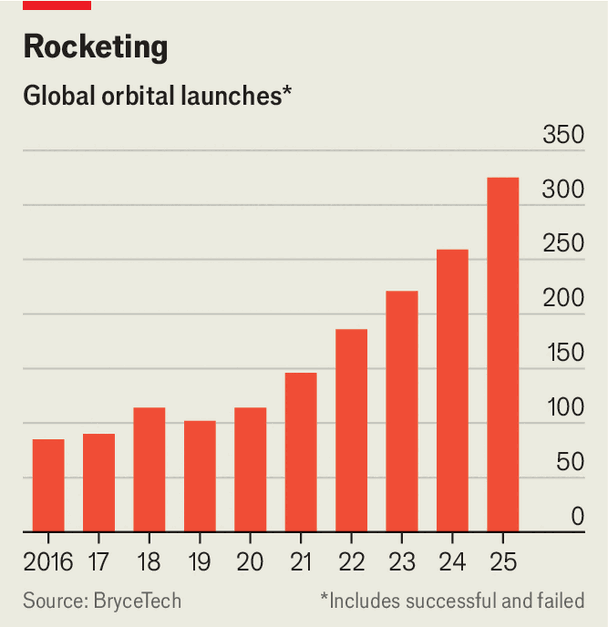
The commercial space launch industry achieved unprecedented records last year, with BryceTech recording 325 orbital launches (a 25% year-on-year increase) that deployed 4,544 spacecraft (up 54%). Despite this superficial abundance, the satellite sector is gripped by an acute rocket shortage panic. SpaceX maintains absolute market dominance through its cheap, reliable Falcon 9, which conducted 43 dedicated and rideshare missions for commercial clients in 2025 alone. By comparison, closest rival Rocket Lab completed 18 launches, but its small Electron vehicle possesses less than 2% of Falcon 9’s payload capacity, leaving the commercial market precariously dependent on Elon Musk's launcher.
An existential bottleneck looms as SpaceX prepares to phase out Falcon 9 in favor of Starship, which deployed Starlink satellites during a flight test on September 28th. Launch schedules indicate 2026 will mark the first annual drop in Falcon 9 launches, with industry insiders warning that commercial bookings past 2028 are unobtainable. Crucially, satellite builders' assumptions that Starship would be commercially accessible are faltering. SpaceX operates as a vertically integrated satellite powerhouse: launch services generated just 8% of its $12.5bn revenue in the six months to June 30th, with the bulk derived from Starlink (with over 11,000 active orbital satellites) and upcoming AI-focused "Starmind" constellations. Internal demand will likely consume Starship capacity entirely, freezing out commercial customers.
This prospective market withdrawal is creating urgent openings for rival launch providers. European Vega-C maker Avio reported an influx of desperate satellite operators rejected by SpaceX. In human spaceflight, Falcon 9’s retirement would terminate Crew Dragon, leaving NASA reliant on Boeing’s troubled Starliner capsule, prompting the agency on September 28th to purchase two additional flights and subsidize thruster repairs. Simultaneously, hungry contenders are mobilizing: Rocket Lab is preparing the medium-lift Neutron rocket; Eric Schmidt-backed Relativity Space is developing Terran R; Jeff Bezos’s Blue Origin is recovering from launchpad failures; and European startup Isar Aerospace achieved orbit on September 5th. As SpaceX redirects focus inward, emerging competitors race to capture the abandoned commercial payload market.
Source: A rocket shortage gives SpaceX’s competitors an opportunity
Subtitle: The firm may soon have little capacity to launch others’ payloads
Dateline: Oct 1st 2026\n