尽管美国自 2019 年以来已从超过 60 年来的能源净进口国转为净出口国,伊朗战争带来的油价冲击仍在伤害其经济。近 3 周内,油价上涨约一半,而通常承载全球约五分之一原油运输的霍尔木兹海峡几乎关闭。Goldman Sachs 估计,这场战争将使美国今年 GDP 增长下调 0.3 个百分点至 2.2%,说明美国虽能从 LNG 和石油出口中获利,却不像典型石油国家那样成为明确赢家。
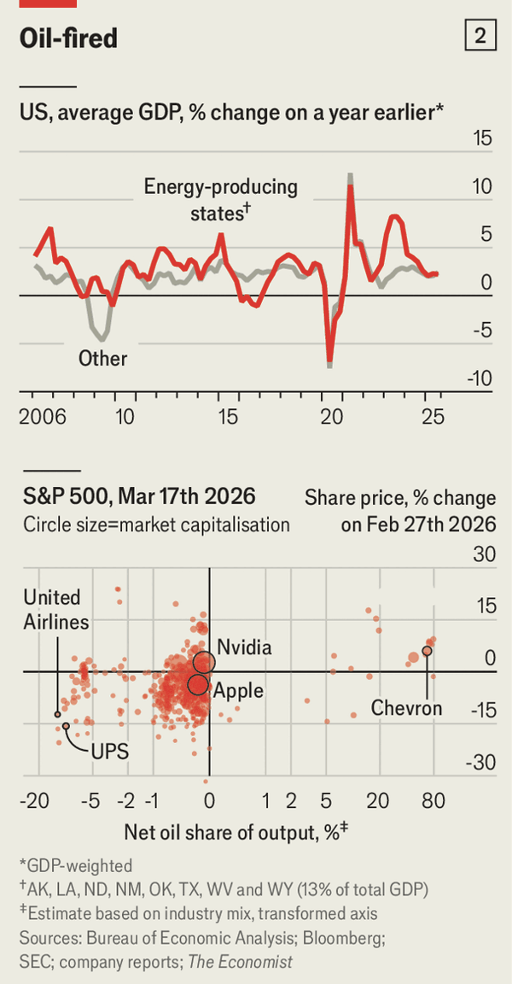
冲击在美国内部的分布高度不均。拥有化石燃料产业的州——尤其是 Texas、Alaska 和 New Mexico——可能再次受益,而且幅度可能大于 2022 年,因为美国 LNG 出口能力如今比当时大三分之一,并将在年底前再增长约 10%,而石油产量在过去 10 年增长了一半。企业层面同样分化:自战争爆发以来,S&P 500 下跌近 4%,11 个大板块中有 10 个下跌;唯独能源板块上涨逾 4%,Chevron 上涨 6%。
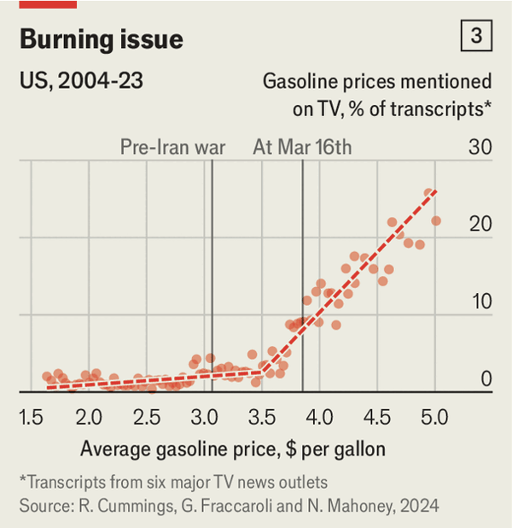
最大的再分配发生在穷人与富人之间。最低收入五分之一家庭在汽油和电力上的支出占比,几乎是最高收入五分之一的两倍,因此能源涨价会迫使他们削减其他消费,而额外支出最终流向石油公司和持股阶层。政治风险也在上升:战前汽油价格低于每加仑 3 美元,如今已接近 4 美元;研究显示,一旦超过 3.50 美元,媒体关注会激增,而若霍尔木兹继续关闭,涨到 5 美元并非不可能。高油价因此可能同时利好石油公司和国会民主党。
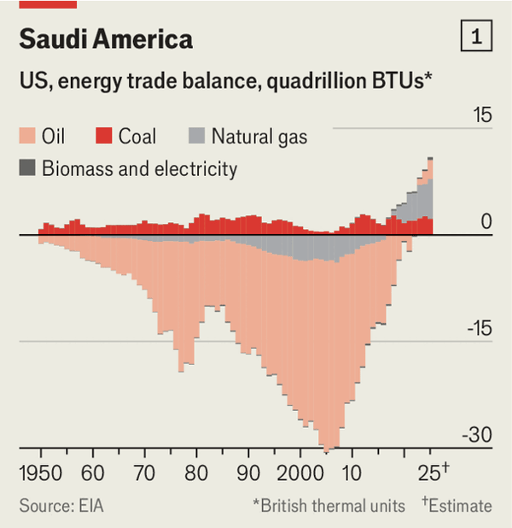
Although America has been a net energy exporter since 2019 for the first time in more than 60 years, the oil shock from the Iran war is still hurting its economy. In nearly 3 weeks, oil prices have risen by about one-half, while the Strait of Hormuz, which normally carries about one-fifth of global crude, is nearly shut. Goldman Sachs estimates that the war will cut American GDP growth this year by 0.3 percentage points to 2.2%, showing that America can profit from LNG and oil exports but is not an outright winner like a classic petrostate.
The shock is distributed very unevenly inside America. Fossil-fuel states—especially Texas, Alaska and New Mexico—may benefit again, and more than in 2022, because American LNG export capacity is now one-third larger than then and will grow by about 10% more by year-end, while oil production has risen by one-half over the past decade. Businesses are also splitting apart: since the war began, the S&P 500 has fallen by almost 4%, and 10 of its 11 big sectors are down; only energy is up, by more than 4%, with Chevron gaining 6%.
The biggest redistribution is from poorer Americans to richer ones. The lowest-earning fifth spends nearly twice as much of its budget on petrol and electricity as the highest-earning fifth, so higher energy prices force cutbacks elsewhere, while the extra spending ultimately flows to oil firms and shareholders. The political risk is rising too: petrol was under $3 per gallon before the war and is now nearly $4; research shows media attention jumps once prices pass $3.50, and if Hormuz stays shut, $5 is possible. Expensive fuel may therefore benefit both oil companies and congressional Democrats.