当前市场氛围令人不安地联想到互联网泡沫末期。投资者已习惯于承受5%的急跌,但若跌幅突破10%,市场可能找不到支撑底部。与此同时,超大规模云端业者的巨额资本支出回报前景再度受到质疑,而这些投资正透过更大规模的股票与债券发行来融资,晶片制造商的长期盈利预期是否切合实际也引发广泛讨论。
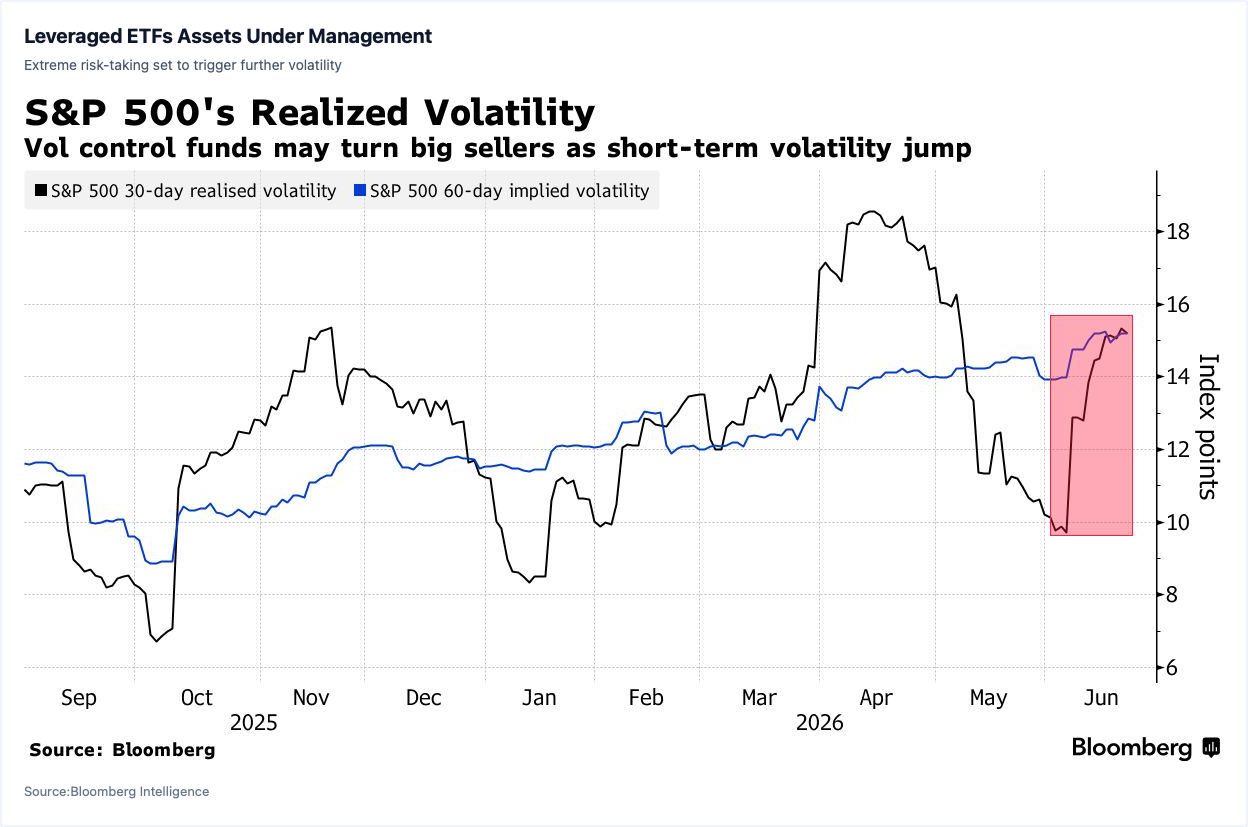
对AI前景的怀疑正促使资金轮动至其他板块。瑞银等主经纪商观察到,部分对冲基金已开始减持拥挤交易以分散风险。野村策略师McElligott估计,若标普500连续两周每日波动达1%,波动率控制型基金将触发约210亿美元的抛售;若波动扩大至1.5%,抛售规模可达410亿美元,市场面临进一步下行压力。
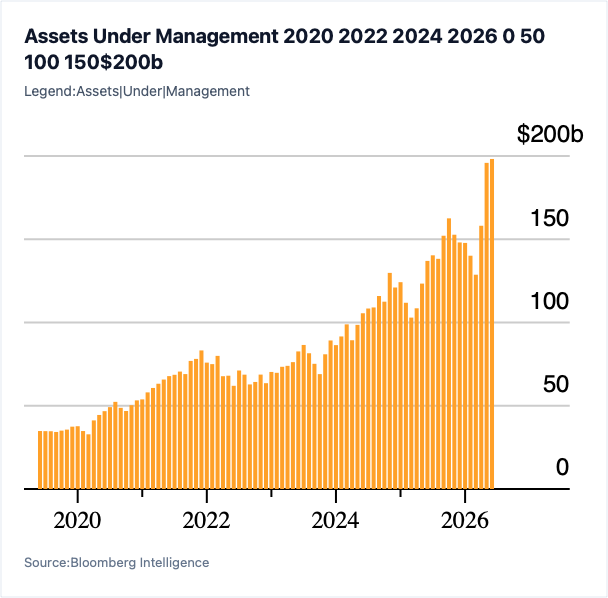
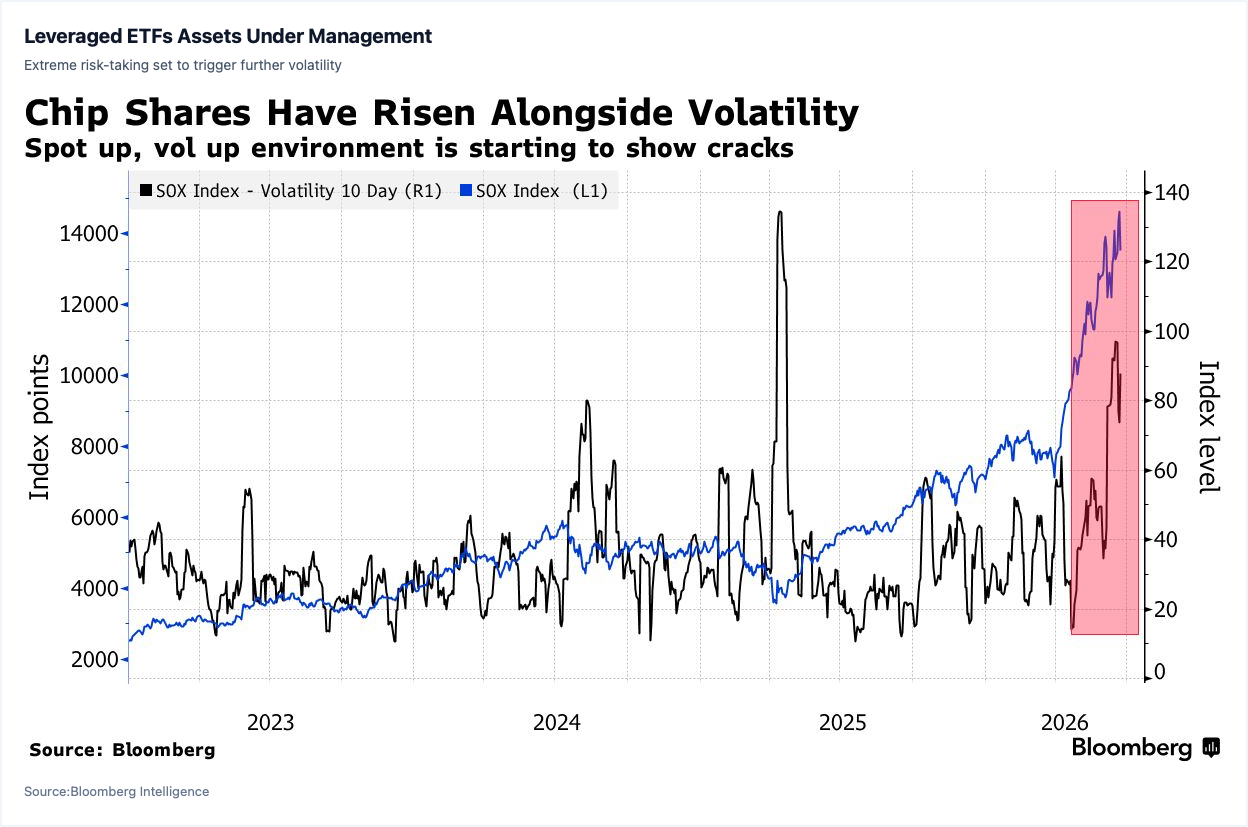
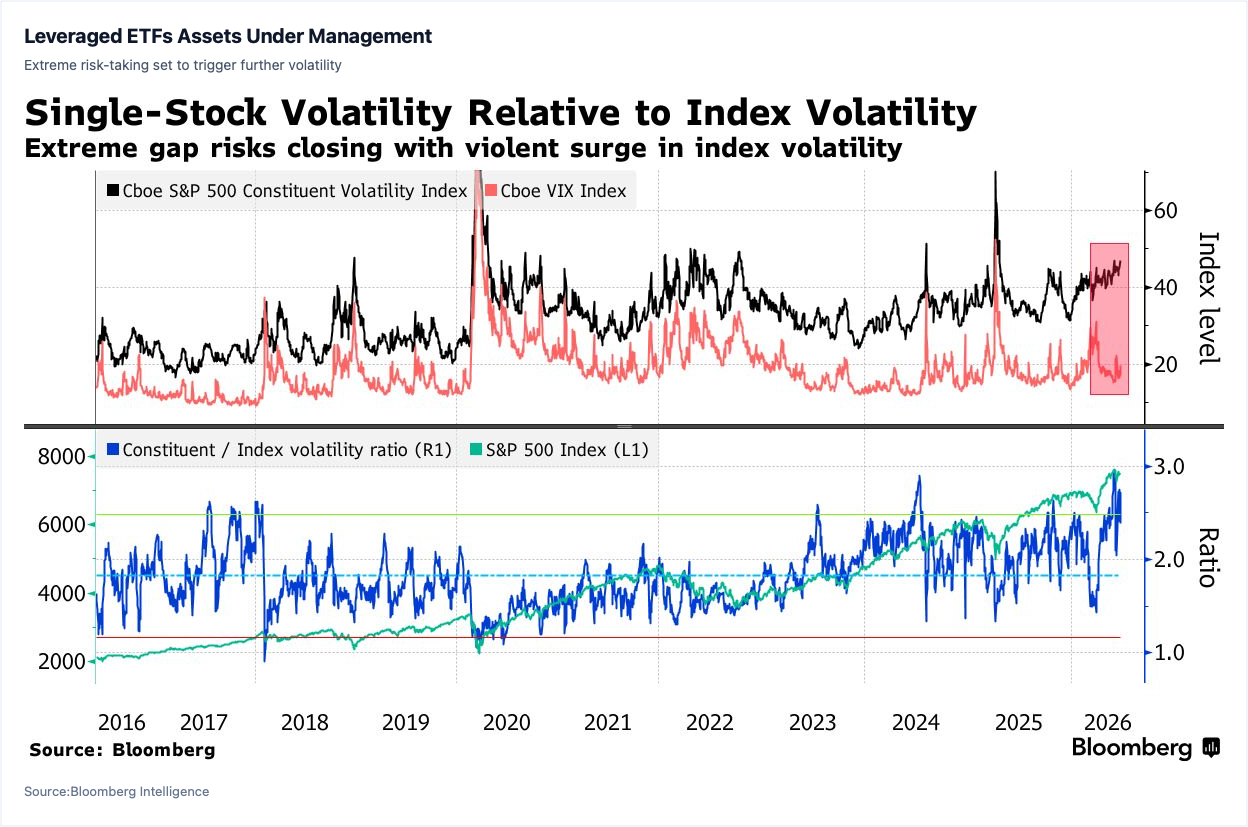
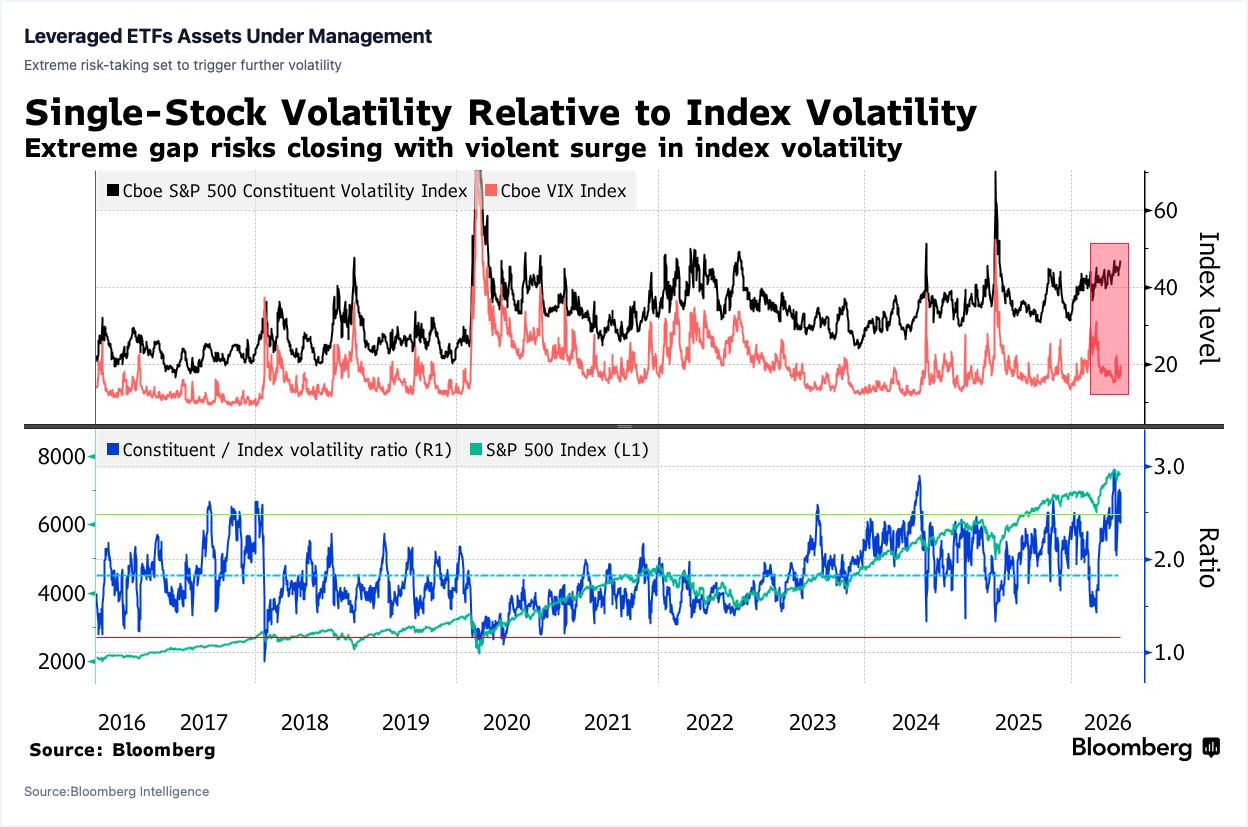
The artificial intelligence trade faces mounting instability as crowded positioning and extreme leverage flash warning signs. Leveraged ETFs, now holding roughly $200 billion in assets, amplify every 1% index move into approximately $9 billion of same-direction rebalancing due to a significant short-gamma effect. Goldman Sachs partner Bobby Molavi cautions that the high co-correlation across active funds, passive funds, hedge funds, and retail investors feels rewarding on the way up but becomes extremely dangerous during an unwind.
The current environment draws unsettling parallels to the final months of the dot-com bubble. Investors have grown accustomed to absorbing sudden 5% drawdowns, but the critical question is what happens if a 10% decline materializes with no visible floor. Compounding the unease, doubts have resurfaced about the returns on hyperscalers' massive capital expenditures, which are now being financed through even larger equity and debt issuance, while lofty long-term earnings expectations for chipmakers face growing skepticism.
Skepticism toward AI returns is accelerating rotation out of crowded trades. Prime brokers at UBS report that some hedge funds have begun trimming exposure, acknowledging the 'same bus' dynamic and questioning how much upside remains relative to risk. Nomura strategist Charlie McElligott warns that rising realized volatility could turn volatility-control funds into heavy sellers, estimating $21 billion in selling flows from two weeks of daily 1% S&P 500 moves and $41 billion from 1.5% moves, underscoring the fragility of the current positioning landscape.