日本驻华大使今年多次请求与中国外交部官员会面均未获回应,两国外交接触几近停摆。高市早苗因中方对她的人身攻击而不愿在今年十一月的APEC峰会期间与习近平会晤。日本目前的公开回应是加入七国集团承诺,在2030年前将对任何单一国家稀土依赖降至60%以下,并考虑推动回收计划、价格底线和贸易措施等方案。
出口数据显示,用于汽车精密工具的钨中间产品自一月起对日出口量降为零;用于LED萤幕和半导体设备的钇出口量仅为去年全年的1.13%;用于电动车高性能磁铁的镝和铽全年出口量同样为零。部分日本大型钨加工企业如住友电气和三菱材料已加大废料回收利用力度来应对,三菱材料的回收材料使用率已达约70%,目标在2030年达到100%。中国在稀土开采、精炼及永磁体生产方面的全球主导地位使日本短期内难以完全摆脱对华依赖。
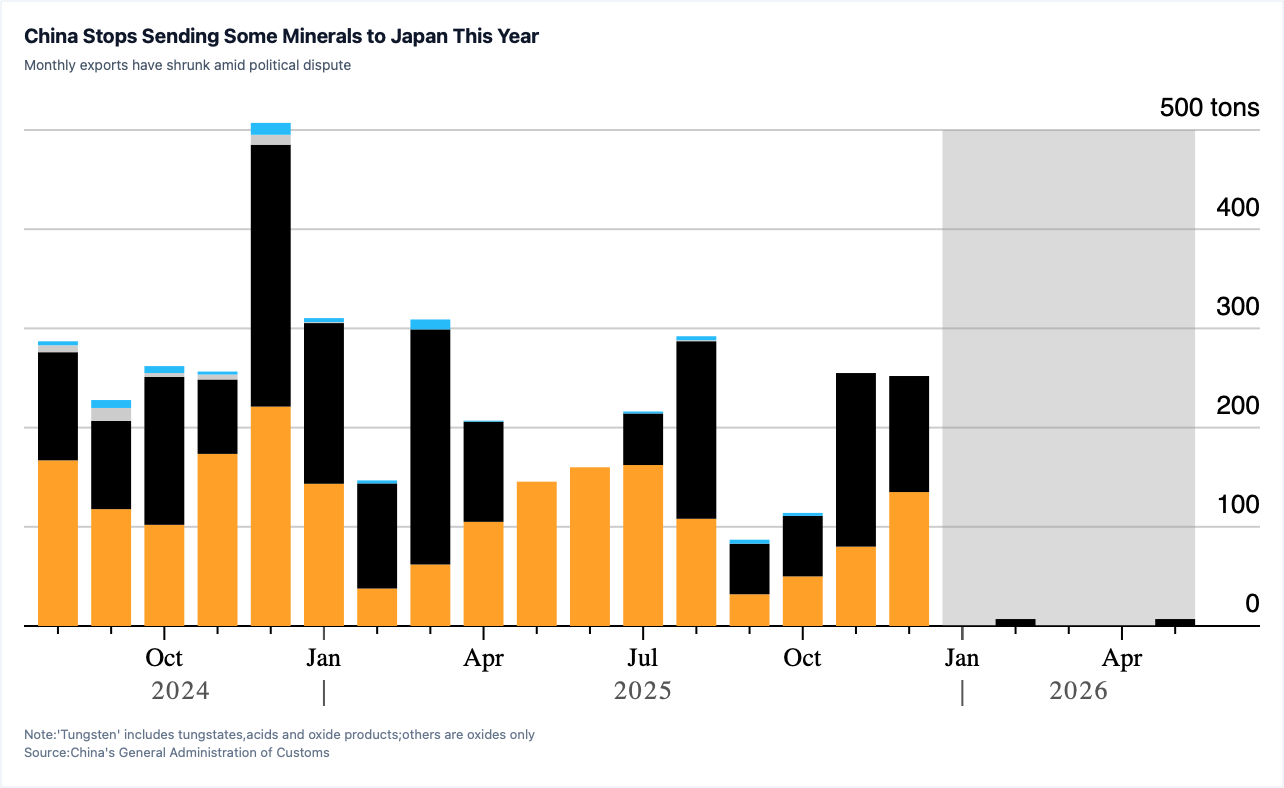
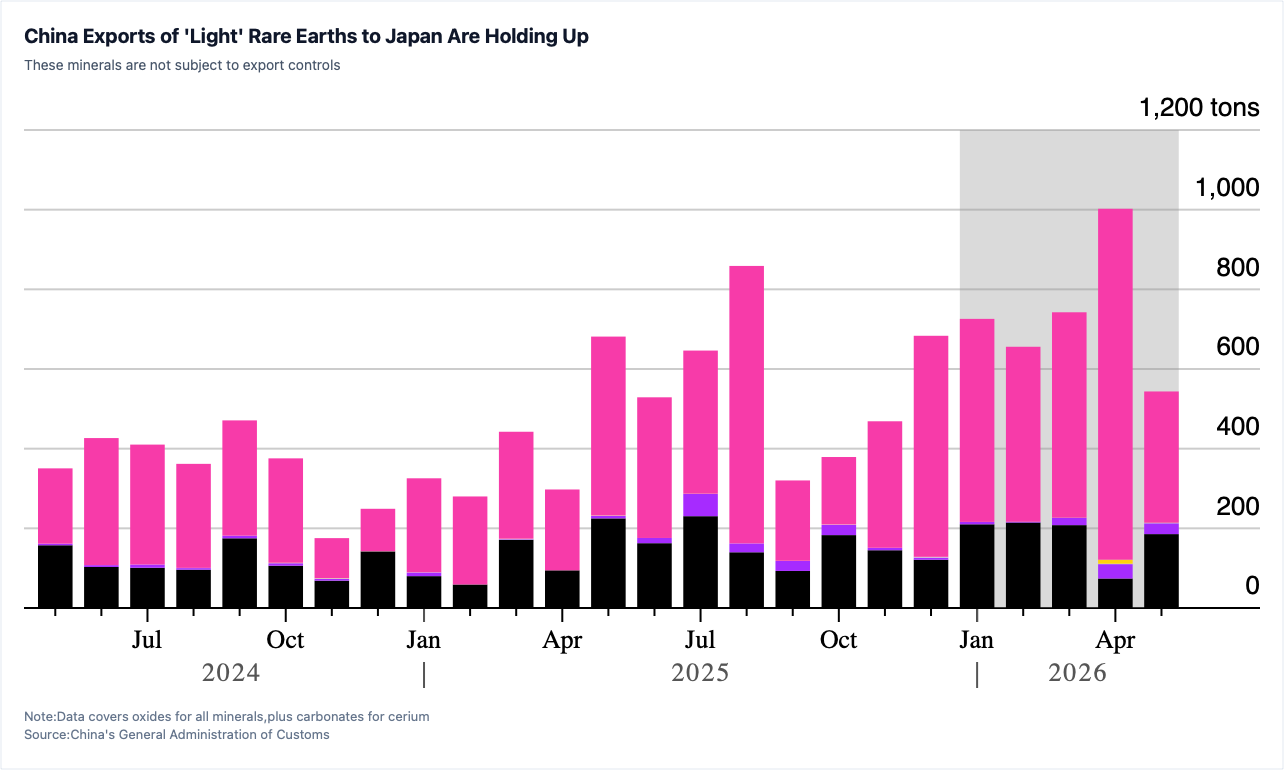
China has nearly halted exports of certain intermediate forms of tungsten to Japan this year and reduced rare earth magnet shipments to their lowest levels since May 2025. The restrictions began after Japanese Prime Minister Sanae Takaichi angered Beijing last November with remarks about Taiwan. The curbs appear designed to inflict targeted economic pain on Japan without provoking a broader response from the United States, but they have forced Japanese companies to draw down stockpiles and search for alternative suppliers.
Diplomatic contact between the two Asian economic powers has ground to a near standstill, with Japan's ambassador to China repeatedly failing to secure meetings with Chinese Foreign Ministry officials. Takaichi is reportedly reluctant to meet President Xi Jinping at the upcoming APEC summit in Shenzhen due to personal attacks directed at her by China. Japan's public strategy so far includes joining a G7 pledge to cap rare earth reliance on any single country at 60% by 2030, along with exploring recycling initiatives, price floors, and trade measures.
Trade data reveals severe disruptions in specific mineral categories: tungsten intermediate exports to Japan dropped to zero starting in January, yttrium exports stand at just 1.13% of last year's total volume, and dysprosium and terbium shipments have been at zero all year. Major Japanese processors such as Sumitomo Electric and Mitsubishi Materials have increased their use of recycled scrap to offset the shortfall, with Mitsubishi Materials targeting 100% recycled feedstock by 2030. However, China's overwhelming dominance in rare earth mining, refining, and permanent magnet production — controlling over 90% of refining and nearly 95% of magnet manufacturing globally — means Japan remains highly vulnerable to supply disruptions in the near term.