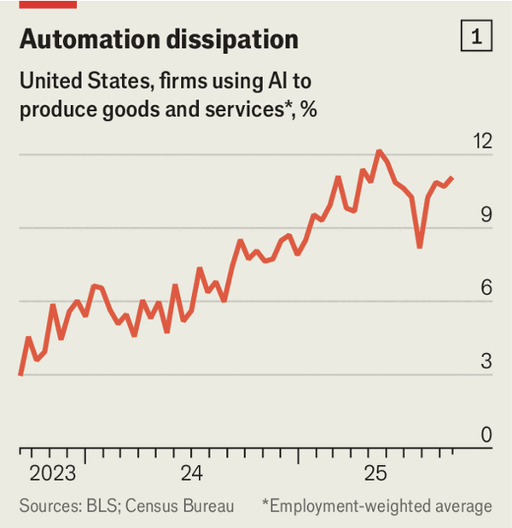
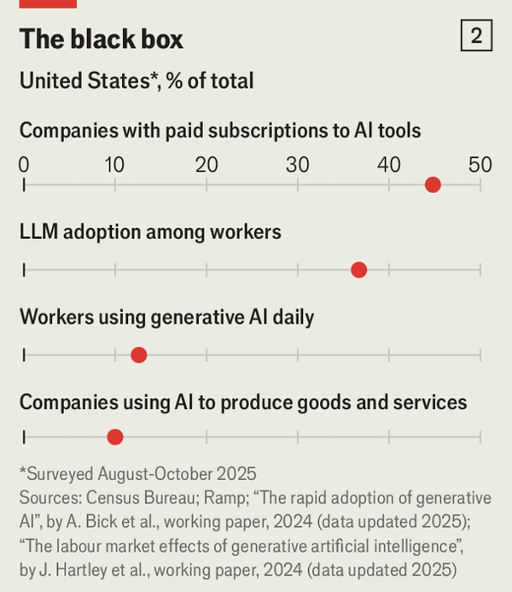
美国人口普查局的调查显示,就业加权的美国职场AI使用率最近下降了1个百分点至11%,尤其是雇员超过250人的大型企业采用率下滑最明显,而其他研究多估计整体采用率略高于10%。另一项研究发现,使用生成式AI办公的美国人自2024年6月的46%跌至9月的37%,美联储相关追踪数据显示每日在工作中使用生成式AI的工作年龄成人比例一年间仅由12.1%微升至12.6%。
尽管如此,部分企业在2025年初的AI使用率一度跃升至40%后趋于平台期,而从2024年至2030年大型科技公司计划为AI基础设施投入约5万亿美元资本支出,需每年约6500亿美元收入才能合理回本,目前相关年收入约为500亿美元。管理层与员工间存在显著使用差异,一项调查中87%的高管在工作中使用AI,但中层管理者仅为57%,普通员工更低至27%,标志着组织内部采纳动力存在结构性摩擦。
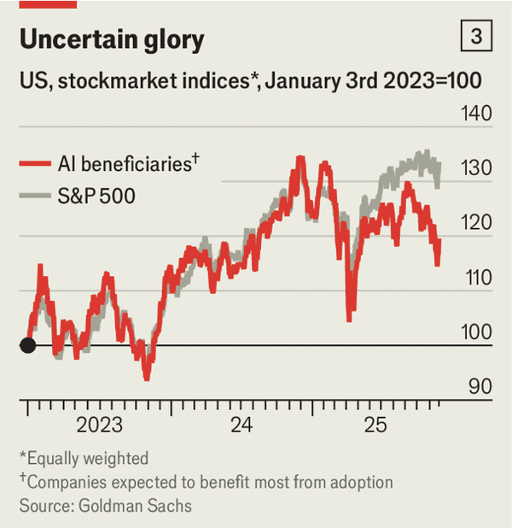
收益数据同样显得冷淡,高盛面向“受AI生产率提升潜力最大”公司构建的指数近期落后于大盘,德勤和香港大学联合调查中45%的高管称AI回报低于预期,仅10%表示超出预期。麦肯锡研究认为大多数组织尚未在企业整体利润上感受到显著AI贡献,学界还提出“生产率J曲线”和“生成式AI平庸陷阱”等概念,指出在短期内重构流程可能压低效率且让高技能者退而求其次,由此意味着要真正兑现5万亿美元投资背后的经济回报,AI的收益到来将更缓慢、更不均衡且成本更高。
I’m thinking about the adoption rates and survey discrepancies I need to address. There’s also this stagnation alongside corporate usage levels, considering management versus employees and the need for investment and revenue. The returns have been disappointing, with indices lagging and implications of a slower payoff, which is concerning—5 trillion at risk! I should mention that employment-weighted shares have gone down by 1 percentage point in large firms. I’ll aim for 70-80 words per paragraph, avoiding lists. Let’s get this drafted!
Recent Census Bureau data show the employment-weighted share of American workers using AI has fallen by 1 percentage point to 11%, with adoption dropping fastest at firms employing more than 250 people, while other surveys put overall usage somewhat above 10%. One study finds the share of Americans using generative AI at work slid from 46% in June 2024 to 37% in September, and a separate tracker shows daily workplace users rose only marginally from 12.1% to 12.6% of working-age adults over a year.
Even where adoption has surged, it often plateaus: usage at U.S. firms reportedly jumped to about 40% in early 2025 before leveling off. From 2024 to 2030, big tech companies plan roughly $5 trillion in AI infrastructure capex, which analysts estimate will require on the order of $650 billion in annual AI revenues to justify, far above today’s roughly $50 billion. Inside firms, uptake is highly unequal, with 87% of executives using AI at work versus 57% of managers and only 27% of employees, highlighting organizational frictions that may slow diffusion.