沙特“2030愿景”于2016年推出,但在油价长期低迷下,耗资巨大的超级项目正在收缩:上月王国叫停了可能因自重坍塌的立方体摩天楼“穆卡阿卜”,耗资逾5000亿美元的“线形城”工程也基本停滞。原定2029年举行的亚洲冬季运动会已改至哈萨克斯坦,因为西北部正在建设的滑雪度假区无法按期完工。
就业与收入数据体现出“名义增长、实际下滑”:愿景开始时平均月薪为10,045里亚尔(2,679美元),九年后为11,197里亚尔,仅增11%,而同期累计通胀略高于17%。女性就业目标推进显著,2016年女性劳动力就业率仅19%,到2025年已升至34%以上;家庭月收入也从2018年的14,823里亚尔增至2025年的18,056里亚尔,但性别薪酬差距扩大,女性更多集中于服务业岗位。
成本端上行更快:海合会2015年决定统一征收5%增值税,沙特2018年实施并在新冠期间将其提高至三倍(15%)且未下调,同时削减电力、燃料和用水补贴,并将年轻劳动者退休年龄从58岁提高到65岁。利雅得因“数十亿”级投入吸引人口流入,租金自2020年以来上涨逾50%且曾被宣布冻结五年;约三分之二家庭已拥有住房(目标70%),但公寓价格自2020年以来翻倍至每平方米6,000里亚尔以上,而吉达和东部省份价格几乎不动;社会开放也凸显分化,酒类商店于1月开业且11月扩至长期居留或月薪高于50,000里亚尔的外籍人士。
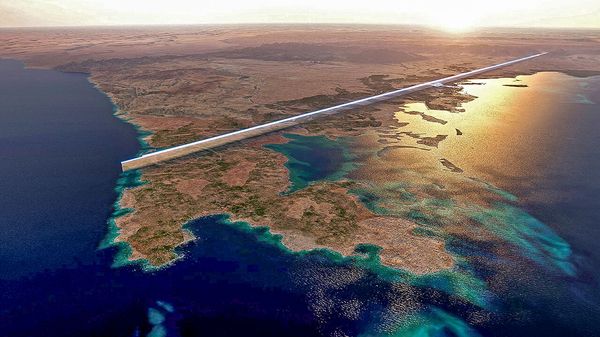
Saudi Arabia’s Vision 2030 launched in 2016, but with oil prices staying low, capital-heavy “giga-projects” are being scaled back: last month the kingdom halted the cube-shaped Mukaab after warnings it could collapse under its own weight, and work has largely stopped on The Line, a $500bn-plus linear city. The 2029 Asian Winter Games were moved to Kazakhstan because a ski resort in the north-west will not be ready on time.
Jobs and income figures show nominal gains but real erosion: average monthly pay rose from 10,045 rials ($2,679) at the start of Vision 2030 to 11,197 rials nine years later, an 11% increase versus cumulative inflation of a bit over 17%. Female employment surged from 19% of the female labour force employed in 2016 to above 34% by 2025, and average family income rose from 14,823 rials a month in 2018 to 18,056 rials in 2025, even as the gender wage gap widened with women concentrated in service work.
Costs have risen faster: after the GCC agreed in 2015 on a uniform 5% VAT, Saudi Arabia introduced it in 2018 and tripled it during covid (to 15%) without reversing the increase, while cutting electricity, fuel and water subsidies and raising the retirement age for young workers from 58 to 65. Riyadh’s boom, fueled by “billions” in investment, has pushed rents up by more than 50% since 2020 (prompting a five-year rent freeze) and driven flat prices to more than 6,000 rials per square metre after doubling since 2020; about two-thirds of families now own homes (vs a 70% target), while social liberalisation has also highlighted inequality, with an alcohol shop opened in January and access expanded in November to expats with long-term residency or salaries above 50,000 rials a month.
Source: Why Saudis feel squeezed even as the economy booms
Subtitle: Young people grousing about service jobs and high rents sound like their peers in the West
Dateline: 2月 12, 2026 05:50 上午 | Riyadh