然而,天文学界对此假说仍存有高度争议。反对者认为这些小红点本质上仍是传统的超大质量黑洞,其极致的红色外观与光谱展宽主要源自环绕黑洞的厚重气体尘埃甜甜圈结构所造成的遮蔽,以及电子散射效应,观测角度的差异即可解释「小红点」与「小蓝点」的色泽差异。
随著研究深入,理论学家透过模型比对与宇宙普查资料发现,小红点天体在宇宙年龄达到20亿至30亿年时显著减少,暗示它们可能代表超大质量黑洞在早期宇宙吞噬外壳物质、迈向成熟的「青春期」过渡阶段,尽管最终定论仍有待更多观测证据加以验证。
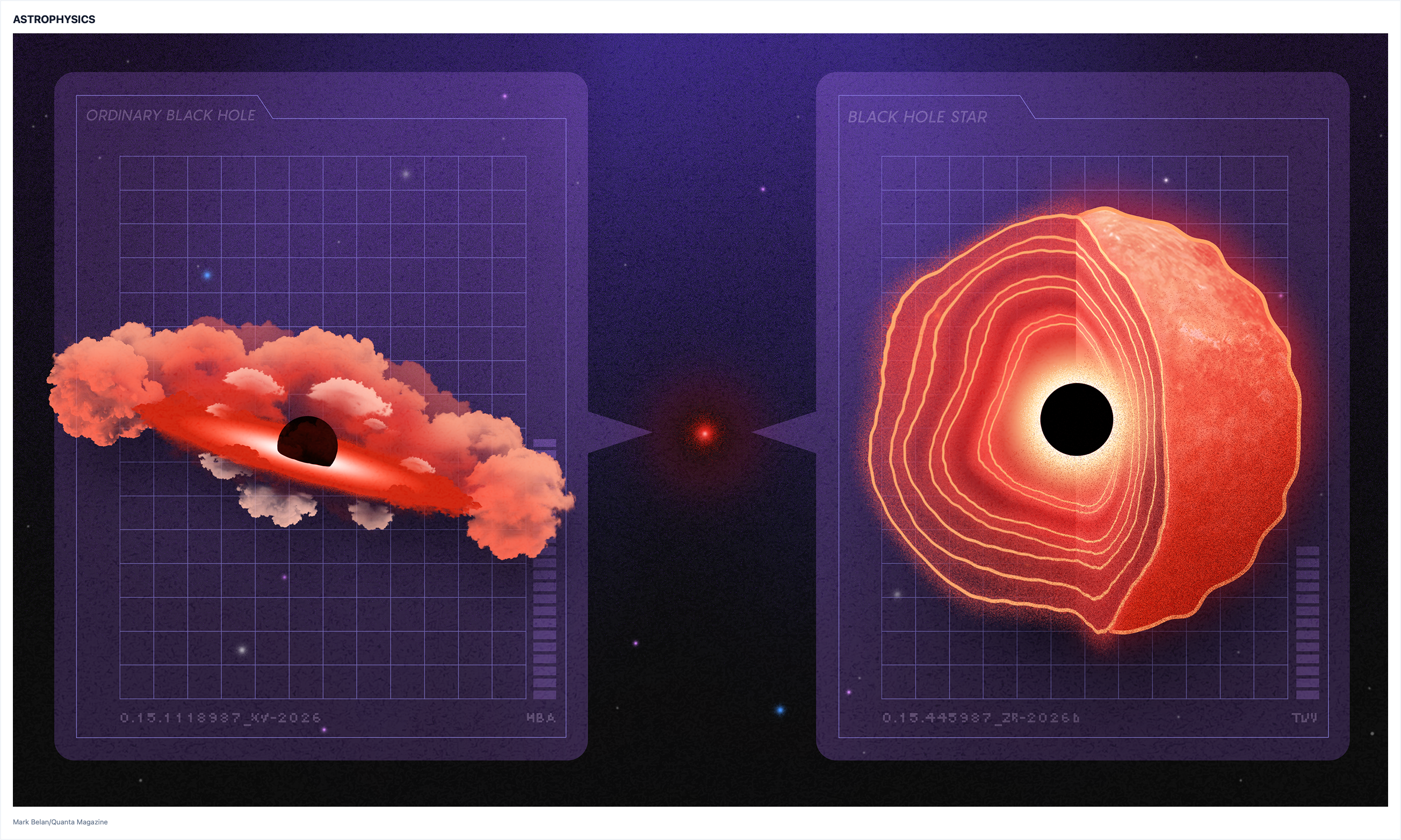
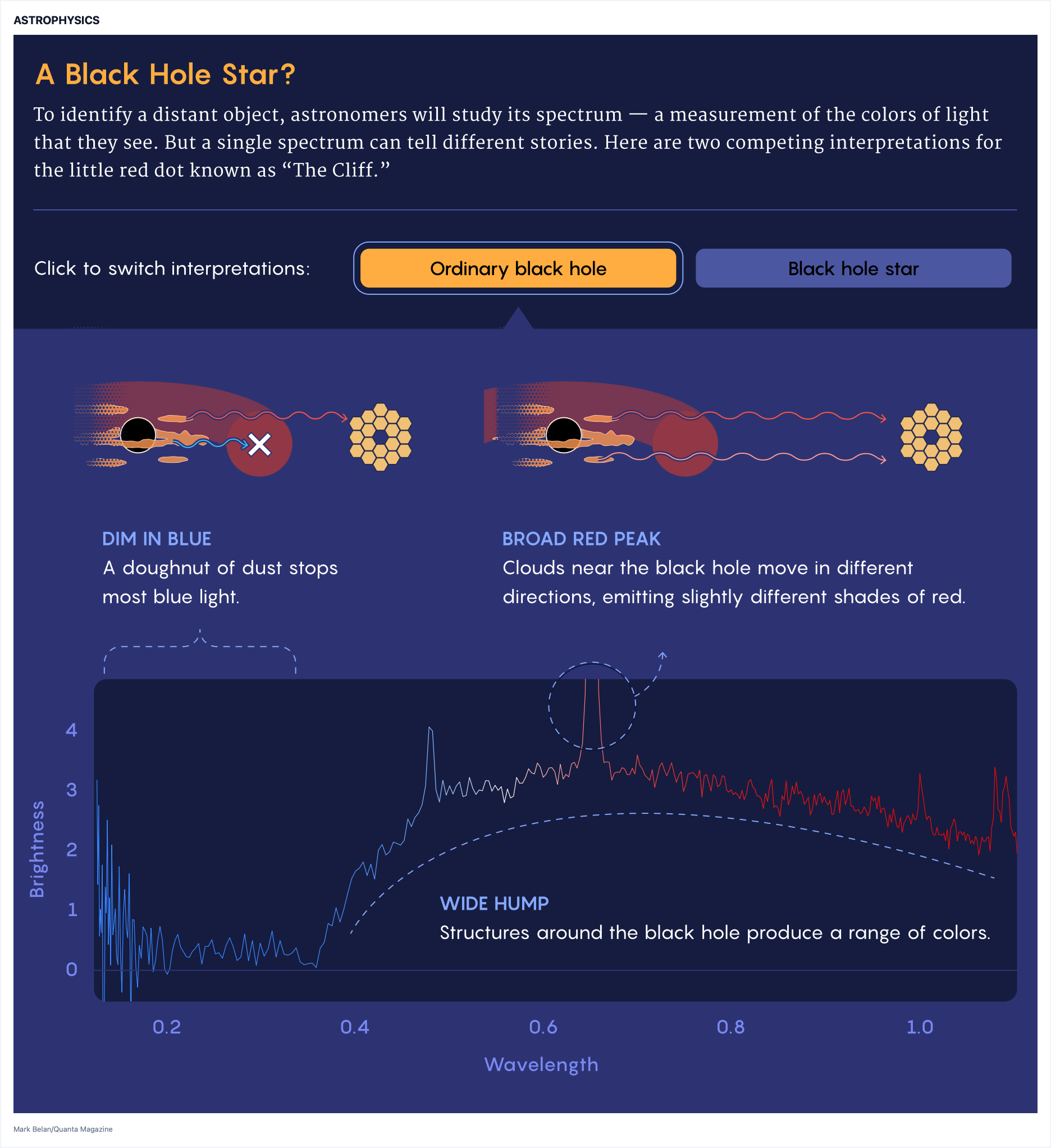
The James Webb Space Telescope has uncovered numerous mysterious, extremely luminous 'little red dots' in the early universe whose spectral features match neither standard galaxies nor typical supermassive black holes. A bold hypothesis suggests these objects may be 'black hole stars' (or quasi-stars)—colossal envelopes of hydrogen gas concealing growing seed black holes at their cores—which neatly accounts for their observed Balmer breaks and absence of typical X-ray emissions or flickering.
Nevertheless, this interpretation has sparked intense debate among astrophysicists, with skeptics contending that the dots remain conventional supermassive black holes. Opponents argue that their pronounced redness and broadened hydrogen emission lines stem from obscuration by dense toroidal clouds of dust and gas along with electron scattering, suggesting that viewing angles could simply explain the distinction between red and blue dots.
As theoretical models and demographic censuses advance, findings indicate that these little red dots disappear as the universe approaches two to three billion years old, offering preliminary evidence that they might represent a short-lived 'puberty' phase where emerging black holes feed inside and eventually clear their gas cocoons, though astronomers still await definitive proof. (Key numbers: 20, 30)