地球能量失衡(EEI)——即吸收的太阳能量与重新释放的热量之间的差值——自2000年以来已增加了一倍多。来自美国国家航空航天局的CERES卫星和Argo海洋浮标项目的数据证实,超过90%的过剩能量正在海洋中积累。这种不断扩大的失衡表明,短期内全球气温的上升速度可能比目前科学共识预测的快10%至30%。在2023年的厄尔尼诺期间,EEI对上层海洋变暖的贡献比本世纪上一次厄尔尼诺高出75%,从而推动了超出标准模型预测的破纪录极端天气事件。
地球反射率(反照率)下降的主要原因是有亮面冷却作用的硫酸盐气溶胶的减少。更严格的排放规定(如国际海事组织2020年的规则)帮助将全球硫排放量从8100万吨降至6900万吨,使船舶相关的冷却作用减少了10%以上。清洁空气的努力和诸如海冰减少等反馈回路解释了2001至2019年间约一半的EEI趋势,但过去的辐射强迫估算低了10%至40%。同时,低云覆盖的变化解释了另一半的EEI增长,然而气候模型难以复制这种由反照率驱动的能量积累。
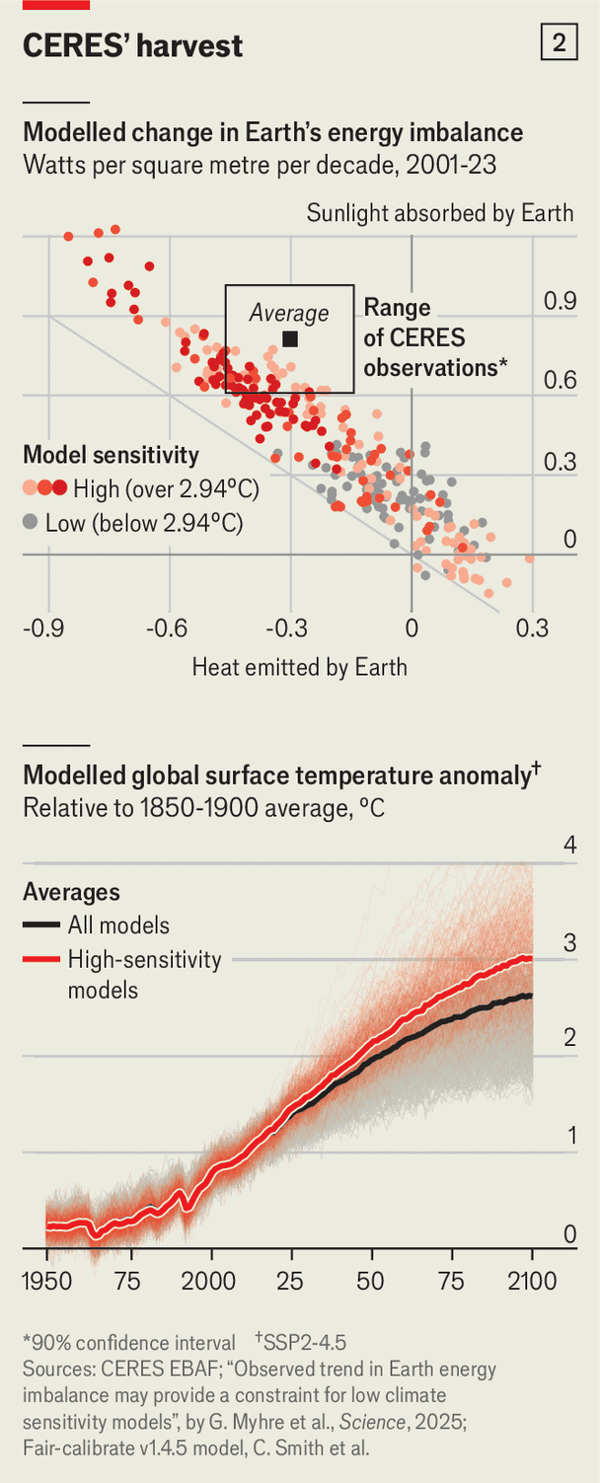
这种分歧迫使研究人员重新评估气候敏感性,即衡量对变暖的反馈响应。最近的分析表明,气候敏感性低于2.94°C的模型可以被高置信度地排除,这表明政府间气候变化专门委员会3°C的最佳估算是绝对的最低值。尽管一些科学家预测变暖速度为每十年0.4°C(到2030年代末将突破1.5°C或2°C的门槛),但其他科学家认为,区域变暖模式(例如热带太平洋的“暖池”散热器)将敏感性限制在4°C以下。最终,现实世界海洋热吸收与模型模拟之间的不匹配仍然是气候科学必须迫切解决的尴尬差距。
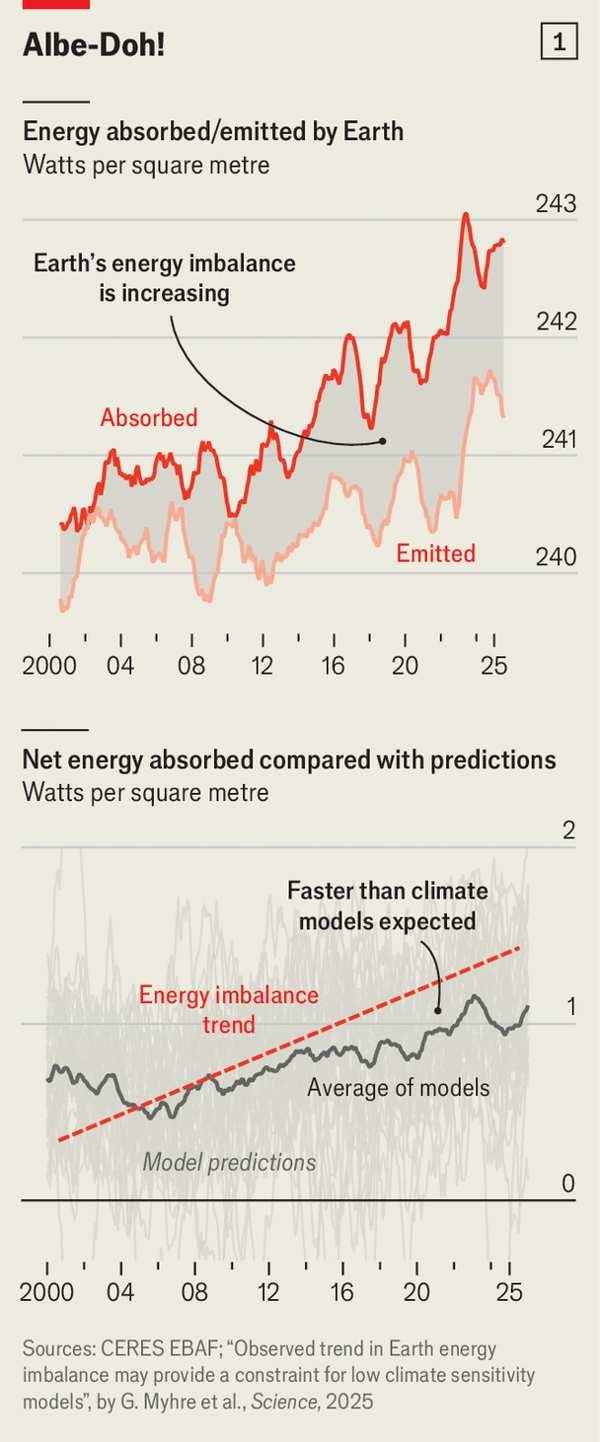
The Earth's energy imbalance (EEI)—the difference between absorbed solar energy and re-emitted heat—has more than doubled since 2000. Data from NASA’s CERES satellites and the Argo ocean float program confirm that over 90% of this excess energy is accumulating in the oceans. This expanding imbalance suggests that global temperatures could rise 10% to 30% faster in the near term than the current scientific consensus predicts. During the 2023 El Niño, the EEI's contribution to upper-ocean heating was 75% higher than in the previous El Niño of this century, driving record-breaking extreme weather events that outpaced standard model projections.
The primary cause of the planet's declining reflectivity (albedo) is a reduction in shiny, cooling sulphate aerosols. Stricter emissions regulations, such as the International Maritime Organisation’s 2020 rules, helped lower global sulphur emissions from 81 million to 69 million tonnes, cutting ship-related cooling by over 10%. Clean air efforts and feedback loops like shrinking sea-ice explain about half of the EEI trend between 2001 and 2019, but past forcing estimates were 10% to 40% too low. Meanwhile, shifting low-cloud cover accounts for the other half of the EEI growth, yet climate models struggle to replicate this albedo-driven energy accumulation.
This divergence has forced researchers to re-evaluate climate sensitivity, which measures feedback responses to warming. Recent analyses indicate that models with a climate sensitivity below 2.94°C can be ruled out with high confidence, suggesting the IPCC’s best estimate of 3°C is the absolute minimum. While some scientists project warming rates of 0.4°C per decade (surpassing the 1.5°C or 2°C thresholds by the late 2030s), others argue that regional warming patterns, such as the tropical Pacific's "warm pool" radiator, limit sensitivity to under 4°C. Ultimately, the mismatch between real-world ocean heat uptake and model simulations remains an embarrassing gap that climate science must urgently address.
Source: The rate at which Earth is absorbing energy is alarming climate scientists
Subtitle: Reflections on a warming planet
Dateline: Jul 16, 2026 06:54 AM