2026 年第二季度,中国 19 万亿美元规模的经济同比增长 4.3%。虽然并非灾难,但这一增速低于政府设定的 4.5% 至 5.0% 的目标区间,也是自 2022 年新冠疫情封控以来的最低增速。这一增长在很大程度上依赖外贸支撑,此前 2025 年的贸易顺差超过 1.2 万亿美元,且 6 月商品出口同比增长超过 25%。然而,分析人士指出,中国的贸易顺差已触顶。6 月进口额增长了 36%(快于出口增幅),导致 2026 年上半年的美元顺差低于去年同期。这主要是由于芯片价格上涨导致集成电路进口额同比增长约 70%,而非油价上涨(中国已削减了石油进口量)。
尽管各界呼吁实施财政刺激以提振疲软的国内需求,但中国政府实际上正陷入“事实上的财政紧缩”。今年 1 月至 5 月,税收收入增长强劲,增值税同比增长 6.2%,个人所得税增长 12.2%。此外,得益于股市交易活跃,印花税飙升了 89%。税收增长的部分原因是通胀提高了名义交易额,以及税务机关加大了征管力度(包括要求纳税人申报自 2022 年以来的境外收入和资产)。因此,尽管中央财政开支增加,但中央和地方政府合并的财政赤字有所收窄,起到了财政收紧的效果。
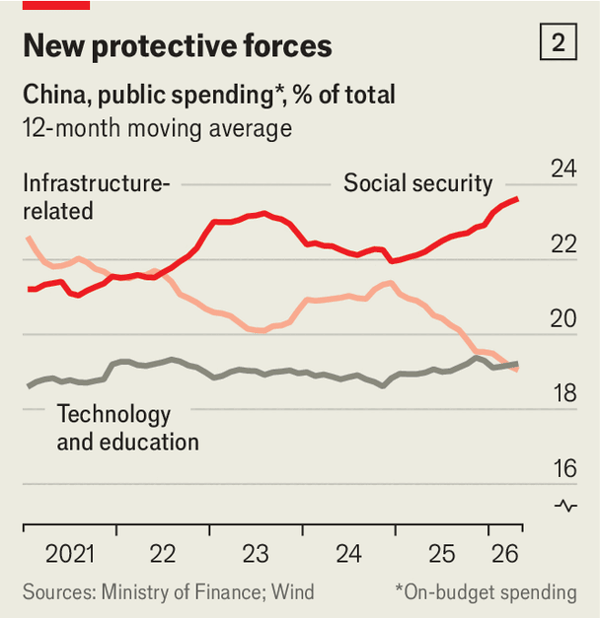
此外,财政支出的结构也发生了反直觉的变化。尽管国家领导人支持高科技制造(“新质生产力”)并曾警告防范“福利主义”,但公共财政支出却向社会保障(包括养老金、失业保险和扶贫救助)倾斜。近年来,这些社保项目在政府主预算中的份额持续增长,而科技和教育支出的比例保持平稳,基建支出的份额则有所下降。这表明在一个老龄化和经济放缓的社会中,无论领导人的个人偏好如何,老年人、失业者和穷人的日常需求总会迫使公共支出向社会安全网倾斜。
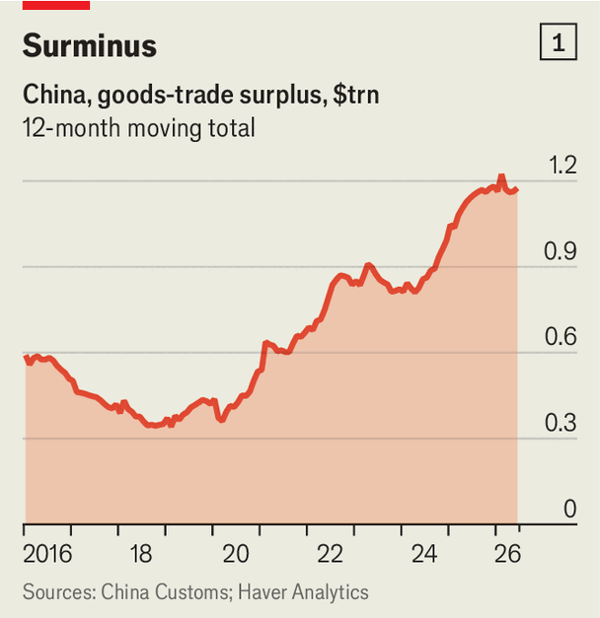
China's $19 trillion economy grew by 4.3% year-on-year in the second quarter of 2026. While not a disaster, this growth represents a slowdown from the government's target range of 4.5% to 5.0% and is the weakest since the zero-covid lockdowns of 2022. The growth was heavily supported by external trade, following a 2025 surplus exceeding $1.2 trillion and a 25% year-on-year surge in June goods exports. However, analysts conclude that China's trade surplus has peaked. In June, imports rose by 36% (faster than exports), resulting in a lower dollar-denominated surplus for the first half of 2026 compared to the previous year. This shift is driven less by higher oil prices (as China cut import volumes) and more by a 70% year-on-year rise in chip import values caused by higher semiconductor prices.
Despite calls for fiscal stimulus to boost weak domestic demand, China's government is entering "de facto austerity." Tax revenues have grown strongly, with value-added tax rising 6.2% and personal income tax increasing 12.2% from January to May. Additionally, stamp duties from stock trading surged by 89%. This revenue growth is fueled by inflation increasing purchase values and intensified enforcement, including demands for taxpayers to declare foreign income and assets back to 2022. Consequently, although central government spending has increased, the narrowing budget deficit (combining central and local governments) acts as fiscal tightening.
Furthermore, the composition of public spending has shifted counterintuitively. Although President Xi Jinping champions tech manufacturing ("new productive forces") and has criticized "welfarism," public spending has favored social security, including pensions, unemployment insurance, and poverty relief. The share of these items in the main budget has grown in recent years, while technology and education spending remained flat, and infrastructure spending declined. This reveals that in an aging, slowing economy, the demands of the elderly, unemployed, and poor will force government spending toward social safety nets, despite leadership preferences.
Source: China’s trade gap is narrowing. And other surprises
Subtitle: The world’s second-biggest economy is stumbling into fiscal austerity
Dateline: Jul 16, 2026 04:58 AM | HONG KONG