在特朗普总统宣布对伊朗实施海军封锁并提议征收 20% 的货物过境费后,霍尔木兹海峡的地缘政治紧张局势升级,引发了美军空袭和伊朗对油轮的导弹报复。尽管原油价格仍低于 4 月份的峰值,但全球精炼油品面临严重短缺。虽然原油供应充足,但全球精炼油品产量目前仅为日均 7900 万桶,比战前水平低 700 万桶/日。精炼燃料价格比战前高出 35% 至 60%。欧洲柴油炼油利润率创 2011 年以来新高,美国“3-2-1”裂解价差(衡量将原油转化为汽油和柴油的利润率)创下历史新高,亚洲航空煤油价格也从战前的每桶 100 美元左右暴涨至 150 美元。
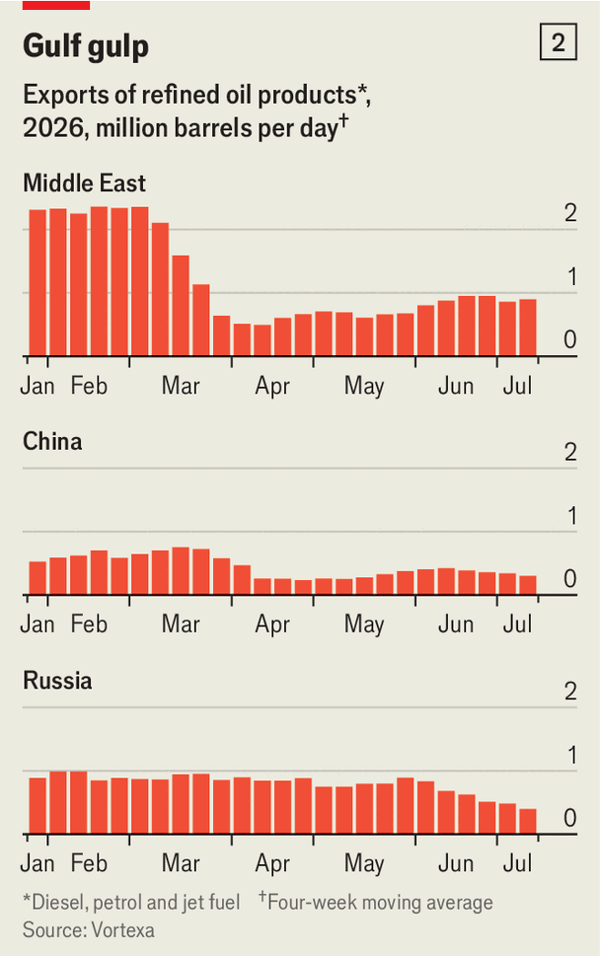
海湾地区、中国和俄罗斯的供应受限加剧了精炼燃料的危机。由于精炼油品与原油不同,无法通过管道绕过关闭的霍尔木兹海峡,导致海湾出口大幅下滑,炼油厂吞吐量下降了 30%(即减少了 300 万桶/日)。此外,伊朗的袭击已摧毁了海湾地区 140 万桶/日的炼油产能。在中国,政府的出口限制导致炼油厂加工量较 2 月份减少了 300 万桶/日(该限制仅在 7 月份暂时放宽)。与此同时,乌克兰对俄罗斯炼油厂(包括远在 2500 公里外的西伯利亚大厂)的无人机袭击破坏了精炼升级装置,导致俄罗斯 6 月的炼油加工量降至 3800 万桶/日,较 1 月减少了 150 万桶/日。
俄罗斯国内的燃料短缺导致油价飙升高达 50%,并引发了柴油出口禁令。鉴于俄罗斯占全球柴油出口的 12% 和燃料油出口的 16%,此举影响了全球。作为主要买家的土耳其被迫将精炼柴油留作自用,导致地中海其他地区供应吃紧;巴西则转向消耗美国供应,进一步挤压了大西洋买家。国际能源署警告称,除非霍尔木兹海峡重新开放,否则危机将进一步恶化。尽管局势缓解将在夏末带来转机,但若冲突持续,美国及进口国将不得不消耗已处于低位的库存,从而推高精炼油价格,延续这场历史性的石油危机。
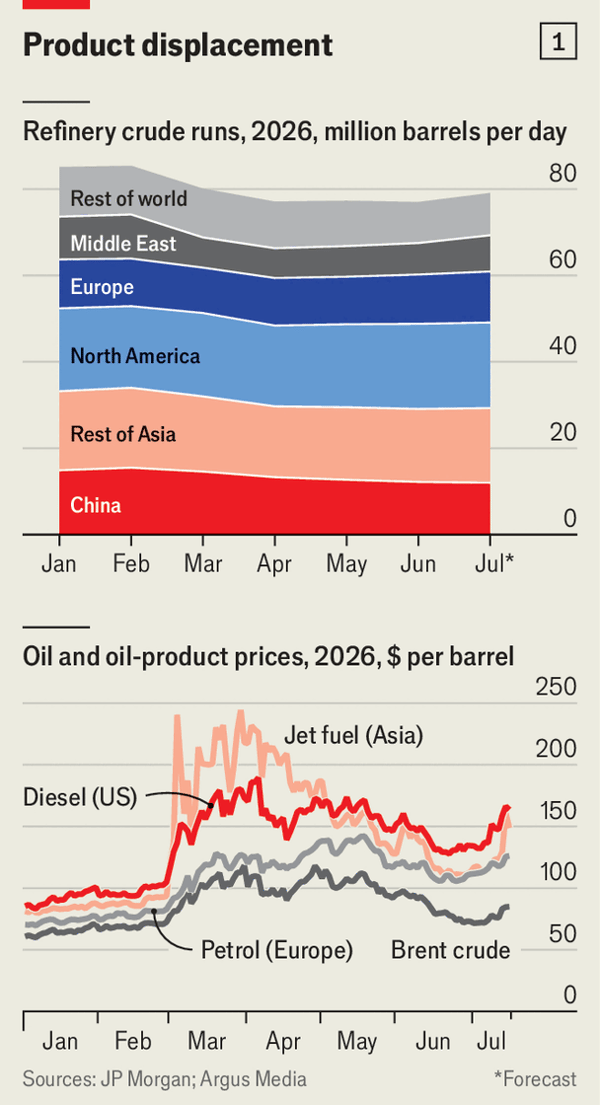
Geopolitical tensions in the Strait of Hormuz have escalated after President Trump announced a naval blockade on Iran and proposed a 20% cargo transit fee, prompting US airstrikes and Iranian missile retaliations on tankers. Although crude prices remain below their April peak, a massive global refined product crunch has emerged. While crude is abundant, refined product output stands at 79 million barrels per day (b/d), which is 7 million b/d below pre-war levels. Refined fuel prices are 35% to 60% higher than before the war. The European margin on diesel is at its highest since 2011, US "3-2-1" crack spreads are hitting records, and Asian jet fuel has jumped from $100 to $150 per barrel.
The refined fuel crunch is worsened by supply constraints in the Gulf, China, and Russia. Gulf exports have collapsed because refined products, unlike crude, cannot bypass the closed Hormuz Strait via pipelines, resulting in a 30% (3 million b/d) drop in refinery throughput. Additionally, Iranian attacks have knocked out 1.4 million b/d of Gulf refining capacity. In China, government restrictions—only temporarily eased in July—have reduced refinery processing by 3 million b/d compared to February. Meanwhile, Ukrainian drone strikes against Russian refineries, including a Siberia facility 2,500km away, have disrupted upgrading units, causing Russian refinery processing to fall by 1.5 million b/d to 3.8 million b/d in June.
Russia's domestic fuel shortages have led to price hikes of up to 50% and a ban on diesel exports. Since Russia accounts for 12% of global diesel exports and 16% of fuel oil exports, the loss ripples globally. Turkey must keep its refined diesel domestic, leaving the Mediterranean short, and Brazil is consuming US supplies, squeezing Atlantic buyers. The International Energy Agency warns that the crunch will worsen unless Hormuz reopens. Although a resolution would bring relief by summer's end, a prolonged conflict will force the US and importers to deplete low stocks, driving product prices higher and continuing the largest oil shock in history.
Source: America’s Hormuz brinkmanship is worsening a global fuel crunch
Subtitle: Rising oil prices are only part of the problem
Dateline: Jul 16, 2026 05:16 AM