历史经验显示,半导体产业的成功通常依赖于有效的国家产业政策以及强大且坚定的核心客户支持,过去德州仪器与台积电的崛起皆是如此。如今,中国正具备这两项关键要素,北京当局精准调整政策以突破人工智慧领域的技术瓶颈,而华为与腾讯等科技巨头也因美国制裁,转而成为支持本土晶片制造商研发的重要客户。
尽管长鑫存储等企业仍与全球领导者存在技术差距,且面临内部合作摩擦及美国持续打压等风险,但在强大的国内生态系统与人工智慧热潮带动的晶片需求下,他们正加速缩小差距。经过多年的产业政策调整与供应链技术累积,中国的半导体产业已经建立起相对完整的生态系,即使在孤立的状态下也具备持续创新的潜力。
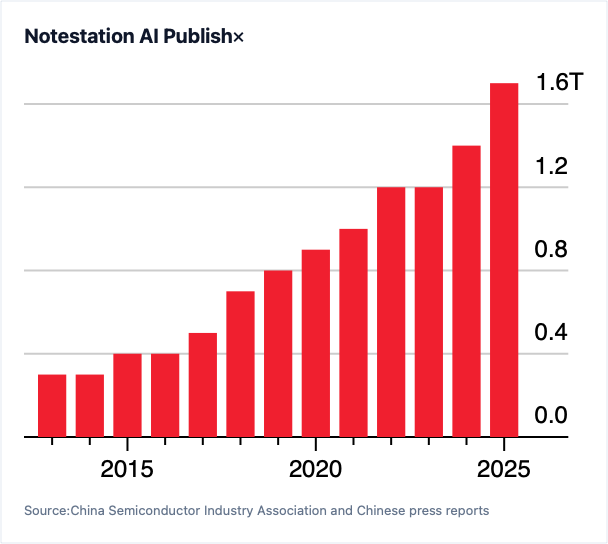
China historically lagged in the semiconductor industry and heavily relied on foreign imports, leading to the 2015 launch of the "Made in China 2025" initiative with massive investments to foster domestic chipmaking. Despite early setbacks involving corruption and corporate bankruptcies, Chinese companies like Huawei and CXMT have recently achieved surprising technological breakthroughs and market success, ironically spurred by US export restrictions.
Historical experience shows that success in the semiconductor industry typically relies on effective national industrial policies and the support of powerful, committed anchor customers, as seen in the rise of Texas Instruments and TSMC. Today, China possesses both of these key elements, with Beijing fine-tuning policies to overcome technical bottlenecks in artificial intelligence, while tech giants like Huawei and Tencent, forced by US sanctions, have become crucial customers supporting domestic chipmakers' research and development.
Although companies like CXMT still face a technical gap compared to global leaders, along with risks of internal friction and continued US pressure, they are rapidly narrowing the distance driven by a robust domestic ecosystem and the AI boom's demand for chips. After years of refining industrial policies and accumulating supply chain technical competencies, China's semiconductor industry has built a relatively complete ecosystem, demonstrating the potential for continued innovation even in isolation.