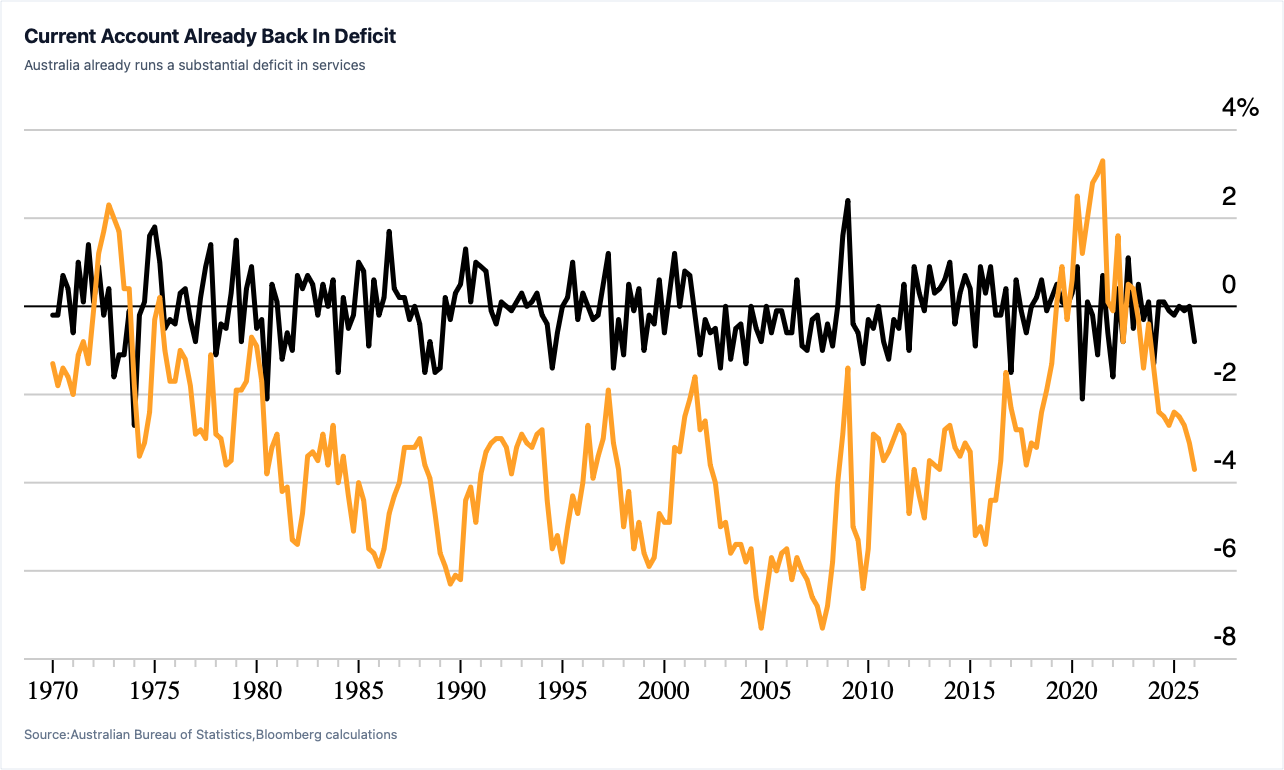
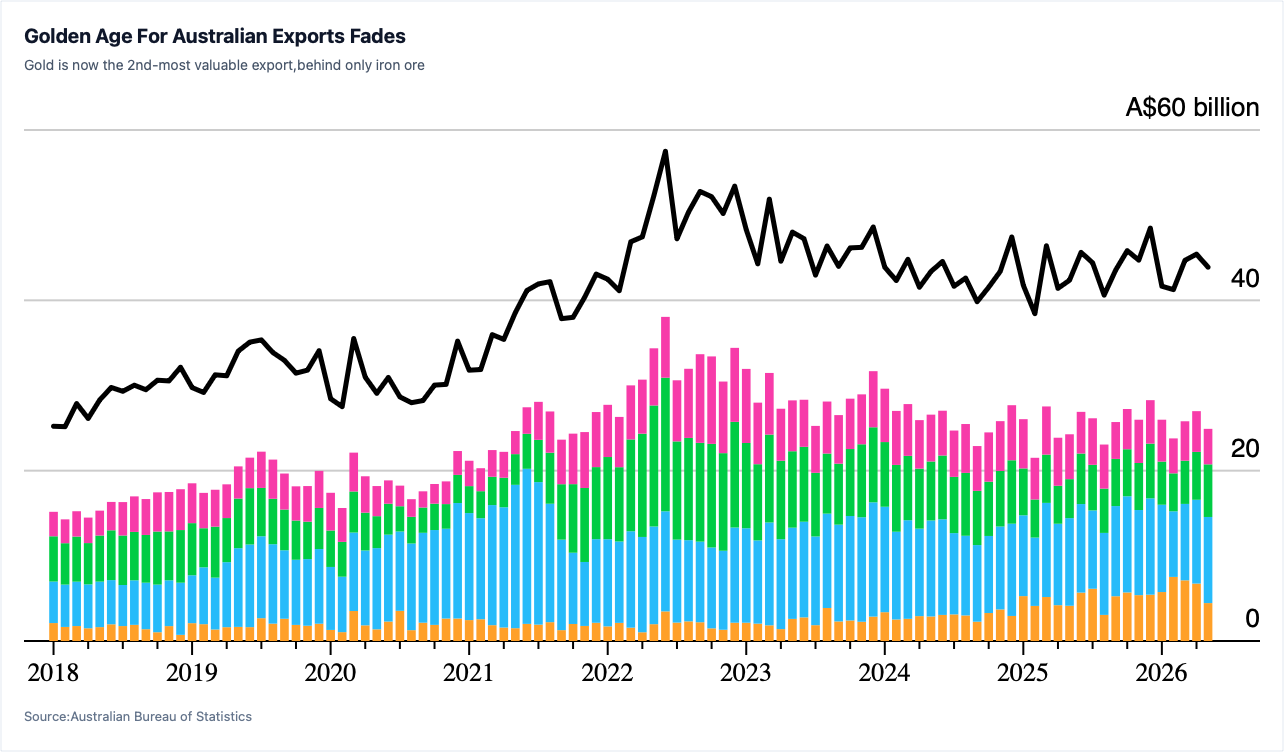
随著矿业繁荣带来的出口红利逐渐消退,且大宗商品价格预计将在明年年中开始下跌,澳洲的经常帐收支已重回赤字状态,服务业逆差也因收紧移民政策减少学生签证而进一步恶化。
尽管贸易与经常帐面临赤字风险,但得益于快速成长的国民养老金系统投资海外资产,以及全球对澳洲债务的强劲需求,该国的净国际投资状况依旧保持强健,并对澳元形成支撑。
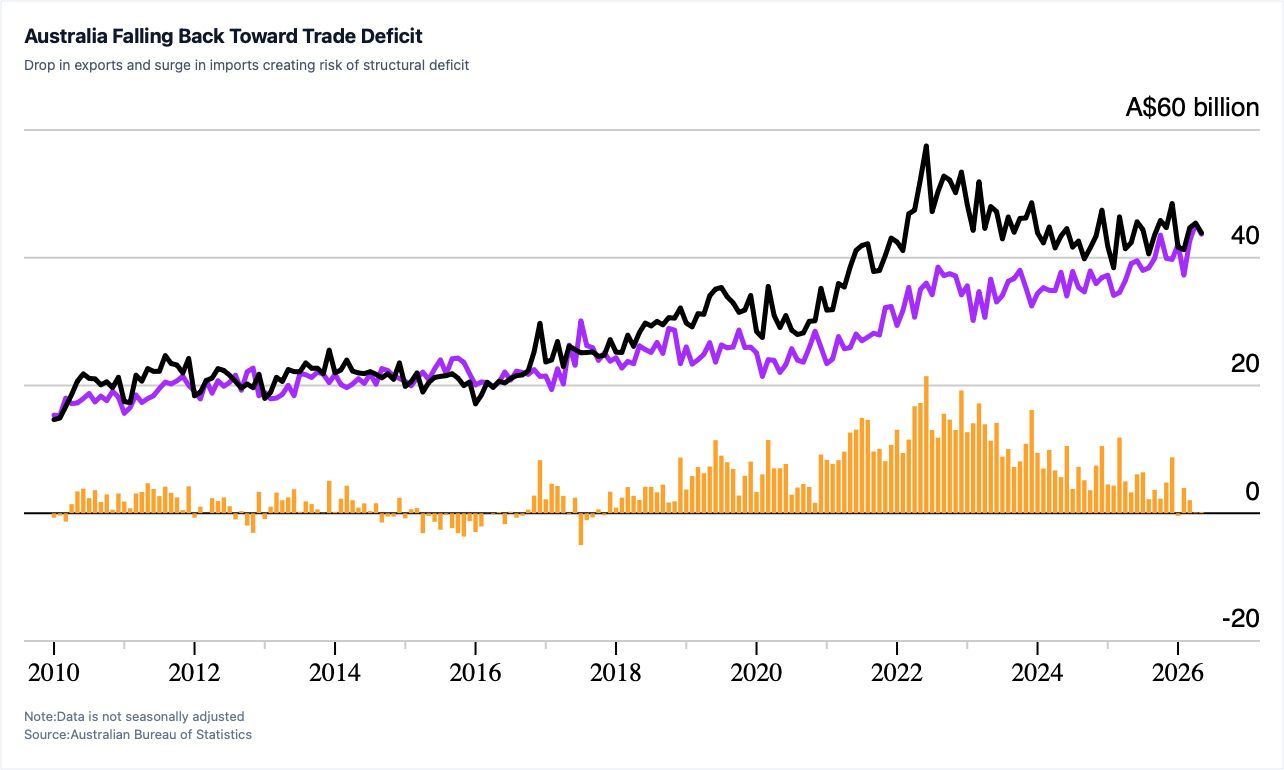
Australia's goods trade surplus has slumped significantly due to a surge in imports of fuel and equipment driven by a data center construction boom, combined with stagnant exports, putting the country on track for its first annual trade deficit since 2016.
As the export payoffs from the historic mining boom fade and commodity prices are projected to decline starting mid-next year, Australia's current account balance has returned to a deficit, which could be further exacerbated by tighter immigration policies reducing student visas and education exports.
Despite the risks of trade and current account deficits, Australia's external position remains resilient, supported by a strengthening net international investment position driven by overseas equity investments from its pension system and strong global demand for Australian debt.