沪深300 ETF曾是中国国家队(如中央汇金投资有限责任公司)的首选,其市值在2024年开始注入资金以稳定股市后曾达到4400亿元人民币的峰值。然而,国家队今年一直在减持部分大型ETF的股份以抑制市场泡沫,这也拖累了沪深300指数的表现。
黄金ETF以及排名第三和第四的短融与货币市场ETF的崛起,突显了投资者在面临经济不确定性时,对固定收益和现金管理等防御性资产的强劲需求,尽管今年中国股市有所上涨,但升势主要集中在少数人工智慧硬体板块。
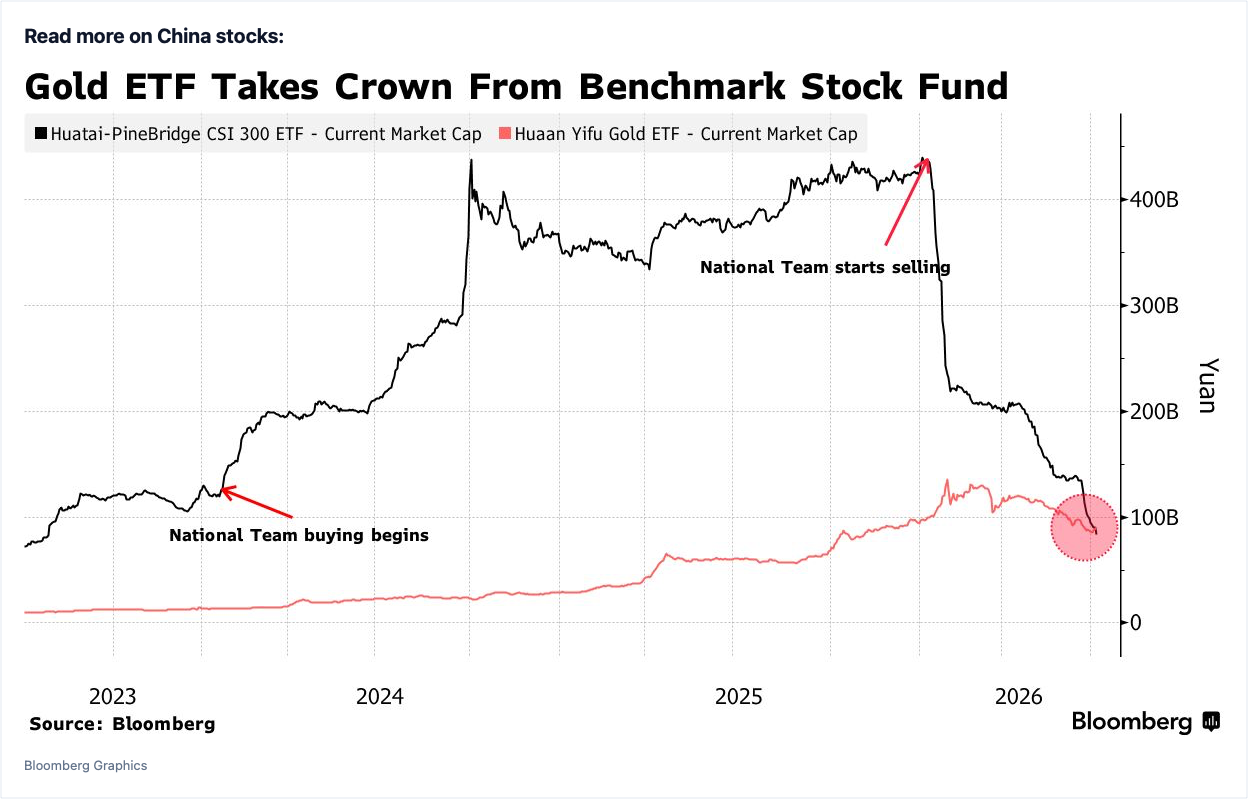
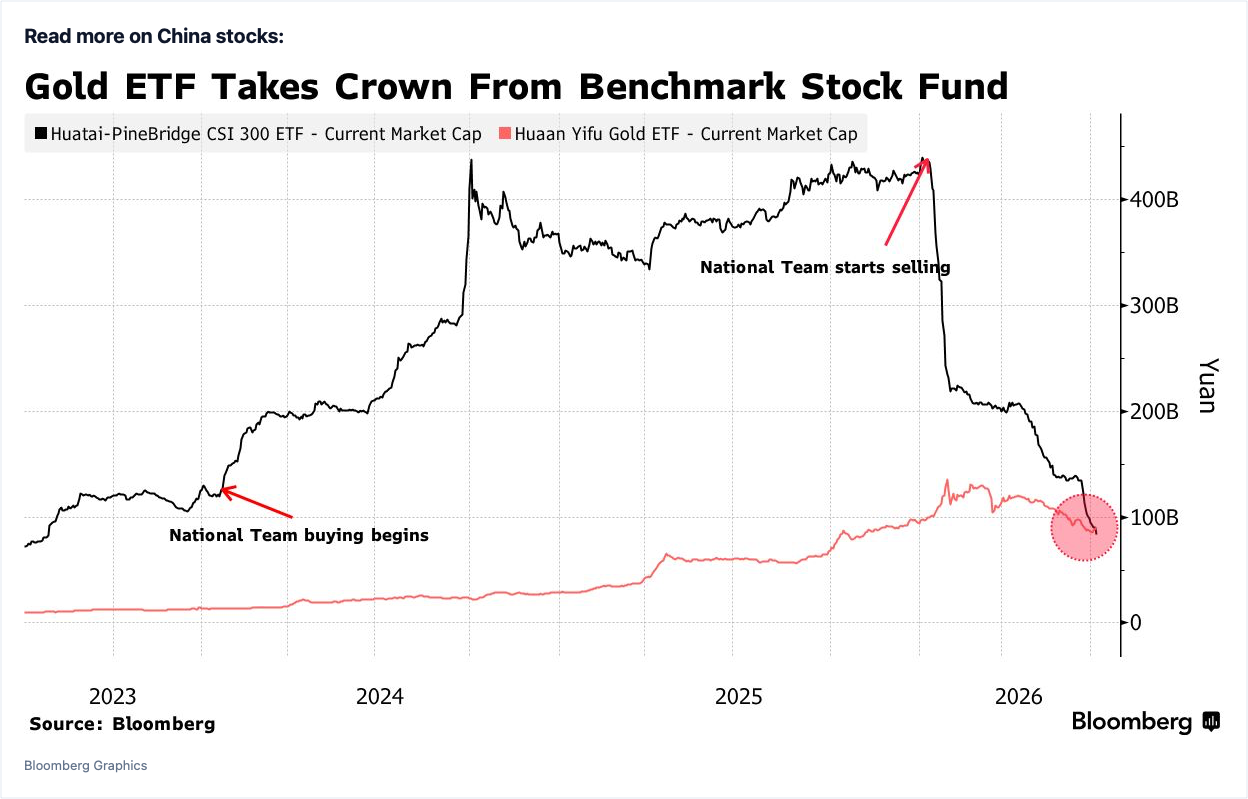
China's spot gold ETF (Huaan Yifu Gold ETF) has overtaken the Huatai-PineBridge CSI 300 ETF to become the country's largest exchange-traded fund. This shift highlights the fading of state-backed support for the stock market, with the gold ETF's market capitalization reaching 90 billion yuan, slightly ahead of the CSI 300 ETF's 83 billion yuan.
The CSI 300 ETF was once a favorite of China's "national team" (such as Central Huijin Investment), with its value peaking at 440 billion yuan after state funds were injected starting in 2024 to stabilize the market. However, the national team has been paring its stakes in major ETFs this year to temper froth, weighing on the CSI 300 Index's performance.
The rise of the gold ETF, along with the third- and fourth-largest short-term bond and money market ETFs, underscores strong investor demand for defensive assets like fixed-income and cash-management products amid economic uncertainty, even as stock gains this year remain concentrated in a narrow group of AI hardware names.