中国正计划在未来五年内投入约2兆元人民币(约合2940亿美元)建设全国性的数据中心,以扩大人工智慧在医疗保健和城市管理等领域的应用。这项由政府主导的计划要求至少80%的核心技术(如晶片)必须由本土企业供应,这将使华为、海光信息等国内厂商受益。
尽管本土晶片需求增加,但全球记忆体晶片短缺(特别是高频宽记忆体 HBM)预计将限制中国AI企业的成长。瓶颈已从单纯的算力转向如何确保支持快速数据传输的高频宽记忆体晶片供应。
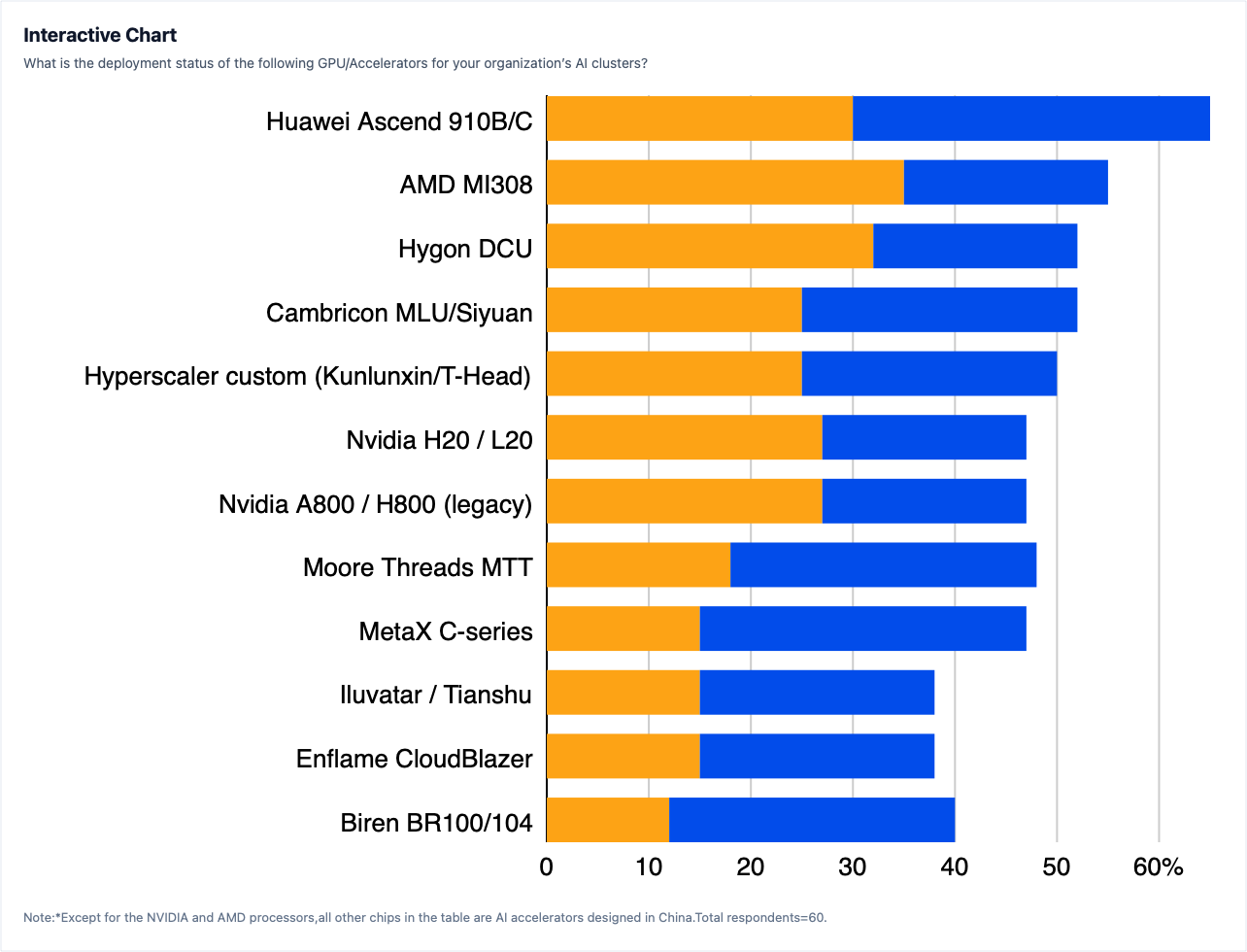
Driven by rising US-China tensions and Beijing's push for domestic technology substitution, Chinese companies are increasingly abandoning Nvidia's advanced accelerators in favor of domestic silicon. According to a Bloomberg Intelligence survey, Chinese executives plan to increase their budget allocation for domestic AI accelerators to 46% over the next 12 months, up from the current 30%.
China is planning to allocate approximately 2 trillion yuan ($294 billion) over the next five years to build data centers nationwide, expanding AI applications in sectors ranging from healthcare to city management. This government-led initiative requires that at least 80% of core technologies, such as chips, be supplied by domestic companies, benefiting local manufacturers like Huawei and Hygon.
Despite the growing demand for local hardware, a global memory chip shortage, particularly of high-bandwidth memory (HBM), is expected to cap the growth of Chinese AI firms. The primary bottleneck is shifting from raw computing power to securing the supply of high-bandwidth memory chips that support rapid data transfer.