尽管市场近期传出中国恢复大举采购的传言,但实际数据显示其进口总量依然低迷,变化主要在于采购结构与地理来源。受美国对伊朗石油出口封锁的影响,中国自伊朗进口的原油量急遽萎缩,转而向伊拉克、阿联酋、巴西及加拿大等公开市场采购,这种自公开定价枢纽买入现货的转变放大了市场价格波动与外界猜测。
中国过去十年间建立了逾12亿桶的庞大战略石油储备,使其具备在荷姆兹海峡受阻时动用库存并维持低进口量的长期潜力。维持国际油价平稳符合北京自身的经济利益,因此中国实施的石油节制策略并非意在协助美国,而是基于自身经济安全的考量,但也客观上减轻了全球通膨与能源供应的紧绷状态。
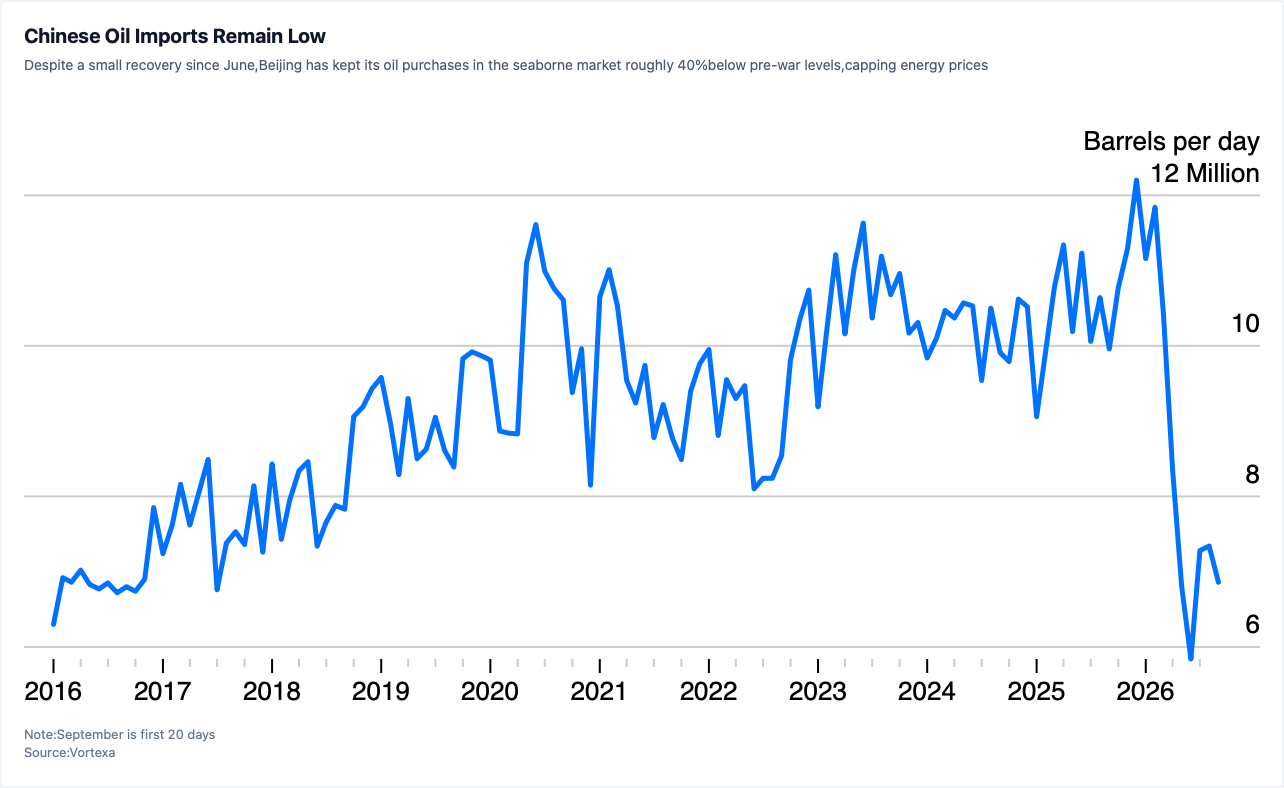
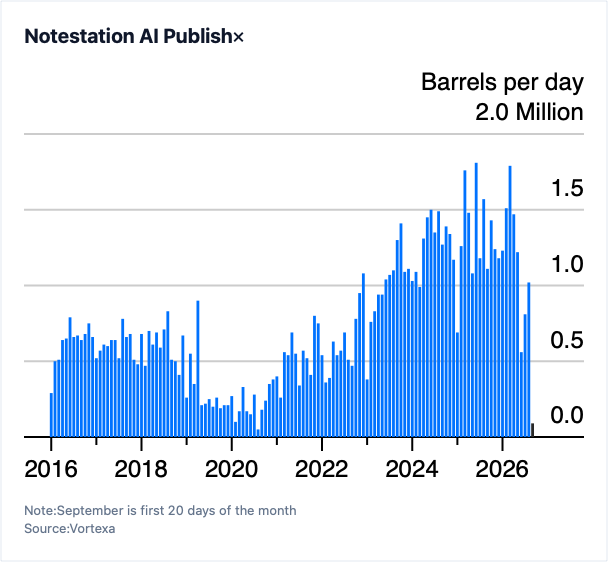
Following the outbreak of the US-Iran war, the global oil market has relied on multiple buffers to absorb the shock, with China's sharp reduction in crude purchases playing a pivotal role. Starting in April, Beijing significantly curtailed its seaborne oil imports, hitting a 10-year low in June; despite a modest rebound, imports remain approximately 40% below pre-war levels, helping to cap runaway energy prices and indirectly giving Washington more strategic leeway.
Although rumors suggested that China was abandoning its buying discipline, import data reveals that total volumes remain depressed and the real change lies in the geographical shift of its procurement. As the US naval blockade drastically curtails Iranian oil shipments, China has replaced cheap Iranian crude with supplies from the open market in Iraq, the UAE, Brazil, and Canada, a shift toward transparent benchmark hubs that has magnified visible market price impacts and fueled speculation.
China has built a massive strategic petroleum reserve exceeding 1.2 billion barrels over the past decade, allowing it to tap domestic stockpiles and keep imports subdued amid disruptions in the Strait of Hormuz. Because maintaining moderate global oil prices directly serves Beijing's own economic self-interest, its ongoing import restraint is designed for self-preservation rather than aiding the United States, even as it objectively dampens global inflation risks.