西非正迅速演变为全球可卡因贩运至欧洲的核心中转枢纽。2026年7月21日,利比里亚警方在首都附近缴获了近4吨高纯度可卡因,其欧洲街头零售价值高达3.17亿美元(批发价值为5000万至6000万欧元)。然而,这并非今年该地区最大的毒品案:今年5月,一艘在西撒哈拉附近被拦截的科摩罗籍船只竟载有近31吨可卡因,这一单次缴获量甚至超过了2025年整个西非地区全年缴获的30吨总和。数据显示,2019年至2025年间,西非每年缴获的可卡因总量飙升了50%,单次运输的平均重量也从2024年的2.4吨暴增至2025年的5.6吨。
导致西非可卡因中转贸易爆发式增长的原因多重且复杂。一方面,欧洲对来自南美洲(如巴西、圭亚那和苏里南)的直接进口实施了严厉打击,促使毒贩将南美大批毒品运至西非港口重新包装,再通过高强度的快艇运往欧洲非正规海岸;据欧盟海上分析与情报中心(MAOC-N)估计,去年有超过100吨可卡因成功通过西非流向欧洲市场。另一方面,通缉犯如荷兰毒枭约斯·莱德克尔斯(在荷兰被判刑24年)在塞拉利昂建立了庞大的贩毒网络,并将其业务扩展至加纳、科特迪瓦和利比里亚,近期阿姆斯特丹缴获的4.5吨加纳来源可卡因及蒙罗维亚缴获的238千克可卡因(价值1920万美元)均与其网络相关。
尽管执法部门频频宣布破获大案,但西非国家在遏制这一庞大非法贸易面前普遍显得无能为力。当地港口与机场普遍缺乏现代化的安检扫描设备与缉毒犬,频繁的停电更是导致现有设备瘫痪。更加严峻的是极其低劣的薪酬水平——在利比里亚,许多基层执法人员的月薪仅为100美元左右,极易被贩毒集团收买腐蚀。面对欧洲持续增长的可卡因需求,偶发的查获仅被毒贩视为必要的经营成本,整个西非地区正面临被深层毒品经济进一步蚕食的风险。
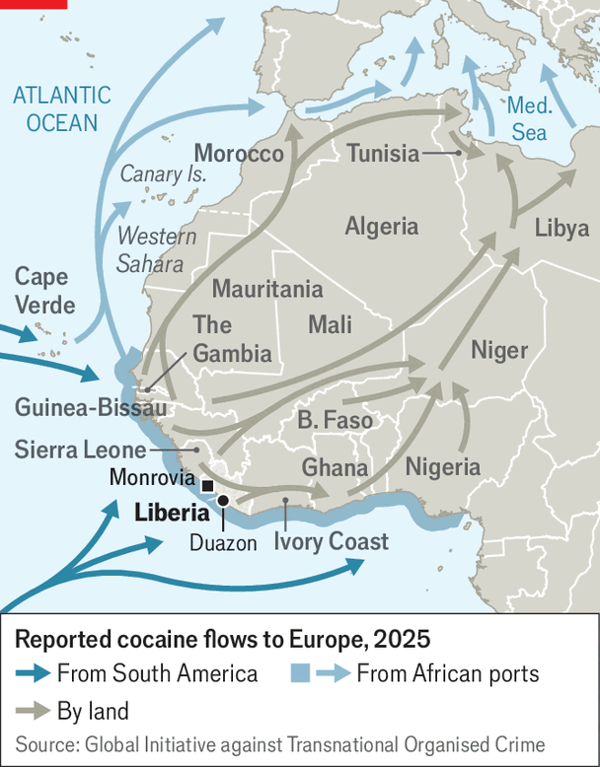
West Africa has rapidly solidified its position as a global transshipment hub for South American cocaine destined for European consumer markets. On July 21, 2026, Liberian law enforcement intercepted nearly four metric tons of high-grade cocaine near Monrovia, representing an estimated European street value of $317 million (wholesale value of €50 million to €60 million). This seizure was superseded in May, when maritime authorities intercepted a vessel off Western Sahara carrying almost 31 tons of cocaine—exceeding the 30 tons confiscated across all of West Africa throughout 2025. Between 2019 and 2025, regional cocaine seizures surged by 50%, with average shipment sizes expanding from 2.4 tons in 2024 to 5.6 tons in 2025.
This structural expansion is propelled by shifting global law enforcement dynamics and criminal infrastructure. As European customs authorities intensified screening on direct maritime routes from South America, cartels diverted cargo to West African ports with minimal inspection infrastructure before transferring contraband onto high-speed vessels bound for European beaches. According to the EU Maritime Analysis and Information Centre (MAOC-N), over 100 tons of cocaine successfully moved through West Africa to Europe last year. Additionally, fugitive kingpins like Dutch national Jos Leijdekkers—sentenced to 24 years in absentia—have orchestrated networks spanning Sierra Leone, Ghana, and Liberia, linked to major busts including a 4.5-ton shipment in Amsterdam and a 238-kg haul ($19.2 million value) in Monrovia.
Despite sporadic high-profile interdictions, West African security services lack the material capacity and institutional integrity required to disrupt international cartels. Municipal ports and border checkpoints frequently lack basic diagnostic equipment, trained canine units, or reliable electrical grids to operate freight scanners. Furthermore, severe wage deficits among law enforcement officers—with some Liberian agents earning barely $100 per month—create systemic vulnerabilities to cartels' corruption. Given sustained demand across European markets, cartels absorb isolated seizures as minor operational expenses while expanding trafficking routes across the region.
Source: West Africa has become a huge cocaine-trading hub
Subtitle: Scrutiny of other routes has changed traffickers’ strategy for shipping to Europe
Dateline: 7月 30, 2026 05:36 上午 | Monrovia