厄尔尼诺对全球供应链和航运的冲击正在加剧。巴拿马运河因降雨量低于历史均值而实施吃水限制,加上中东霍尔木兹海峡和红海航线受战争威胁,全球海运基准费率已突破每个40呎货柜4600美元的两年新高。巴西小麦产量预计下降23%,农民因担忧收获期暴雨而减少种植;印度限制糖出口以保障国内供应,引发对稻米出口进一步受限的担忧。澳洲农业保险申请量飙升至正常水平的四倍,对冲基金摩顿资本合伙公司更推出5亿美元计划押注粮食通胀。
专家预测这次厄尔尼诺将于2026年底达到强度峰值,太平洋海温可能比正常值高出2.6°C,成为1950年有现代纪录以来最强的一次。其经济损失预计到2030年将超过4万亿美元,远超2016年和1998年的超强事件。哥伦比亚因水力发电占全国电力三分之二,干旱条件已迫使该国更多依赖化石燃料发电。摩根大通全球气候咨询主管卡普尼克指出,气候变化使季节性预测面临前所未有的不确定性,企业和政府难以精确判断最严重的暴风雨和干旱将在何处降临。
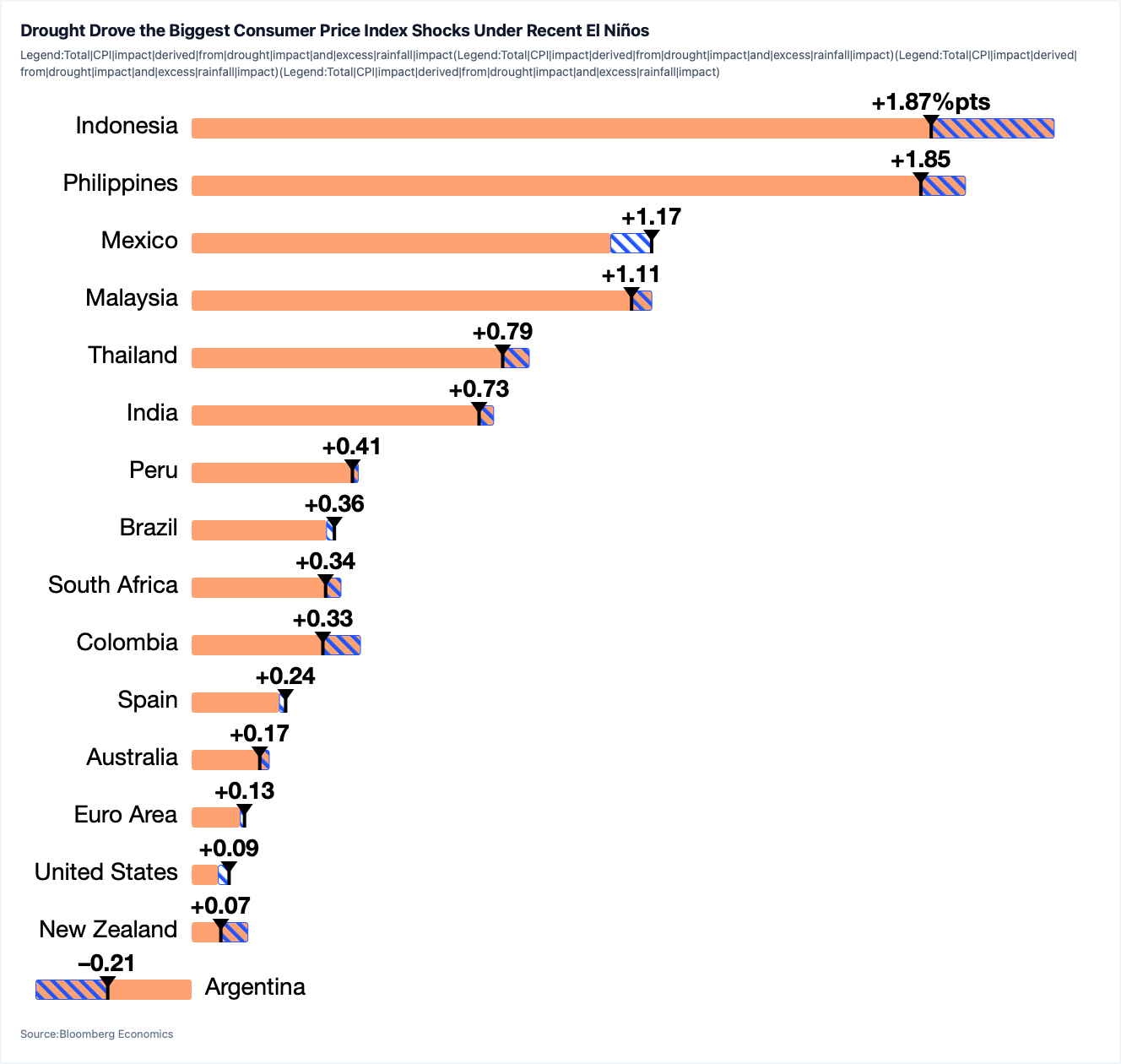
A potentially record-breaking Super El Niño, forming since June 2026, is rapidly intensifying across the Pacific and poses severe risks to economies already destabilized by the war in Iran. The event threatens crops, fisheries, and food security across the Global South, with Peru's anchovy industry shut down, India's monsoon rainfall running 12% below normal, and consumer prices surging in the Philippines and Indonesia. Bloomberg Economics research estimates that drought from a typical El Niño can push consumer price indices up by nearly two percentage points in both Southeast Asian nations. Food, which comprises 35–40% of household spending in these countries, is where most consumers will feel the impact first.
Global supply chains face compounding disruptions as El Niño-induced drought threatens the Panama Canal alongside war-related blockades in the Strait of Hormuz and Red Sea. Benchmark shipping rates have hit a two-year high above $4,600 per 40-foot container. In agriculture, Brazil's wheat production is forecast to fall 23%, India has restricted sugar exports, and Australian farmers are bracing for failed spring rains critical to grain harvests. Insurance requests in Australia have surged to four times normal levels, while hedge fund Moreton Capital Partners has launched a $500 million initiative betting on dramatic food inflation from vulnerable global crops including wheat and palm oil.
Scientists project this El Niño will peak in late 2026 with ocean temperatures up to 2.6°C above normal, potentially making it the strongest since modern records began in 1950. Cumulative economic losses are estimated to exceed $4 trillion through 2030, amplified by a larger global economy and greater event intensity compared to the 1998 and 2016 episodes. Colombia's hydropower-dependent grid is already shifting toward fossil fuels, and energy transitions are complicated by over $500 million in unpaid utility debts. JPMorgan's climate advisory head Sarah Kapnick warns that climate change introduces unprecedented uncertainty into seasonal forecasting, making it a major research challenge to predict where the worst impacts will strike in a world without historical analogs.